

By David Rogers. TRAPHILL, N.C. — When Capital Investment Companies (CIC) financial advisor John Palko first started fishing, it was not a “catch and release” experience for him. With a big smile, he says he was “hooked” from Day 1.
Along with Blowing Rock resident and CIC chief executive officer Richard Bryant, Palko is helping lead the firm’s involvement — and investment — in the newly formed non-profit organization, the North Carolina Brook Trout Association, and helping it gain needed startup visibility.
Brook trout are the only species of trout native to North Carolina.
Palko was on hand recently for NCBTA’s inaugural fundraising event hosted by Roaring Rivers Vineyard. Along with several other people — some with vested interests in the Brook trout industry, some concerned with environmental issues and others simply fresh water fishing enthusiasts — Palko listened intently on the situation described by NCBTA founders Tyler Pait and Trey Creasy.

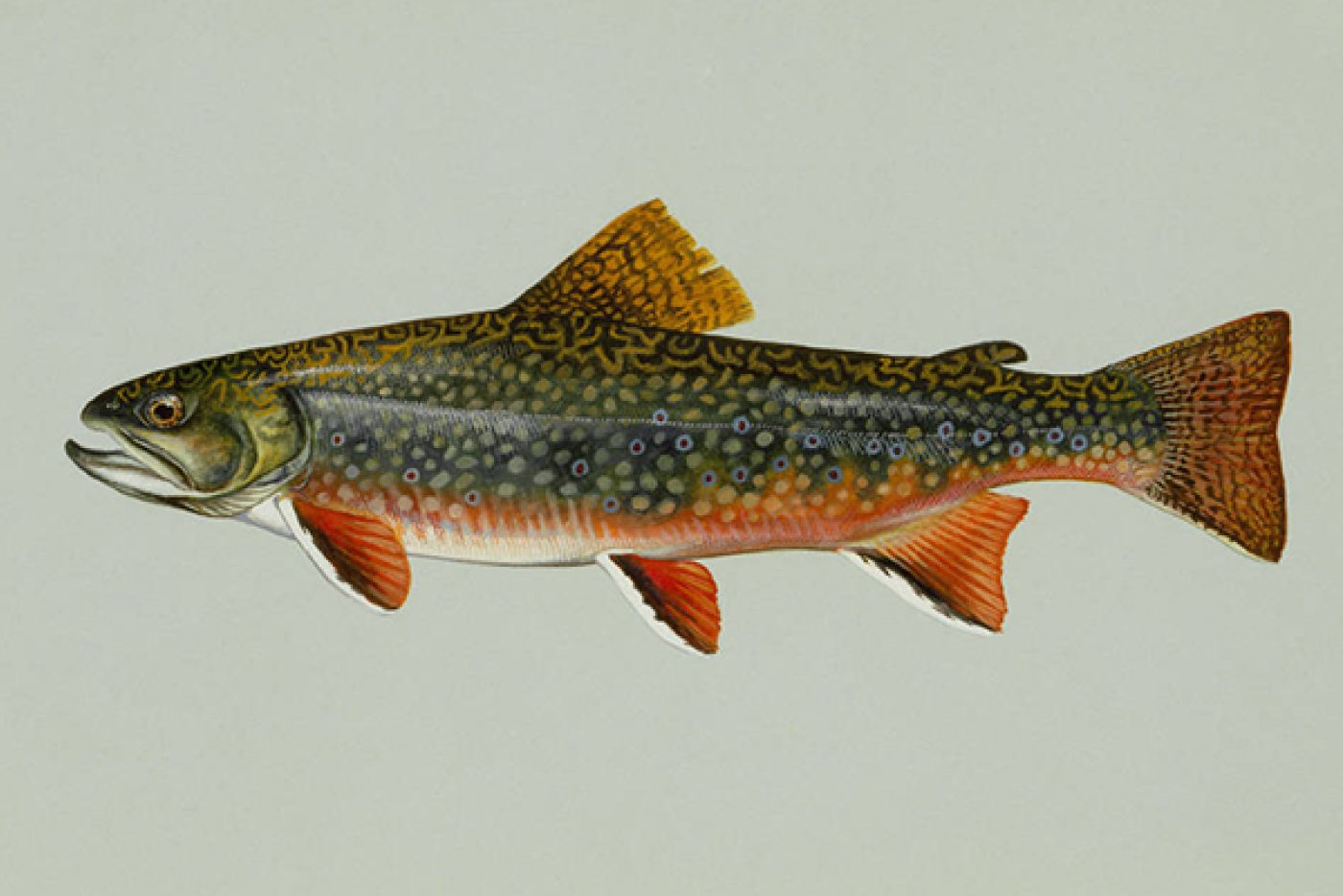
“Brook trout are the only species of trout native to North Carolina,” said Creasy in opening his remarks. “They are primarily found in high-elevation mountain streams here in the southern Appalachians. North Carolina is home to a genetically unique southern strain of the species. The fish are usually a dark green or olive color, with distinctive red spots surrounded by blue halos along their flanks, with white edges along the underbelly.”

As beautiful and unique as the Brook trout might be, Creasy explained they border on becoming an endangered species.
“More than 80 percent of the Brook trout’s habitat in North Carolina has been destroyed. They are being pushed higher and higher into remote mountain rivers and creeks,” said Creasey. “What we envision in launching the North Carolina Brook Trout Association is to help restore and connect the network of cold-water mountain streams where the state’s native Brook trout can survive, reproduce and thrive for generations to come.”
The habitat’s deterioration dates back more than a century, Creasy explained, starting with the exploitation of the region’s natural resources by business people in New England, the Mid-Atlantic states, and the Midwest.
Entrepreneurs bought large tracts of forested land in North Carolina’s mountains, then clear-cut the timber to feed market demand from urbanization in the North and westward expansion, for construction lumber, railroad ties and paper. It was all part of the Industrial Revolution.
“Back in the late 1800s and into the first couple of decades in the 1900s, the United States, especially in the northern states, was experiencing the Industrial Revolution. In order to take advantage of market demand created by urbanization in the northern states as well as western expansion, entrepreneurs bought large tracts of forested land in the timber-rich and less populated southern states. They clear-cut entire forests in the Southern Appalachian mountain regions. Those actions eliminated the cover, the tree canopies, that kept mountain streams cool, which is a requirement for Brook trout habitat,” said Creasey. “During the rainy season, it also led to flooding downstream, creating even more devastation at the lower levels.”
And it gets worse because ignorance may not be bliss.
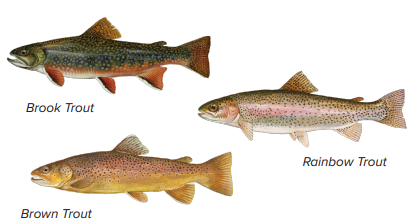
“After public alarm at the effects of deforestation, including downstream flooding, politicians required the timber companies to not only plant trees, but to put back the trout they had killed,” said Pait. “For most of those northerners, a trout is a trout. Apparently, they didn’t know what distinguishes a Brook trout from a Rainbow trout or a Brown, so they imported Rainbow and Brown trout and introduced them to the North Carolina mountain streams. Suddenly, the Brook trout faced competition for their very survival in their own native habitat.”
It has been more than 90 years since the logging ended. We feel the stream is ready.
For students of American history, it is a familiar story: The introduction of European settlers into North America, bringing more advanced tools and weapons, forced the indigenous populations from their native lands, moving them ever westward and virtually imprisoned on reservations.
The North Carolina Brook Trout Association exists to help restore and expand the Brook current trout population by working with other non-profit and government-funded wildlife agencies. Under the direction of Creasy and Pait as volunteer managers, 100 percent of the funds raised by NCBTA go to Brook trout rehabilitation and recovery projects, including hard-to-reach areas in the Great Smoky Mountains National Park.
“With native Brook trout now occupying just 18 percent of their historic range, the funds we raise help pay for on-the-ground conservation work needed to stop that decline and start reversing it,” said Creasy.
Pait shared an example of a project that NCBTA is helping with in the Great Smoky Mountains.
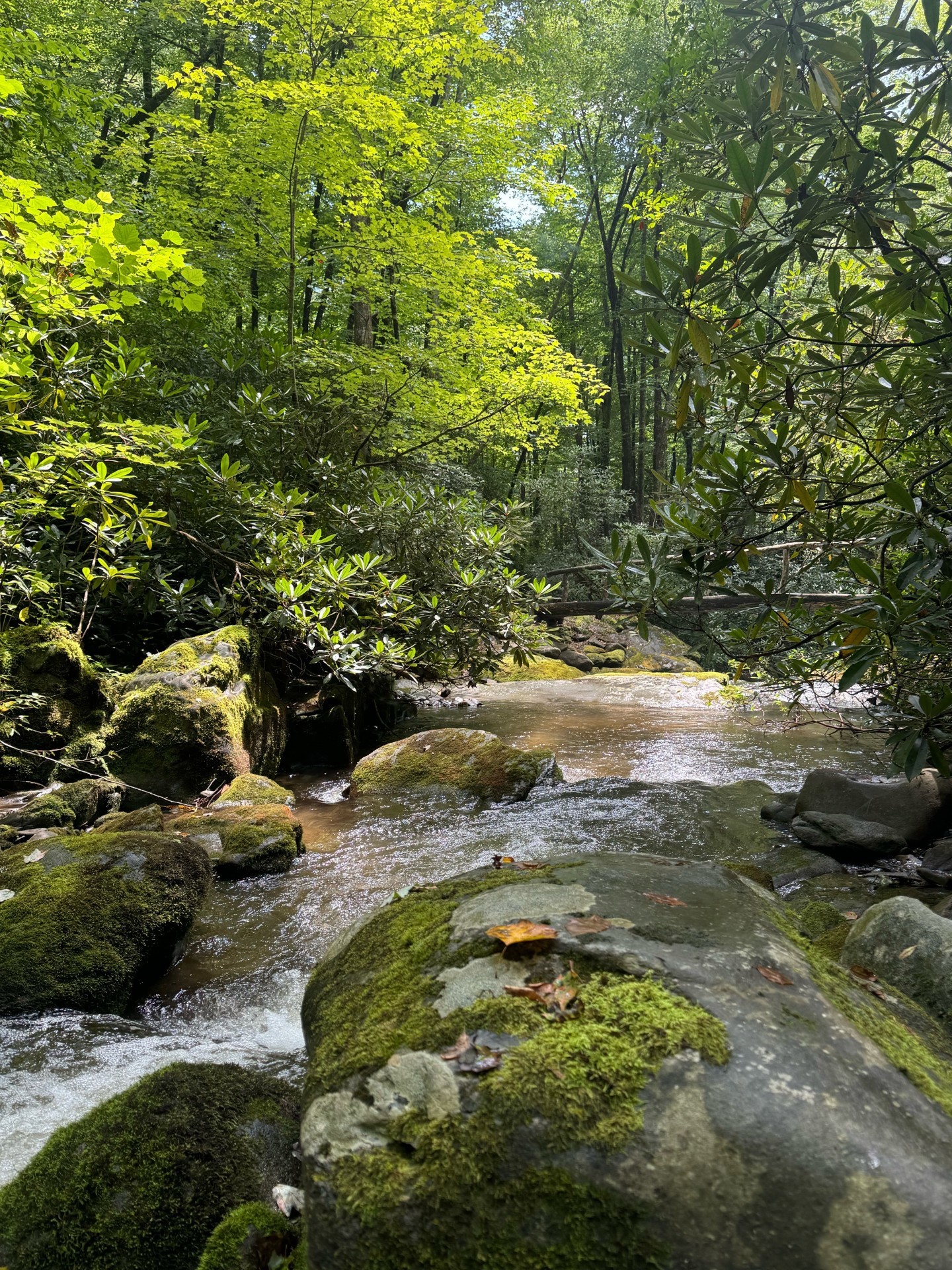
“The Moore Springs Branch is a beautiful, 3.6-mile mountain stream and one of those lost Brook trout natural habitats. About 75 percent of the habitat in the national park was lost and our project aims to restore approximately 2.4 miles of the stream, including what is known as the Dalton Branch. It has been more than 90 years since the logging ended and we feel the stream is ready.”
The project actually started in 2022, with four phases to be completed. The first phase, lasting from roughly 2022 to the current year, was to prepare and monitor the site, including pre-treatment surveys at three sites to establish existing Rainbow trout densities as well as to establish the Brook trout recovery targets.
“The second phase,” said Creasy, “is scheduled for this year and that is to remove the Rainbow trout, which is being done by the National Park Service. They use Antimycin A, a natural piscicide from soil bacteria. It will remove the non-native Rainbow trout from 1.9 miles of stream. The material breaks down harmlessly within days. There is also about a half-mile of the Dalton Branch that is already fishless, so doesn’t require treatment.”
A waterfall acts as a natural barrier.
The third phase of the project, explained Creasy and Pait, is to introduce roughly 600 genetically pure Southern Appalachian Brook trout into the Moore Springs Branch, translocated from nearby Great Smoky Mountain National Park source populations.
“The fourth phase of the project is to monitor the streams, confirming that no Rainbow or Brown trout populations remain,” said Creasy. “During this phase, of course, we will also monitor our success with the Brook trout, to see if the populations of the native species meet or exceed our pre-treatment density targets.”
The Brook trout specialists explained that the project will work at the Moore Springs site because of a waterfall on the lower Moore Springs Branch, which acts as a permanent barrier to any downstream Rainbow trout. They can’t reinvade the upper Moore Springs sections.
Creasy said that Great Smoky Mountain National Park scientists co-authored the national field manual for this technique and have successfully restored Brook trout in 19 streams totaling 36.5 miles within the national park straddling both North Carolina and Tennessee.
“All the Brook trout used for restocking come from genetically verified, pure Southern Appalachian source stocks,” said Pait. “These are not hatchery fish. The entire project is backed by data and science.”
Creasy noted that the national park maintains a dedicated Brook trout restoration fund that has financed every phase of the species recovery work — but two concurrent, essential projects have drawn that fund to near zero.
“We want to carry the momentum and the previous success,” said Pait. “So we have started the NCBTA to allow fishing enthusiasts as well as conservationists to participate in helping finish the job.”
“Our passion for outdoorsmanship is rooted in time spent on the water and a responsibility we feel to leave these places better than we found them,” Creasy added. “Conservation is not optional. It is essential to preserving Brook trout and the mountain streams they depend on.”