

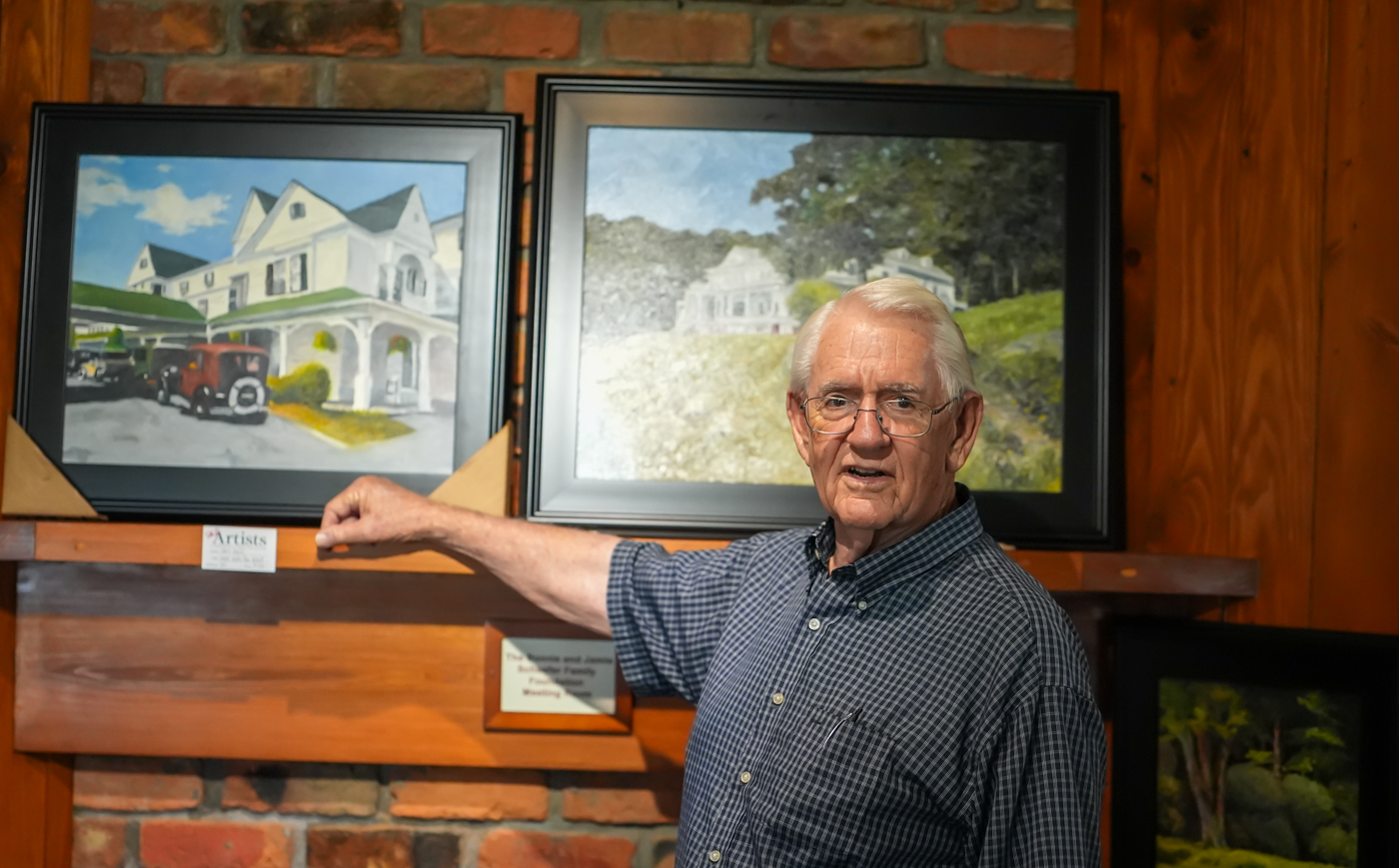
By David Rogers. BLOWING ROCK, N.C. — For local artist Earl Davis, there is one unequivocal truth about painting.
“You are always learning when it comes to painting,” said Davis, the longtime “interim” pastor at several churches in the region who is one of the Artists in Residence at Edgewood Cottage, from June 29 to July 5.
“Since the last time we spoke a couple of years ago,” he added, “I’ve learned more about depth and perspective. And then, composition is always a good challenge for any artist. If you don’t get a good composition it doesn’t matter what else you do.”
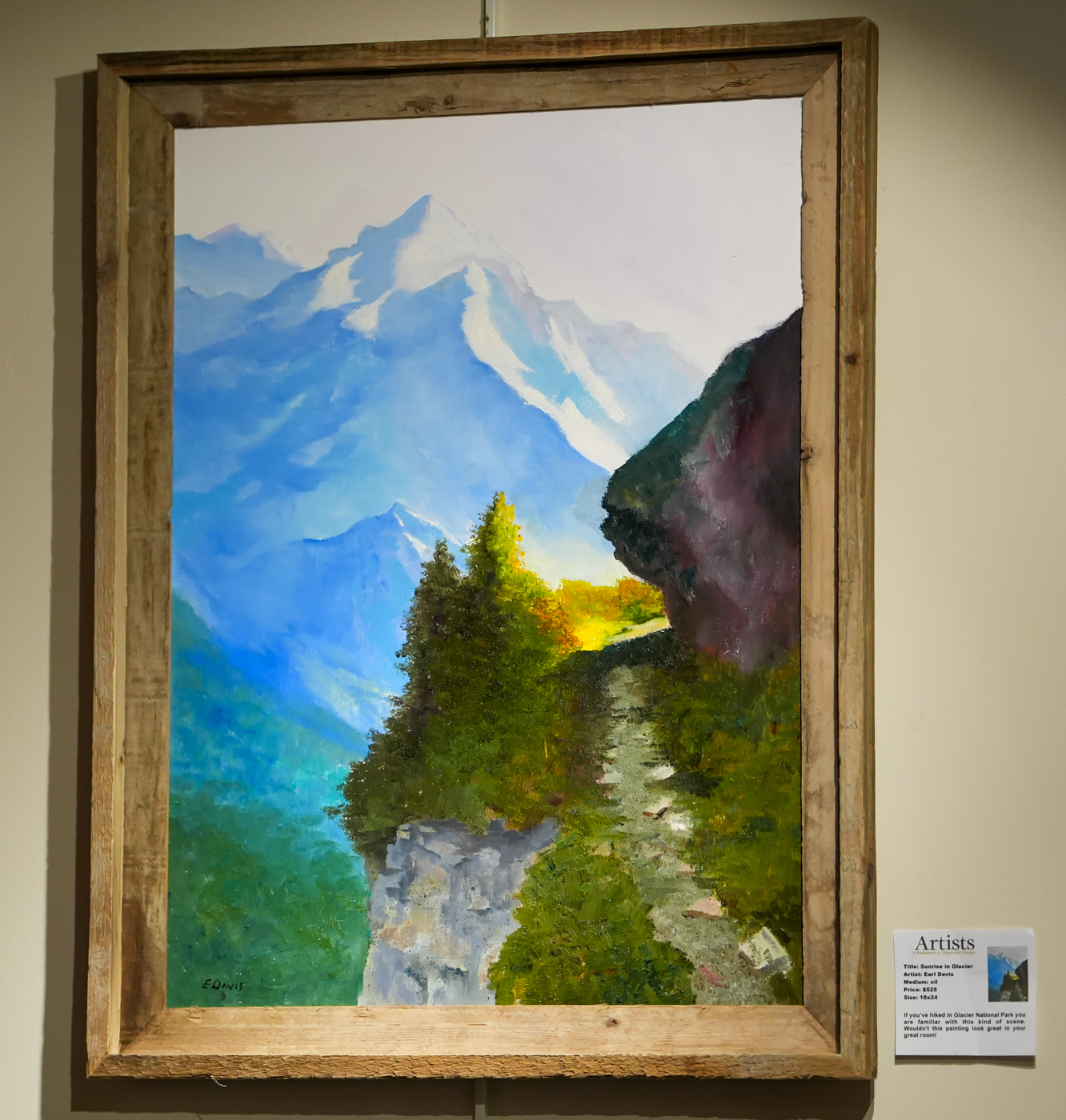
Davis shared that he is still “playing” with the effects of sunlight on his landscape themes.

“What I have learned about light is there are some amazing shades of green and other colors, all brought out by light,” he said. “You know, you ride down a road and I might say to my wife, who is not an artist, ‘Oh man, look at those shades of green over there.’ And she’ll say, ‘What?’ Any good artist sees things that many, if not most folks don’t see, even looking at the same thing.”
“I think I am going to develop a sort of counseling ministry out there. An old man with an easel and fiddling with paint, it draws people like flies to honey!”
The Edgewood Cottage “Artists in Residence” series runs through the summer and early fall, hosted and produced by the Blowing Rock Historical Society. Each week, a different pairing of accomplished regional artists exhibit their work in what was once famed artist Elliot Daingerfield’s home studio. They talk with visitors, sharing their artistic knowledge, telling stories about their exploits and often sell some of their creations. This is Davis’ fourth summer to be one of the selected artists.
“I’ve been painting around Bass Lake a good bit, including last summer and this one. It’s what they call plein air, which in French just means out in the open. I started in oils quite a while ago and haven’t seen a good reason to change,” he said with a chuckle.
For Davis, currently the interim pastor at College Avenue Baptist Church in Lenoir (for the fourth time), painting “out in the open” has become a part of his ministry.
“A couple of years ago, I was between interim pastor assignments and I got to thinking, ‘Well, I enjoy painting and I have painted a little bit of Bass Lake. I think I am going to develop a sort of counseling ministry out there,'” recalled Davis. “I just go out and paint and talk to people as they come by. An easel and me tinkering with paint, it draws people like honey draws flies!”
Asked how his ministry has impacted his art and painting, Davis admitted that he gets asked that question a lot.
“I don’t think it has, much,” he said, “because I don’t paint religious themes. What the practice does, though, is provide me with an opportunity to have meaningful spiritual conversation with someone who needs to talk with a pastor. I guess people figure that an old guy out by lake with paint on his clothes is someone safe to talk to — and it won’t get back to your pastor if you don’t want it to!”
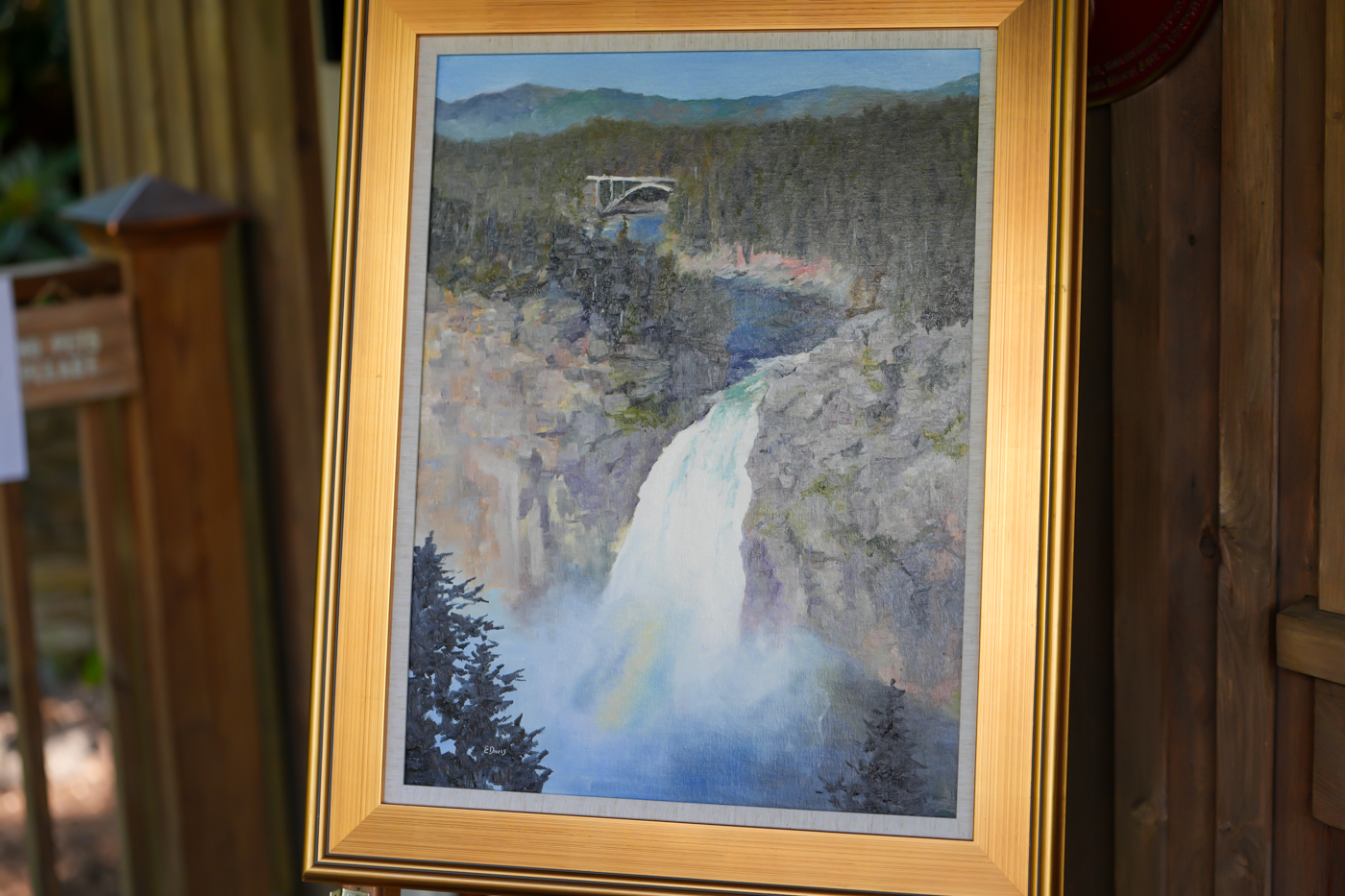
Davis explained that when people ask him how long he has been painting, he always says, “Not all my life. I am a pastor first and I paint in my spare time. That PhD on my card can lead into some meaningful conversations when people find out that the degree is in Theology.”
In previous conversations with Davis, he shared that he spent a lot of time painting on Blue Ridge Parkway overlooks. He has also spent a good amount of time visiting various national parks.
In painting, we call it simplicity.
When asked how his use of color has changed in recent years, Davis was quick to respond.
“That’s a good question. I think I am using different shades of darker colors better,” he said. “I use a lot of darkness, but never black. I use some marine blue and red oxide transparent to get really nice shadows. They draw you back into the focus of the painting. If you achieve a good composition, you have to decide, ‘What’s the focus?’ That’s where you want to put your biggest color contrast, to draw the eye to it. Things point to the focus. Maybe it’s a road, maybe it’s water.”
There’s a parallel in fine art landscape photography, using what some experts call “the three C’s”: Clarity, Contrast, and Color.
“In painting, we call it simplicity. Make it simple,” said Davis. “If your composition doesn’t look good with just a pencil sketch, then don’t do it.”
Davis said he no longer does many pencil sketches.
“A lot of artists do it,” he said. “But I’ve reached the point where I go out and I will see a good composition and so I will then lay in the large masses. The last 10 percent of your painting is where you have the fun. That’s the big payoff. You are doing the little things you want to do to make it pop.”
Richard Schmid, Davis said, was one of the biggest influences on his artistic development.
“He lived in Vermont,” said Davis, of Schmid. “I also like a young man who studied with Schmid and also lives in Vermont, Mark Boedges. He is a nationally renowned contemporary plein air landscape painter, known for his painterly realism. He specializes in capturing the atmospheric light, earthy textures and dynamic compositions of the New England countryside. For the month of May, I worked with another prominent plein air landscape artist, Albert Handell. Bank in the 70s and 80s, every book on pastel painting would have a chapter on Handell. Today, he does mainly oils, living in Santa Fe, New Mexico.”
Davis said that the mentorship has really helped.
“I see things today that maybe six months or a year ago, I wouldn’t have done,” he said.
He has been painting now for 10-12 years. True to form, Davis is always learning.