By David Rogers. LINVILLE, N.C. — More than a dozen members of The Rotary Club of Blowing Rock got a firsthand look at Grandfather Mountain’s education programs on May 4, discovering a world experienced by more than 12,000 students and their advisors in the past year.
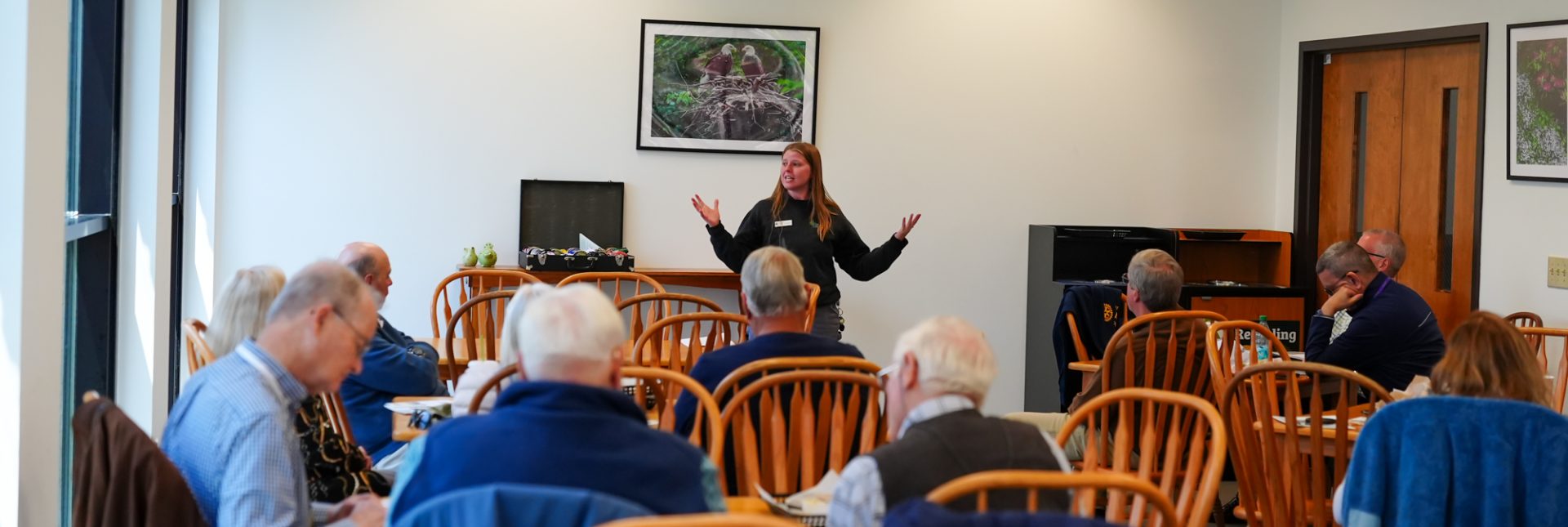
Grandfather Mountain education specialist Elizabeth Warfield speaks to The Rotary Club of Blowing Rock on May 4. Photographic image by David Rogers for Blowing Rock News
Education specialist Elizabeth Warfield led the presentation and tour for the Rotarians, outlining the learning opportunities about nature and conservation offered by the Grandfather Mountain Stewardship Foundation, which includes a curated “Classroom in the Clouds” field trips, expert-led adult field courses and specialized teacher workshops. Warfield explained the education programs at Grandfather Mountain focus on nature study, environmental education, and wildlife conservation through hands-on, on-mountain experiences tailored especially for schools, as well as for adults and professional development.
Near the feature-rich Wilson Center for Nature Discovery, is of the newer education attractions on the Grandfather Mountain property: “Yoshi’s Clubhouse,” a 1,300-square foot, ADA-accessible, indoor education center with 10 interactive exhibits. The Rotarians toured the clubhouse, learning about the study of ecosystems, pollinators, and weather. Highlights include a seek-and-find forest mural, live animal glass habitats, a full-scale tree model, a drawing nook, a microscope station and connections to outdoor pollinator/sensory gardens.
Warfield explained that understanding the science behind ecosystems, nature and wildlife is an important emphasis in all of Grandfather Mountain’s education offerings.
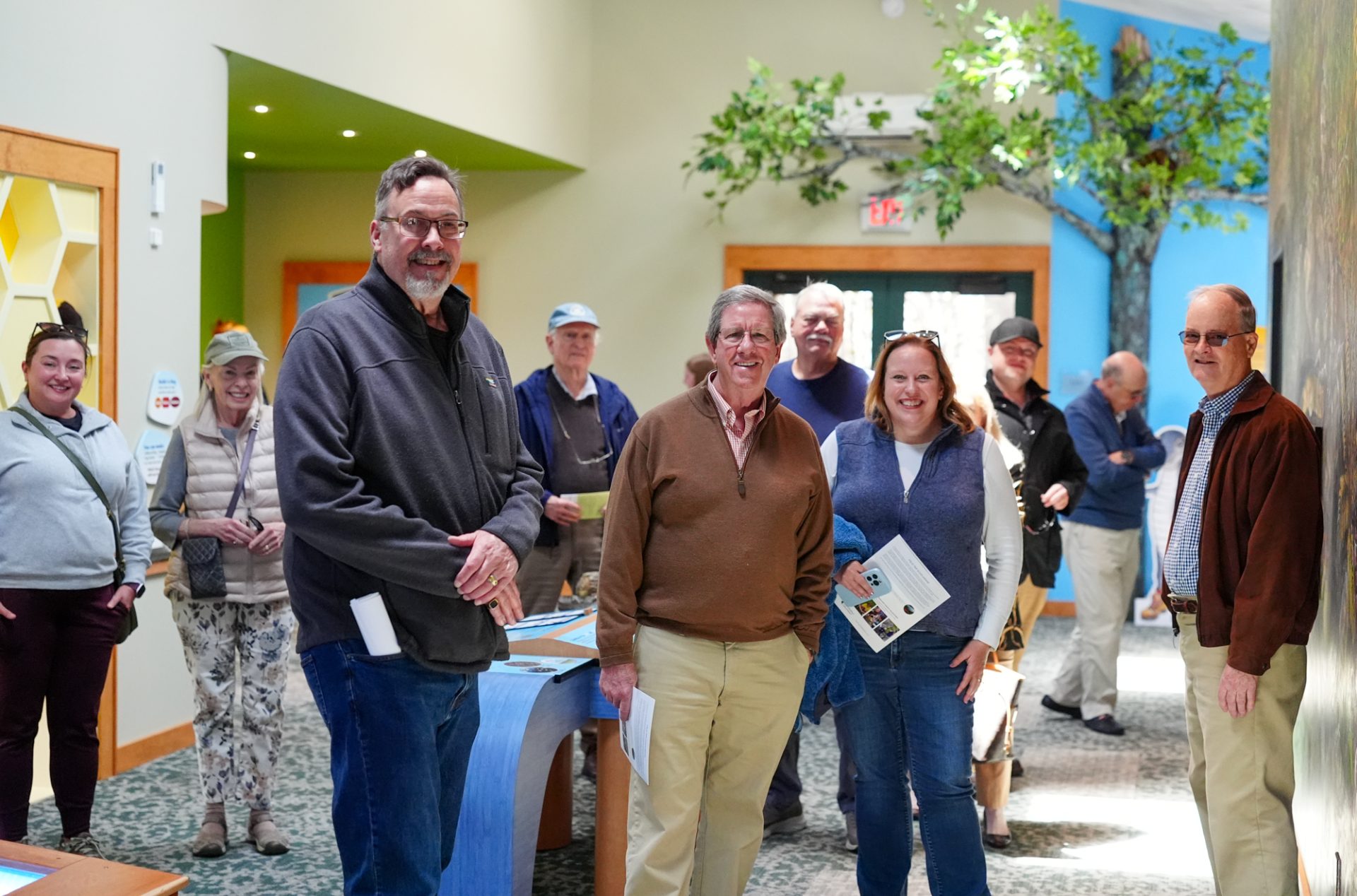
Members of The Rotary Club of Blowing Rock pause during their tour of Yoshi’s Clubhouse for a photo op. Photographic image by David Rogers for Blowing Rock News
A Summary of Key Education Opportunities & Usage Examples at Grandfather Mountain
Classroom in the Clouds (K-12): Curriculum-based field trips focusing on science standards, such as guided hikes studying habitats or “nature discovery” sessions at the Wilson Center.
Wild Watch Program: A specific partnership with local schools that provides in-school visits and field trips for 1st, 3rd, and 5th-grade students, focusing on experiential learning.
Adult Field Courses & Workshops: In-depth, in-person courses from May to October on topics like birding, fungi, photography, and botany, often featuring expert naturalists.
Educator Workshops: Training for professionals, such as “Project Learning Tree” and “Methods of Teaching Environmental Education” (MOTEE), which provide CEU credits.
Daily Programs & Group Tours: Guided interpretive hikes, animal habitat tours (bears, otters, eagles), and “Nature at the Bridge” sessions designed for adults and groups.
Mobile Outreach Programs: Naturalists bring educational presentations and materials directly to schools or organizations.
The Rotary Club of Blowing Rock meets each Monday from 11:45 a.m. to 1 p.m., at The Meadowbrook Inn in Blowing Rock. Periodically, the group meet at special locations, such as the May 4 excursion to Grandfather Mountain. Another recent meeting included serving at F.A.R.M. Cafe.
The key tenets of Rotary clubs throughout the world are providing members with opportunities for fellowship, networking and service, with a central motto of “Service Above Self.”
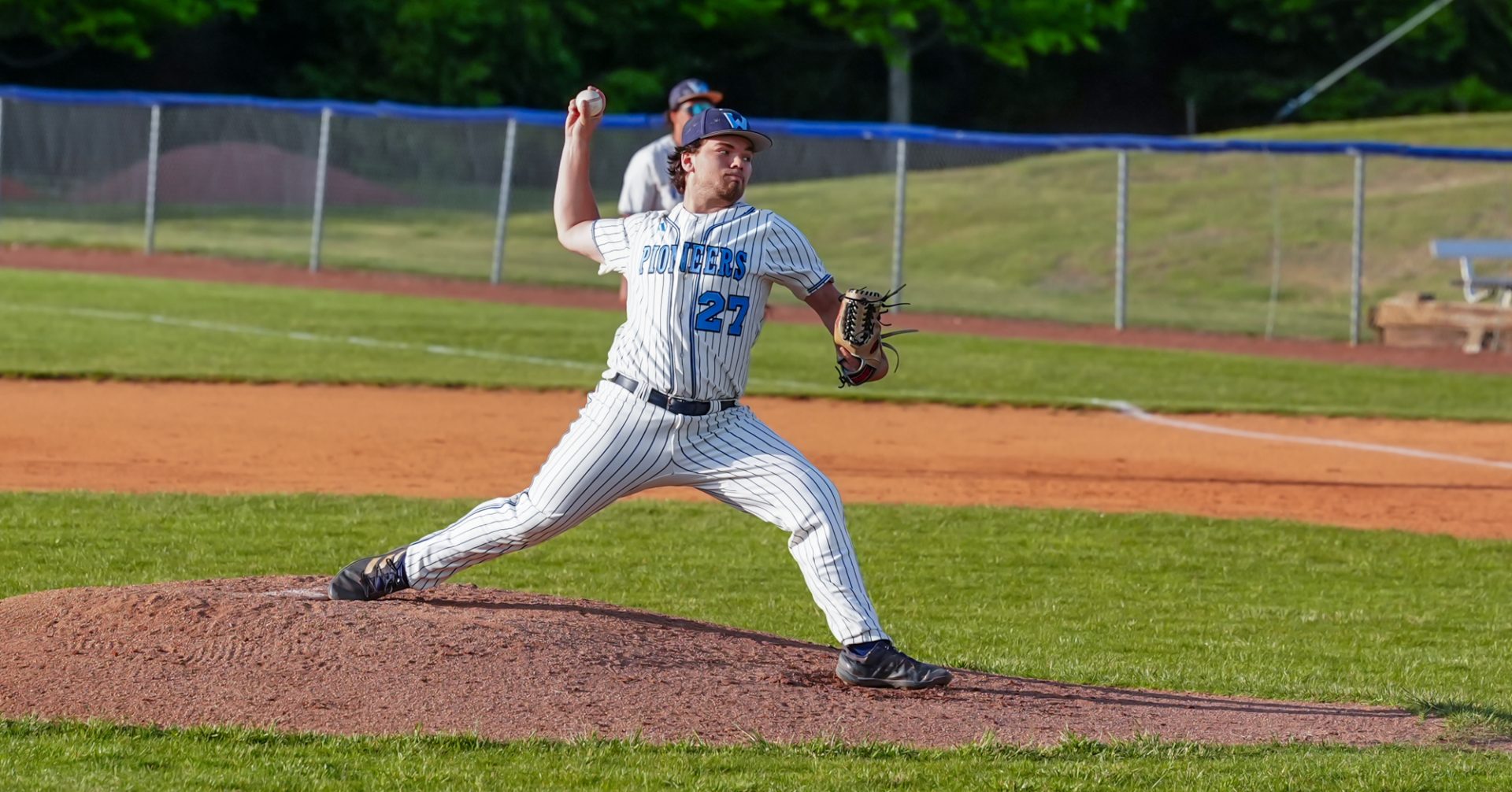
By David Rogers. BOONE, N.C. — Unless pitching falters, it’s hard not to lose a baseball game with a .538 batting average, which Watauga posted on May 5 in the first round of the 6A North Carolina state playoffs vs. Dudley. With senior starting hurler Brett Vannoy giving up only two runs on two hits while striking four Panthers and walking only one in three and a half innings — and junior reliever Bryce Scheffler finishing the shortened “mercy rule” contest with three strikeouts — Watauga romped to a convincing, 12-2 win in the first round of the North Carolina 6A state playoffs.
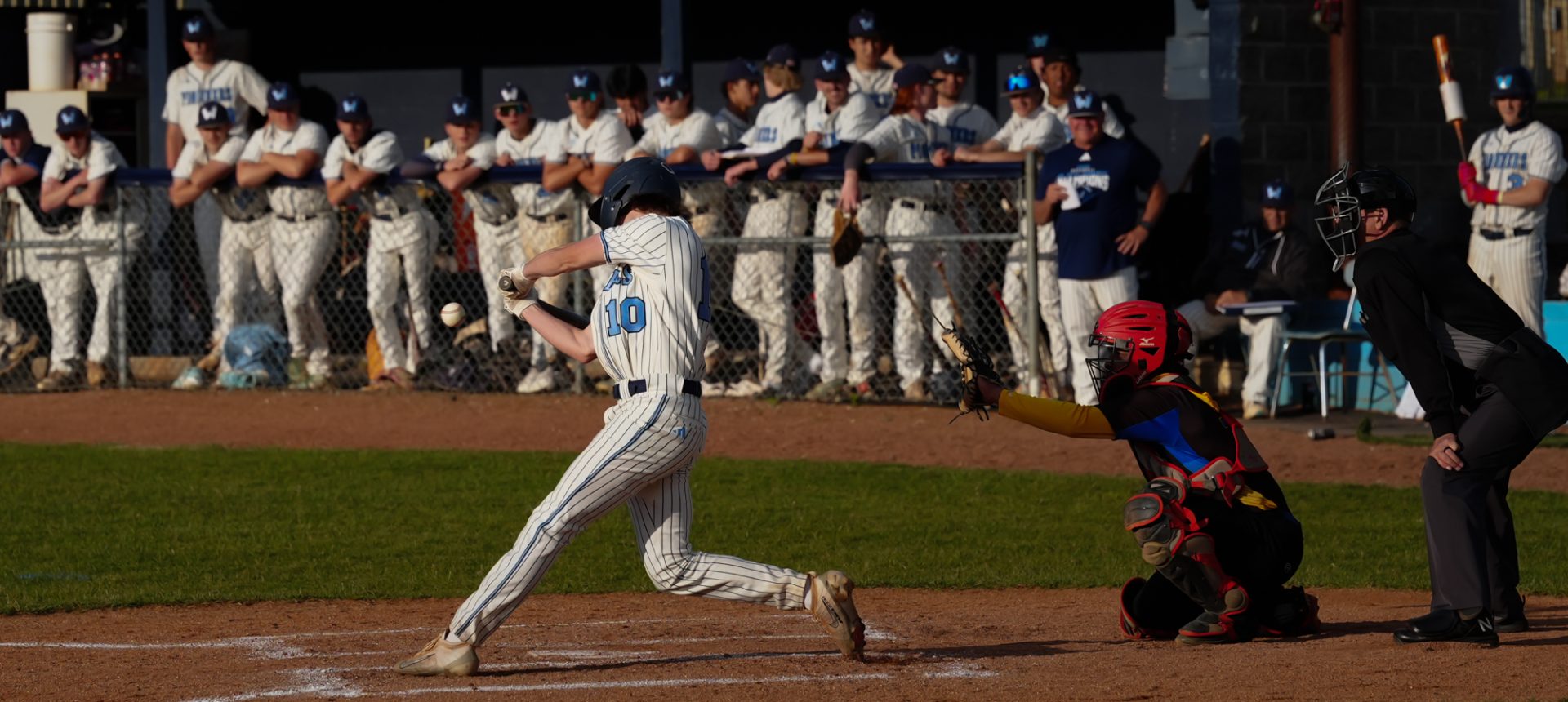
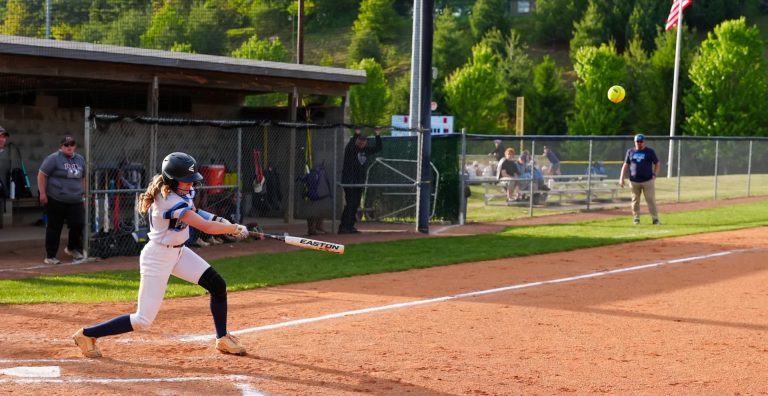
Cade Keller (10) connects on the first of his two double against Dudley in the North Carolina 6A state playoffs. The Pioneers won, 12-2, to advance to Rd. 2, where they will face Southeast Guilford in Greensboro on May 8. Photographic image by David Rogers for Blowing Rock News
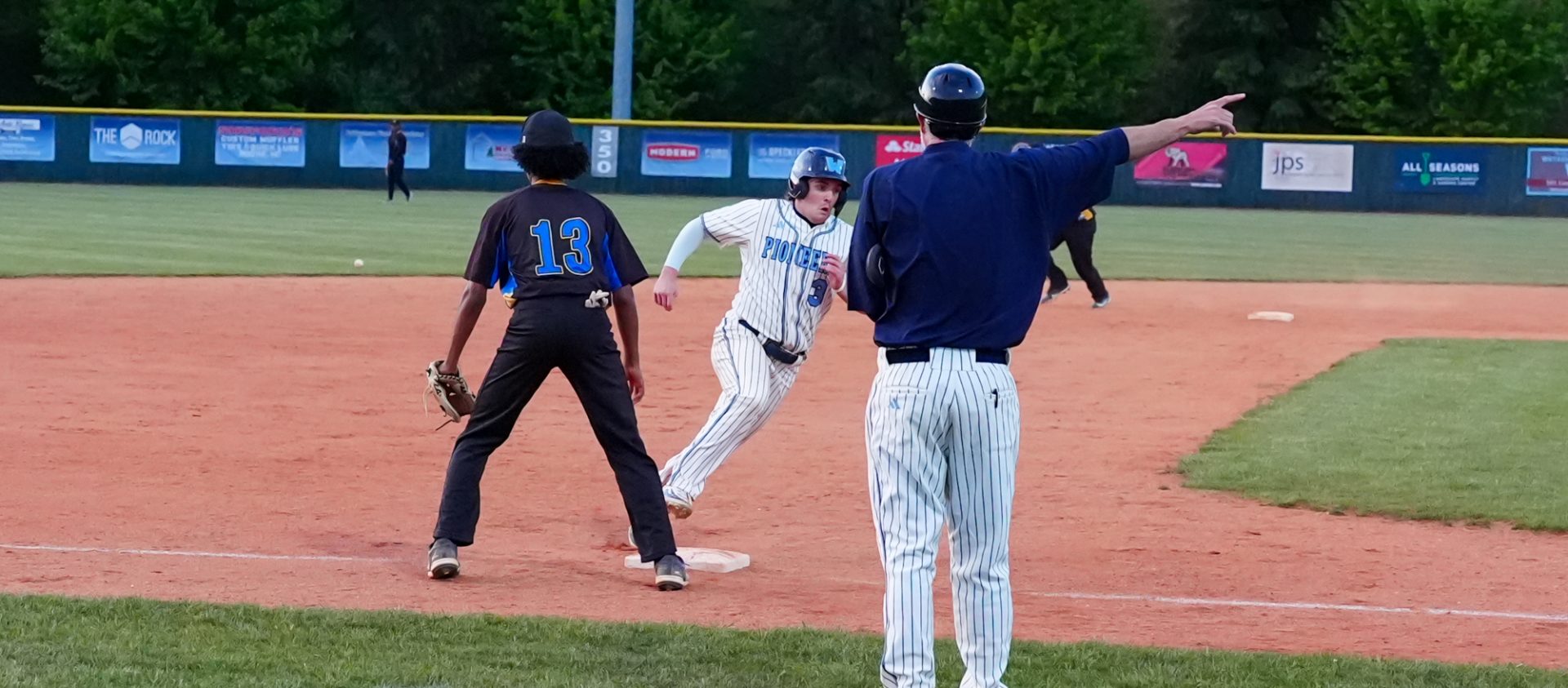
With Vannoy shutting out the Panthers’ side in an opening frame that featured a double play by the Pioneer infield, Watauga didn’t waste any time, scoring four runs in the bottom of the first inning. Following a leadoff double by Watauga shortstop Evan Burroughs and a full count walk to rightfielder J.J. Everett, senior centerfielder Jake Blanton laced a single to left, loading the bases. Designated hitter Daniel Jones showed why he is in the lineup when not serving as Watauga’s ace pitcher, sending a ball to the right field fence for a double and scoring Burroughs, Everett and Blanton, racing around the bases.
That early offensive output was enough to chase Dudley’s starting pitcher, freshman Xavier Baker. In came senior Brayden Jeffries, who got two quick strikeouts before Pioneer second baseman Cade Keller rapped yet another double to the right field fence, scoring Jones. Jeffries got Watauga leftfielder Everett Gryder to ground out to get out of the inning, but the Pioneers had established momentum — and it would lead to a shortened game with the lead 12-2 after the Panthers’ at bat in the fifth inning.
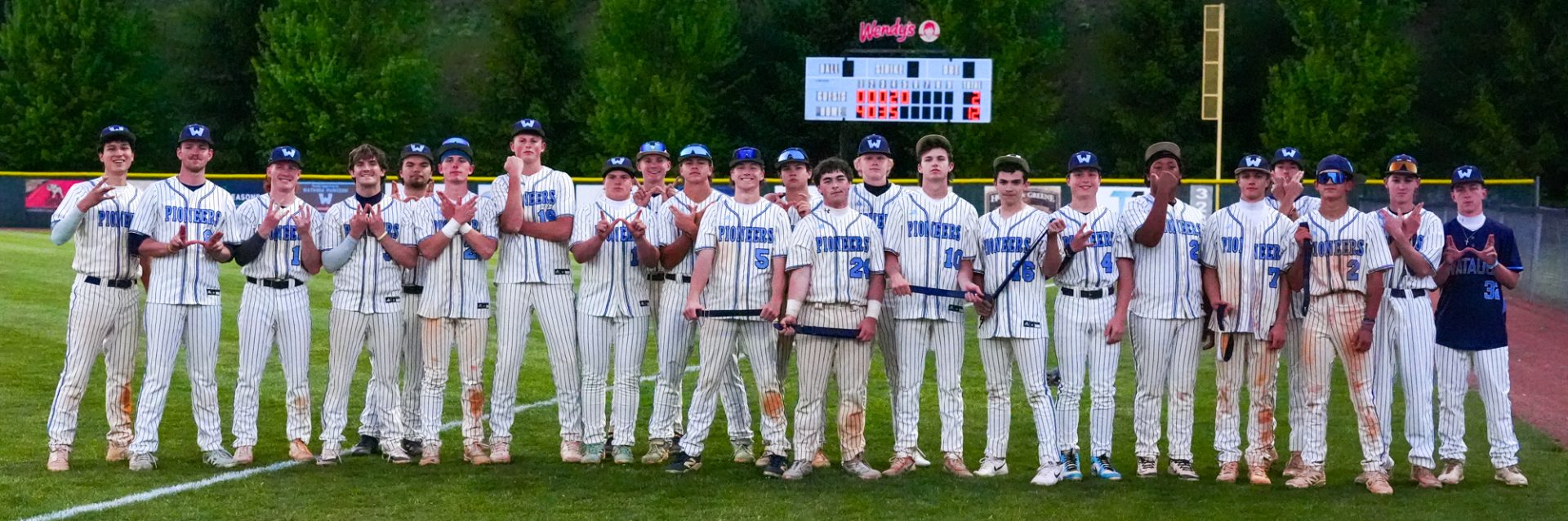
The Watauga Pioneers baseball varsity had a lot to smile about after a 12-2 win over Dudley in Round 1 of the state playoffs. Photographic image by David Rogers for Blowing Rock News
For the contest, Watauga touched up Jeffries for seven runs on 13 hits. Baker was credited with allowing those first four runs and another Dudley reliever, Cam Wilkerson McAdoo yielded the final Pioneer tally in Watauga’s 5-run fifth inning.
The No. 9 seeded Pioneers will travel to Greensboro on Friday, May 8, to face the No. 8 seed, Southeast Guilford, which was awarded a bye into the second round. The playoffs’ seeding puts Watauga and the NCHSAA 6A West bracket’s No. 1 seed, conference rival Alexander Central in the upper half of the West bracket. If both win in Round 2, they will face each other for a fourth time this season, in Round 3.
Key Watauga Offensive Performers in Round 1
DH Daniel Jones (Jr.): 3-3, 3 runs scored, 4 RBIs, 2B
SS Evan Burroughs (Sr.): 3-3, 2 runs scored, 1 RBI, 2 doubles, stolen base
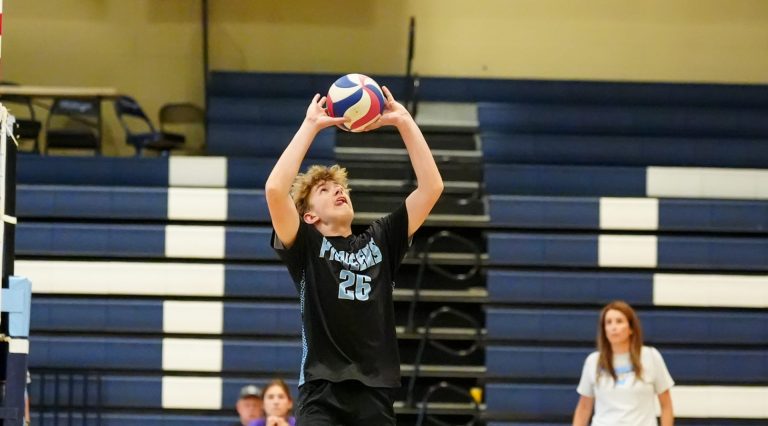
By David Rogers. BOONE, N.C. — After falling behind 1-6 in the first set, Watauga men’s volleyball team rallied behind a strong early service performance by Devon Shook to go on a 10-4 run and take an 11-10 lead they never gave up. The Pioneers used that momentum to take a 25-20, 25-16, 25-18 sweep over St. Stephens on May 5 in Lentz Eggers Gym.
The visiting Indians of St. Stephens didn’t go away quietly, coached by a former middle blocker star of the Pioneer varsity women’s team and current Lenoir-Rhyne graduate student Emma Clark.
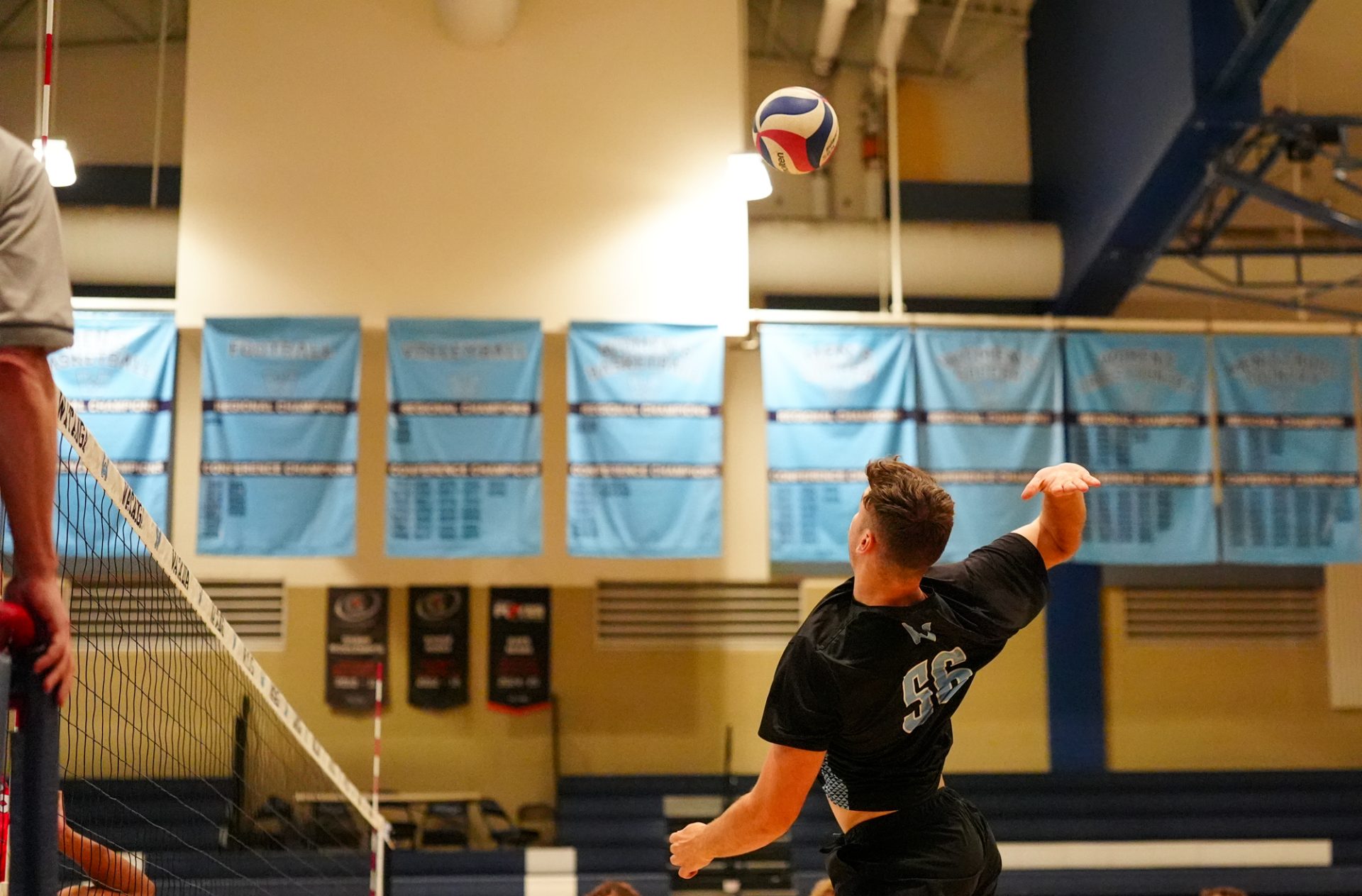
Brady Lindenmuth (56) goes up for resounding spike vs. St. Stephens in Rd. 1 of the playoffs on May 5. Photographic image by David Rogers for Blowing Rock News
“Our guys really played well together,” said Watauga head coach Robyn Lindenmuth. “They worked with each other, complementing one another’s skills and using each other.”
Coach Lindenmuth noted exceptional play by setter Noah Brown, middle blocker Colby Whiteside and other offensive stalwarts Jonathan Bouboulis and Brady Lindenmuth.
For Round 2 of the North Carolina men’s volleyball playoffs, Watauga travels to Hendersonville on May 8 (6:30 p.m. first serve) to face North Henderson.
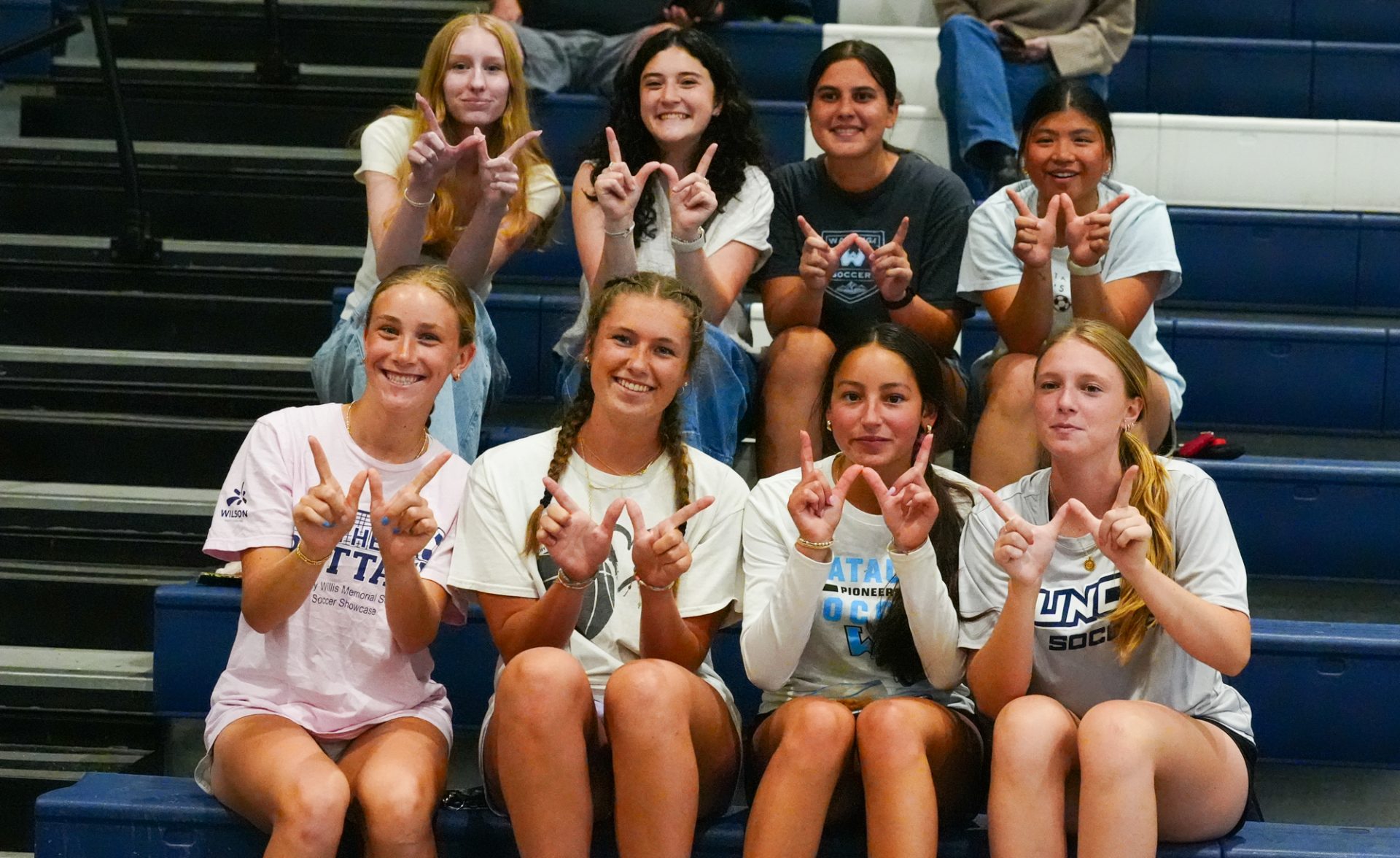
It was a small but enthusiastic student section in Lentz Eggers Gym for Round 1 of the state playoffs on May 5, supporting Watauga’s 3-set sweep over. St. Stephens. Photographic image by David Rogers for Blowing Rock News
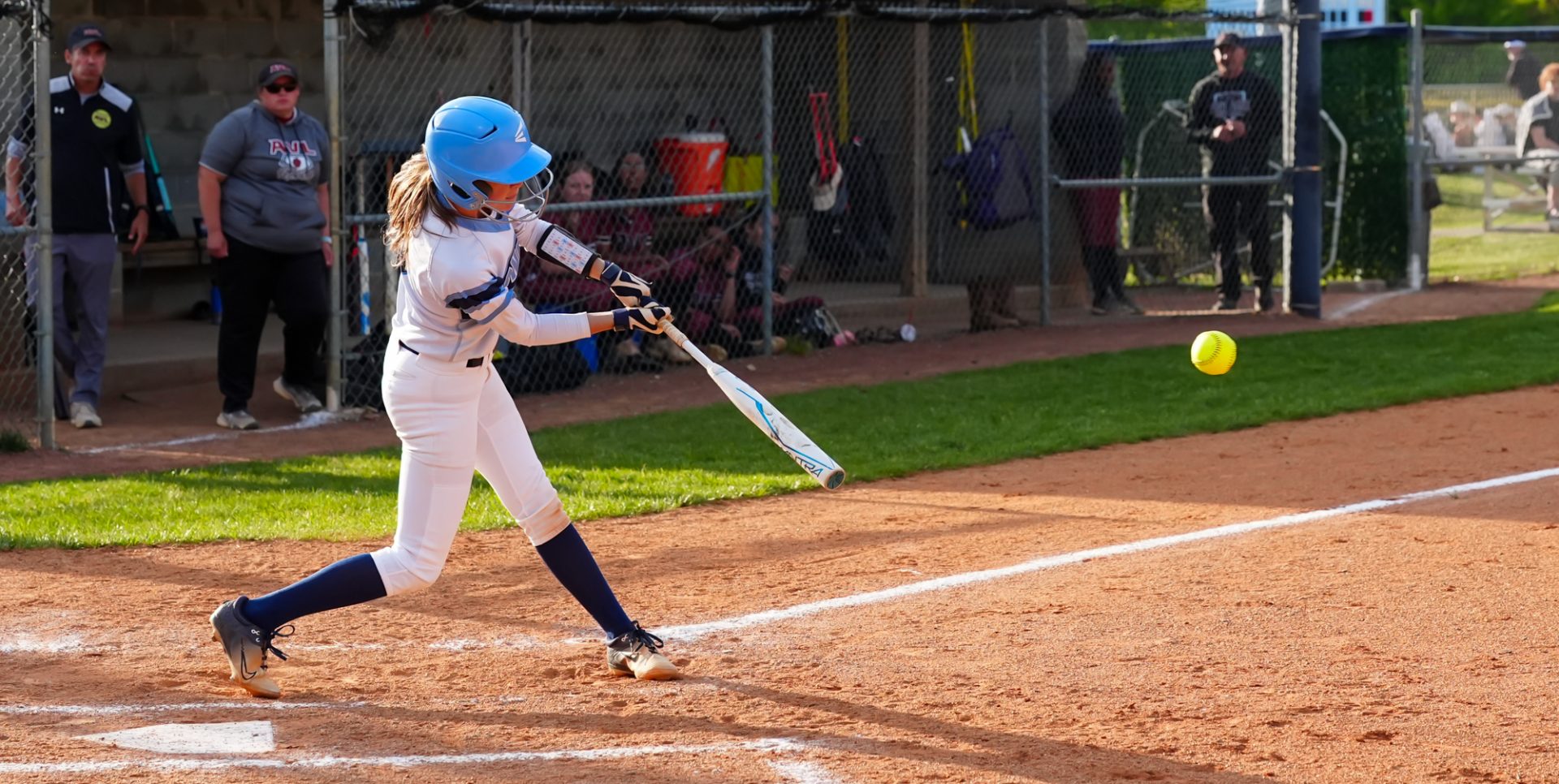
By David Rogers. BOONE, N.C. — Host Watauga teed off for five doubles and a home run among their 19 hits that scored 19 runs on May 5 vs. Asheville in Round 1 of the 6A state playoffs.
With the win, the No. 11-seeded Pioneers will travel to Concord on May 8 for a Round 2 tilt with No.6-seeded Central Cabarrus, which earned a first round bye in the playoffs.
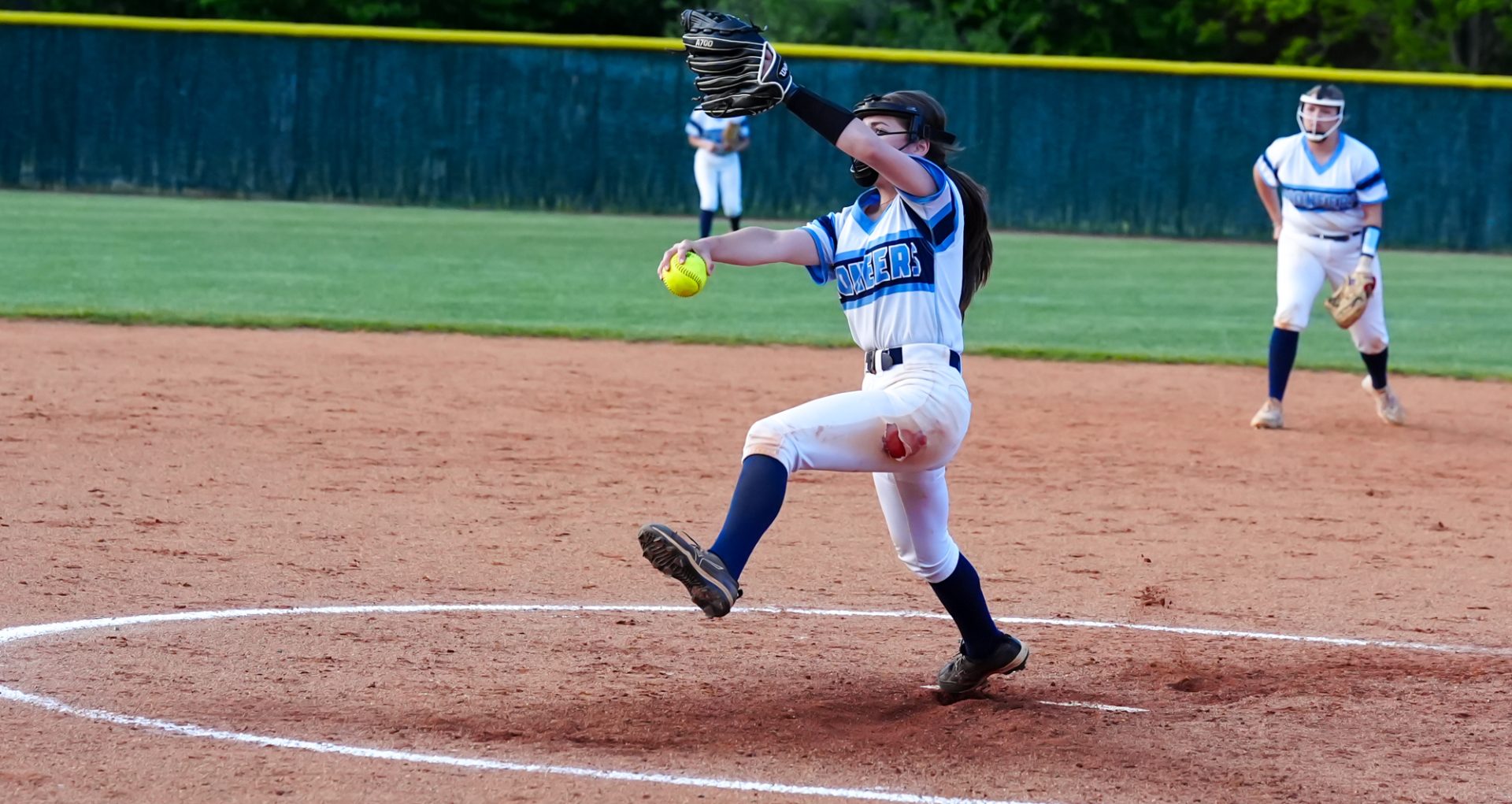
A pair of freshman Pioneers, Addison Moody and Lula Elrod, allowed only 2 hits and one run on May 5, in Watauga’s 19-1 6A state playoffs win. Photographic image by David Rogers for Blowing Rock News
The Pioneers played error-free ball behind two freshman pitchers. Addison Moody (4 innings, 1 hit, 0 runs and 6 strikeouts) and Eula Elrod (1 inning, 1 hit, 1 run, 2 strikeouts) combined for a dominating performance in the circle for Watauga.
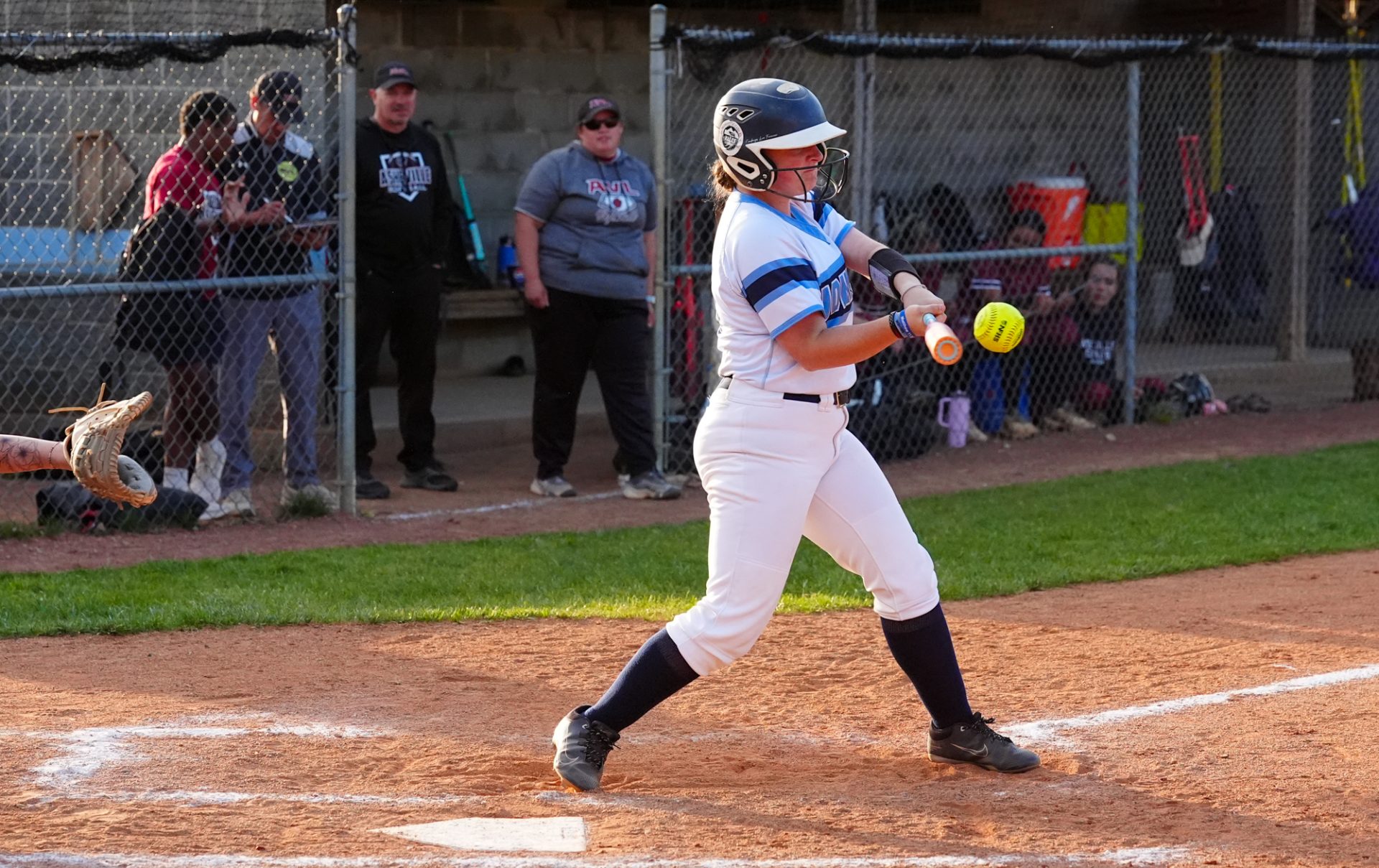
Offensively, it is hard to distinguish a real difference maker with a roster pounding out 19 runs on 19 hits. Charlotte Moretz, still a junior, stands out for her early home run. Fellow junior Presli Wood did plenty of damage, too, going 3-for-4, scoring 3 runs along with 3 RBIs while adding a double to her resume. As a team, the Pioneers suffered zero strikeouts.
Overall key offensive performers for Watauga:
Charlotte Moretz (Jr.): 1-1, 2 runs scored, 3 RBIs, HR, SF, 1 walk, 1 stolen base
Presli Wood (Jr.): 3-4, 3 runs scored, 3 RBIs, 2B
Sierra Costner (Fr.): 2-3, 3 runs scored, 1 RBI, 2B
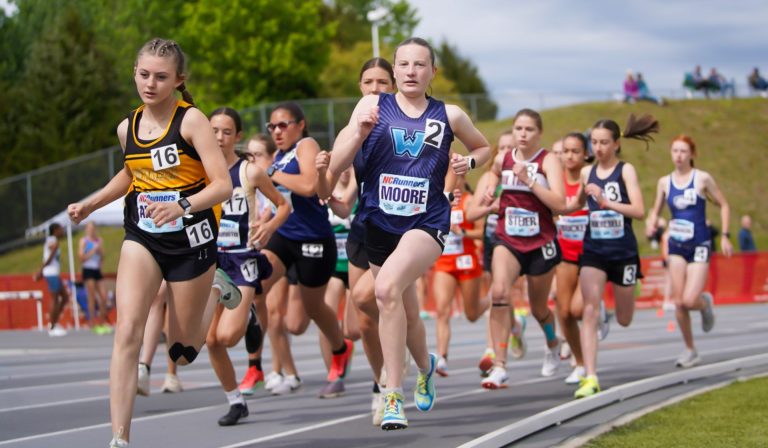
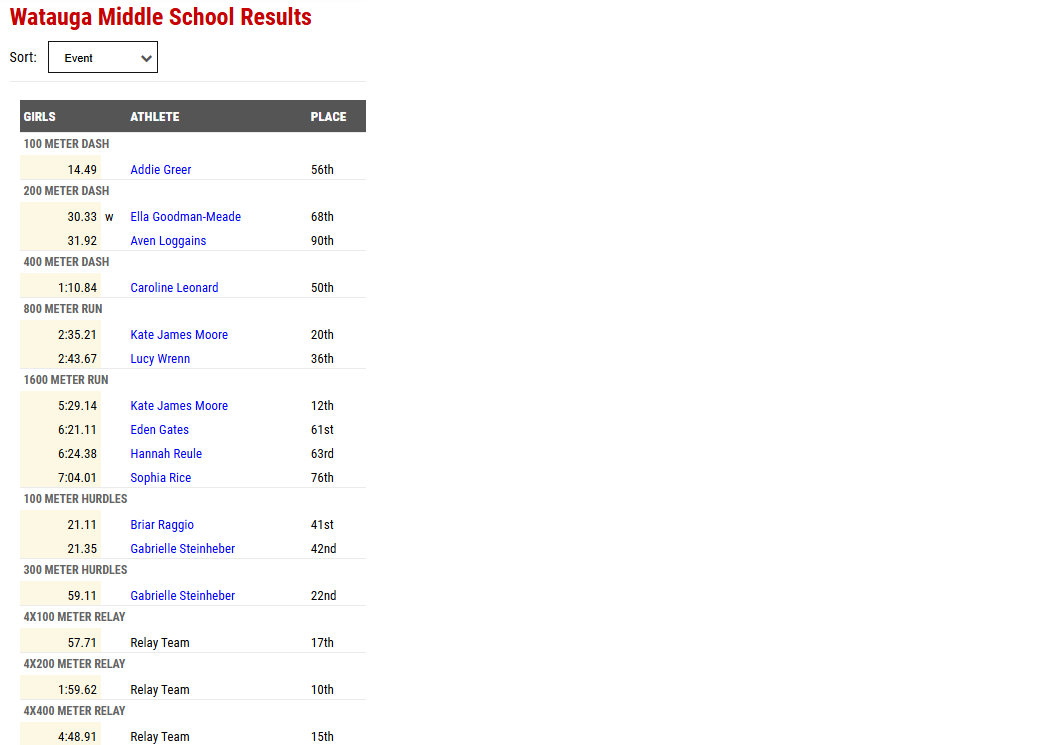
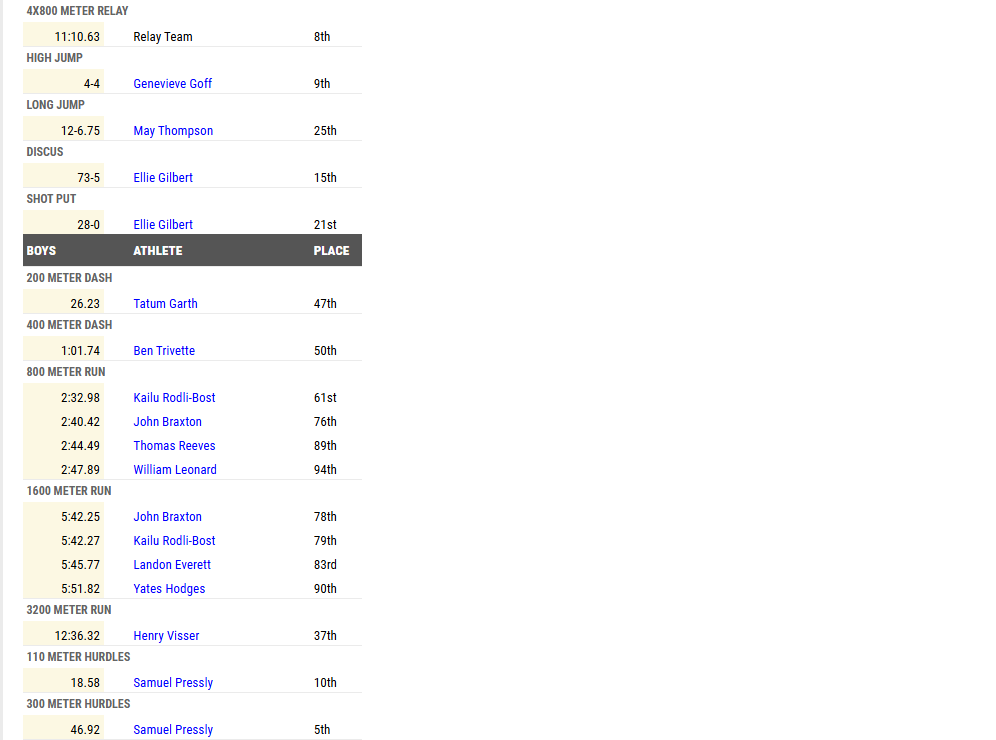
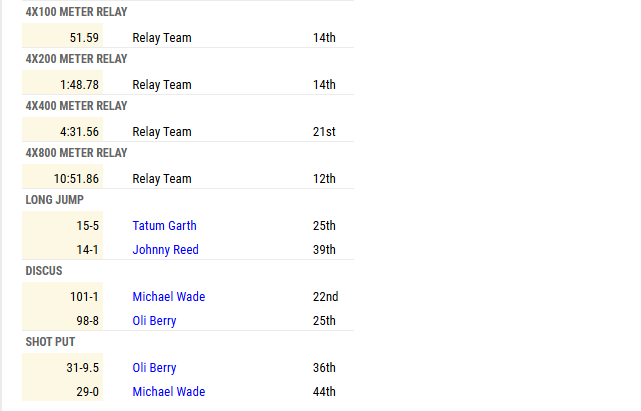
By David Rogers. CONCORD, N.C. — Kudos to the organizers of the NCRunners Middle School All-State Track and Field Championships on May 2, hosted by Jay M. Robinson High School. One hundred and forty-one (141) North Carolina middle schools were represented, including 25 Watauga District 6th, 7th and 8th graders. Watauga didn’t win any state titles this year, but when you consider that most of the events had upwards of 100 athletes competing — in each event — just qualifying to be there was an accomplishment unto itself.
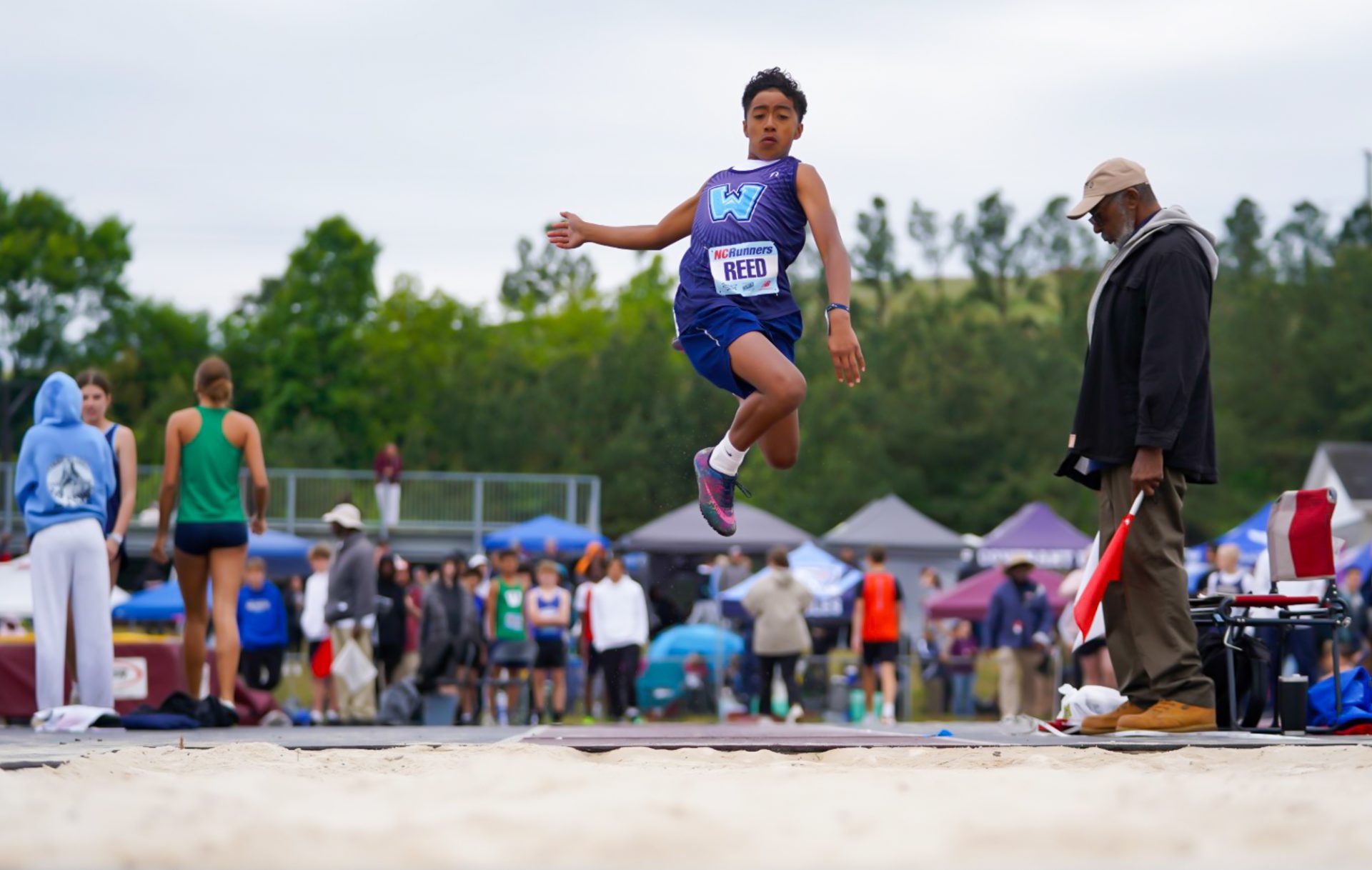
FLYING HIGH: Watauga’s Johnny Reed earned a No. 19 finish competing against 41 other middle school athletes in the NCRunners middle school state meet on May 2. Photographic image by Jared Everett for Blowing Rock News
Here is a summary of the Watauga performances. The meet did not distinguish between the grade levels, so 6th graders were competing against 7th and 8th graders.
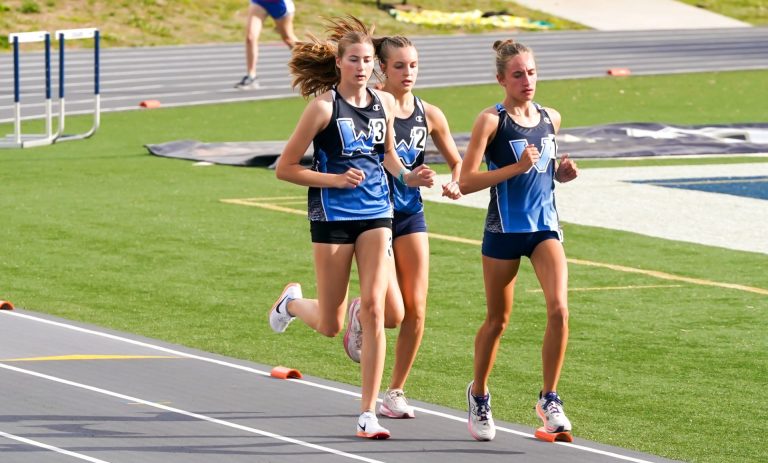
By David Rogers. TAYLORSVILLE, N.C. — With the NCHSAA 6A Regionals just two Saturdays away, May 9 at Asheville’s A.C. Reynolds High School, the Watauga men’s and women’s track and field teams had quite a “tune-up,” both claiming Northwestern Conference team championships on April 29 at Alexander Central High School — in dominating fashion.
WOMEN’S DIVISION
TEAM STANDINGS
Watauga (278)
Alexander Central (174,5)
South Caldwell (68)
St. Stephens (65)
Freedom (63.5)
McDowell (35)
We have to lead this accounting of the Watauga women’s team performances with a nod to sophomore Cali Townsend and freshman Josie Mayo.
Townsend competed in the 1600 Meters, the 3200 Meters, winning both long distance races. Josie Mayo? All she did was run on the winning 4×800 relay team, come in No. 2 in the 3200 Meters and No. 2 in the 1600 Meters.
“We call Josie’s 3-race performance ‘The Trio of Death’ because of how demanding it is to compete in those three distances in a single track event. The only ones to do it have been Josie (‘our FRESHMAN!’) and Cali,” said Watauga running coach J. Scott Townsend.
The Watauga women won each of the four relays, the 4×200, the 4×100, the 4×800 and the 4×400. In the individual events, the greatest curiosities were when the Pioneers didn’t have all three of their entries in the top five, if not a 1-2-3 sweep. The 4×800 Relay started this off, with Watauga finishing No. 1 (10:46.13), roughly 28 seconds ahead of second place St. Stephens (11:14.38).
Watauga had only two entries in the Women’s 100m Hurdles, going 1-2 with Tessa Buchanan (No. 1, 15.47) and Grace Scantlin (No. 2, 17.70). The Pioneers didn’t make the podium in the Women’s 100 Meters, but all three entries finished in the Top 10, including Charlotte Rosenbalm (No. 5, 13.45), Sophia Kop (No. 7, 13.64) and Gracyn Phelps (No. 9, 13.70). Malayah Adams of Alexander Central won the race with the only time under 13 seconds (12.39), but the rest of the field was tightly bunched with 10 runners between St. Stephens’ Ady McHenry (No. 2, 13.23) and McDowells Azmond Carson (No. 11, 13.97)
It was an exciting start to the afternoon’s competition. The Women’s 4×800 Relay could well have been the most exciting event of the day with No. 1 Watauga (1:49.29) barely edging out No. 2 St. Stephens (1:49.49). When you consider that each athlete on a team ran the equivalent of a half mile and the total distance run by each team was the metric equivalent of two miles, to have the finish come down to two-tenths of a second is a thrilling race. The Watauga foursome was Sydney Townsend, Lainey Johnston, Lily Kimbrough and Josie Mayo.
Cali Townsend continued her season-long excellence in the 1600 Meters event, finishing No. 1 (5:41.29), just over eight seconds ahead of the Pioneers’ Josie Mayo (No. 2, 5:50.23) and another three seconds ahead of teammate Lily Kimbrough (No 3, 5:53.73). The Pioneers’ 1-2-3 sweep was a statement as the only athletes under six minutes. No. 4 went to McDowell’s Elyse Foster (6:32.97).
In the 100m Hurdles, the first individual event, Tessa Buchanan and Grace Scantlin got Watauga off to a promising start with a 1-2 sweep of the event, Buchanan at No. 1 (15.47) and Scantlin at No. 2 (17.7).
The Pioneers may not have had any sprinters among the leaders in the individual 100 Meters sprint race, but apparently they have greater roster depth than the rest of the conference because they took the 4×100 Meters Relay (51.41), again by an eyelash over the runner up team, Alexander Central (51.63) for an exciting finish. Watauga’s quartet was comprised of Gracyn Phelps, Tessa Buchanan, Sophia Kop and Charlotte Rosenbalm.
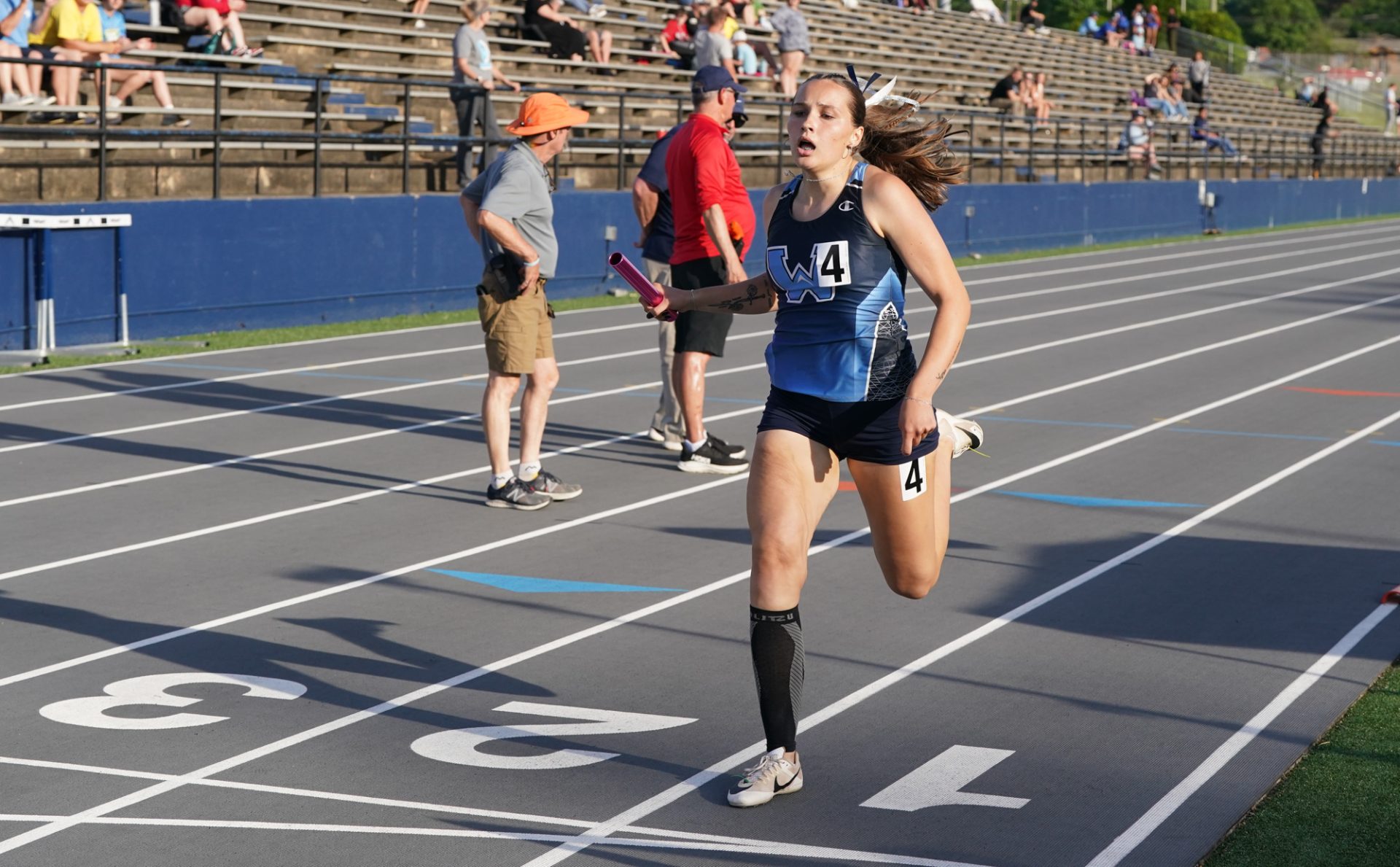
Watauga’s Charlotte Rosenbalm brings home the baton on the final leg of the Women’s 4×400 Relay on April 29 in the 6A/7A Northwestern Conference meet. Photographic image by David Rogers for Blowing Rock News
All three of Watauga’s entries in the Women’s 400 Meters finished in the Top 10, capped by Lily Stough’s No. 1 victory (58.61), the only runner in the event to eclipse the 1-minute mark. South Caldwell’s Sarah Franklin took the No. 2 spot (1:01.37), followed by No. 3 Ava Cooke of Freedom (1:01.39). Watauga’s Vivian Hans (No.6, 1:04.35) and freshman Ember Honeycutt (No. 7, 1:04.49) picked up valuable team points with their finishes.
The Women’s 300m Hurdles was another 1-2-3 sweep for the Pioneers, with Tessa Buchanan (No. 1, 46.32). Grace Scantlin (No. 2, 52.28) and Hannah Kop (No. 3, 52.90). The figured as role models for the Pioneers’ entries in the 800 Meters, with Cali Townsend (No. 1, 2:20.46), Lainey Johnston (No. 2, 2:24.34) and Lily Kimbrough (No. 3, 2:33.55) following suit for yet another 1-2-3 sweep for the Pioneers.
Although Watauga didn’t have anyone place on the podium in the earlier 100 Meters, the 200 Meters sprint race was a different story. Alexander Central’s Malayah Adams won the event (No. 1, 26.28), but Watauga had the next two finishing spots, both within about a half-second of the winner: Mackenzy Cheek (No. 2, 26.78) and Tessa Buchanan (No. 3, 26.92). Merritt Powell also made the top 10, finishing No. 7 (28.39).
The final individual running event of the evening was arguably the Pioneers’ most dominating: the 3200-Meter Run. Cali Townsend (No. 1, 12:05.09), Josie Mayo (No. 2, 12:20.53) and Susanna Goff (No. 3, 12:23.03) lapped the field in taking the 1-2-3 sweep and demonstrating Watauga’s long distance superiority, at least in the 6A/7A Northwestern Conference. South Caldwell’s Kaylee Teague ran a respectable 15:44.09 at No. 4, well ahead of her No. 5 rival, Hope Cox (16:00.75), representing Alexander Central, but put in perspective, all three of Watauga’s athletes were more than three minutes ahead of the field, running near or under their personal bests.
In the final women’s relay, the iconic 4×400, Watauga (No. 1, 4:19.64), held off a game performance by Alexander Central’s quartet (No. 2, 4:29.40), as well as St. Stephens (No. 3, 4:36.66). The Watauga relay team members: Vivian Hans, Hannah Kop, Mackenzy Cheek and Eden Krenzin.
In the field events, Watauga continued its domination with most of the teams’ athletes finishing in the top five, if not winning. The Pioneers took a 1-2-3 sweep of the Pole Vault behind Sydney Helms (No. 1, 10-09), Sophie Robbins (No. 2, 9-06), and Carrie Bradbury (No. 3, 9-00).
The Pioneers’ Lily Stough (No. 1, 19-02) captured the Long Jump conference title, with Ember Honeycutt (No. 4, 15-11.50) and Eden Krenzin (No. 5, 15-10) rounding out the top five and capturing valuable team points.
Stough also showed well in the High Jump, placing No. 2 (5-02) behind Alexander Central’s Kay’ona Connor (No. 1, 5-04). Ashlyn Smith was Watauga’ only other entrant in the event, in the mix at No. 4 (5-00).
In the demanding Triple Jump, Stough again led a trio of Pioneers, all placing in the top five of the event. Stough captured the conference title with a leap of 40-04, more than four feet further than No. 2, Alexander Central’s Carly Hendren (35-10.25). Watauga’s Eden Krenzin (No. 4, 34-03) and Sophie Kop (No. 5, 33-08.25) rounded out the top five. Alexander Central also had the No. 3 jumper in Cadence (“Cadee”) Rollins (35-00).
Alexander Central’s Ali Lewis was a double winner in capturing the Shot Put and Discus titles, going 31-07 in the Shot Put and 198-04 in the Discus. While the Pioneers didn’t place anyone in the top five of the Shot Put, two Watauga athletes made it to the top five list in the Discus: Ellie Helms (No. 2, 96-03) and Maggie Smith (No. 5, 84-05).
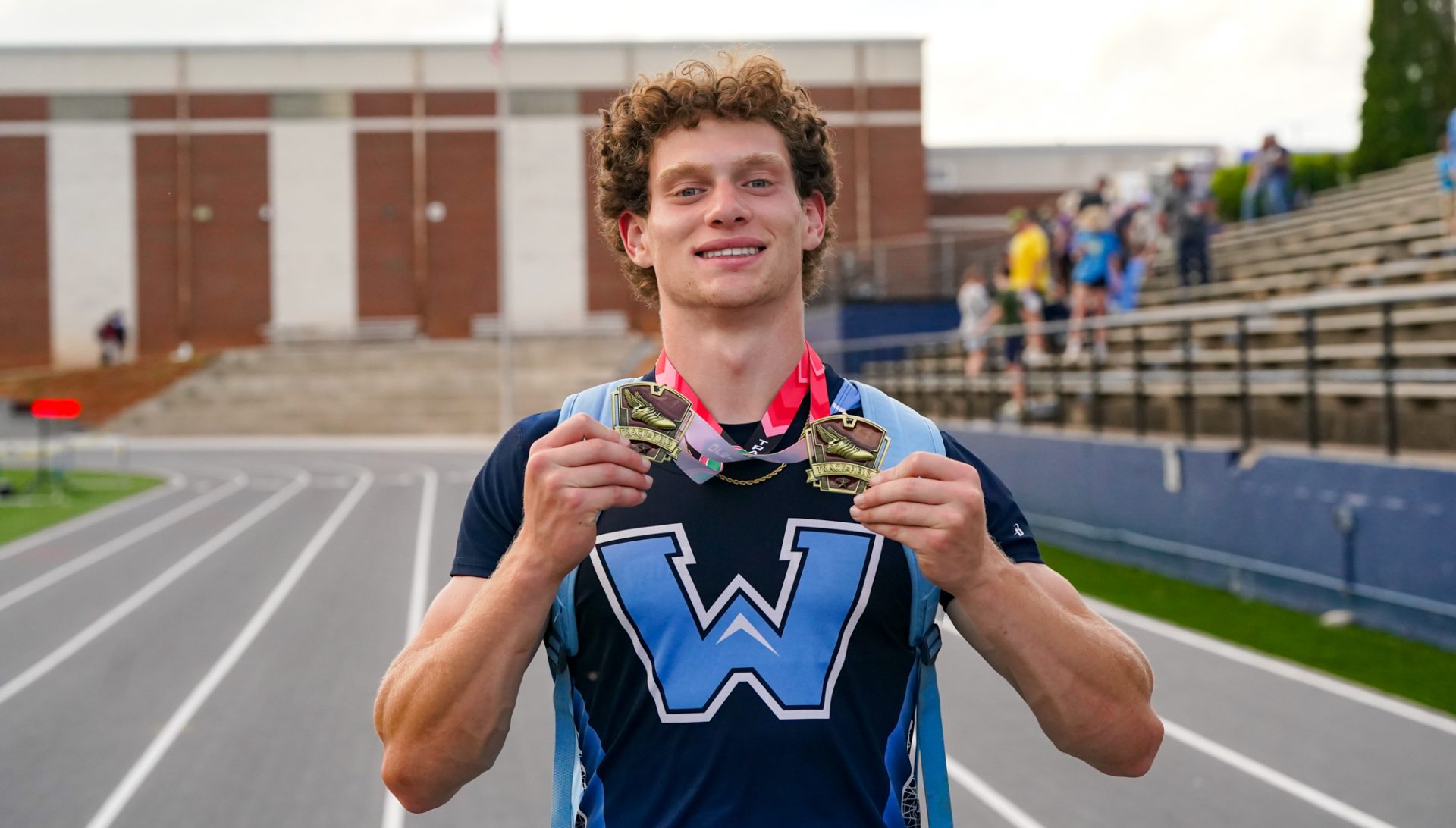
Mars Hill University bound Matthew Leon (to play football) of Watauga was a double gold medal winner on April 29 in the 6A/7A Northwestern Conference track meet. Photographic image by David Rogers for Blowing Rock News
MEN’S DIVISION
TEAM STANDINGS
Watauga (218)
Alexander Central (151)
St. Stephens (122)
Freedom (66)
South Caldwell (63)
McDowell (58)
Watauga won three of the four relay events, capturing the 4×100, 4×200 and 4×800. A lane violation in the 4×400 resulted in a disqualification.
The 4×800 team of Grady Gates, Levi Anderson, Brian Newmark and Calvin Zwetsloot got the Watauga men’s team started on the right foot, capturing the conference title with an 8:54.07 performance, a little more than 11 seconds ahead of No. 2 Alexander Central (9:05.62).
The 110m High Hurdles event was won by St. Stephens’ Kion-nie Banks (15.66), followed by the Pioneers’ Eli Reed (No. 2, 16.42)
.Watauga’s Nyle Peays led a 1-2 sweep of the 100 Meters, sprinting the distance in 10.66 seconds. He was followed by No. 2 Riley Ellison (10.93), the only two competitors under 11 seconds.
In the 4×200 Relay, the Pioneer quartet of Matthew Leon, Lucas Cash, Mason Harris and Riley Ellison were crowned conference champions, winning the event in 1:30.27.
James Bostrom of Watauga clocked a 4:37.14 time to secure the 1600 Meters title. Teammates Jonah Pearson (No. 3, 4:38.68) and Zeke Walker (No. 4, 4:45.04) were not far behind No. 2, Bryce Corpening of South Caldwell (4:38.06).
Watauga similarly showed off its sprint prowess in the 4×100, with the quartet of Mason Harris, Riley Ellison, Lucas Cash and Nyle Peays completing the one-lap circuit in 43.37 seconds, with Alexander Central No. 2 (44.11).
Pioneer senior Matthew Leon was the only Northwestern Conference performer to run under 50 seconds in the grueling 400 Meters sprint. His No. 1 time of 49.42, a personal best, allowed him to cross the finish line ahead of Alexander Central’s Aidan Batty (No. 2, 50.24) and Kevin Hinson (No. 3, 51.32). Leon revealed to Blowing Rock News that he has committed to play football next year for Mars Hill University, north of Asheville.
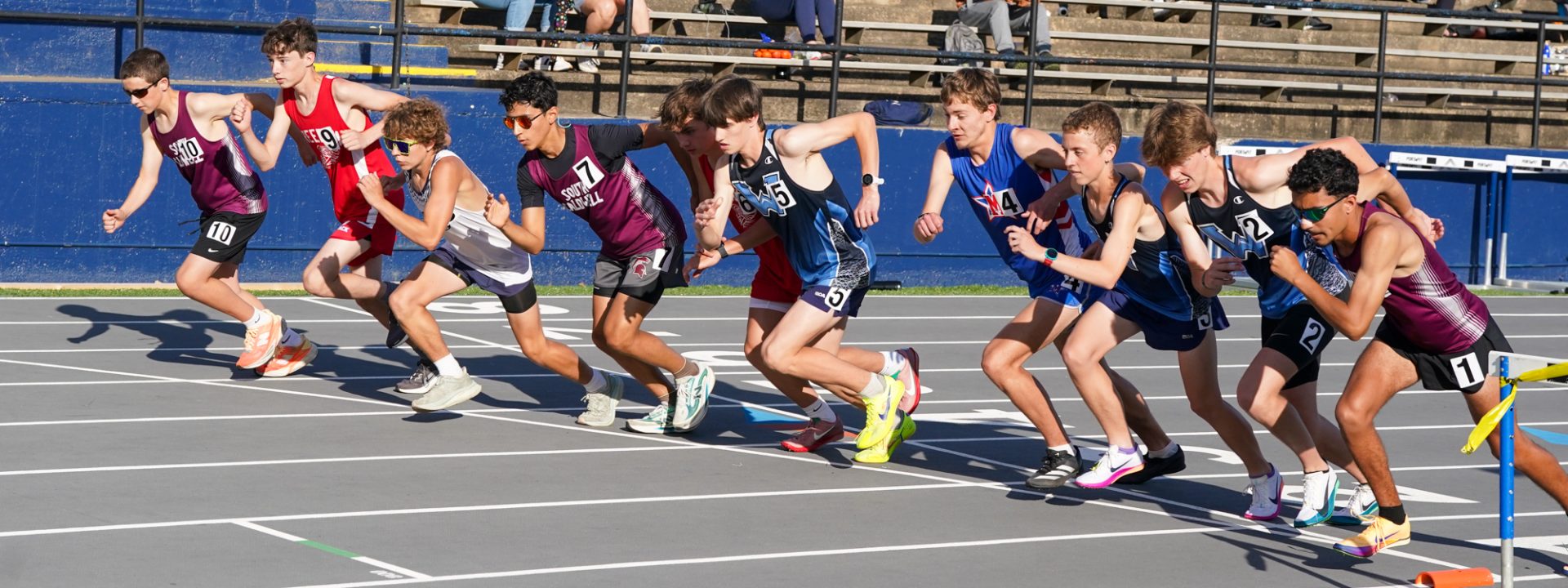
Far right, Bryce Corpening of South Caldwell has the inside edge at the start of the Men’s 3200. Corpening won, closely follwed by a 2-3-4 finish for Watauga’s Parker Williams, Calvin Zwetsloot and Isaac James. Photographic image by David Rogers for Blowing Rock News
Nyle Peays and Eli Reed completed a 1-2 sweep in the Men’s 300m Hurdles. Peays was No. 1 (39.38) and Reed was No. 2 (40.74).
Watauga’s entries in the Men’s 800 Meters took another 1-2-3 sweep to the podium, with Levi Anderson (No. 1, 2:04.72), Zeke Walker (No. 2, 2:05.40) and Brian Newmark (No. 3, 2:06.20) taking the honors.
The Pioneers followed that up with 1-2 sweep of the Men’s 200 Meters, with Nyle Peays again leading the way at No. 1 (21.69), followed by Riley Ellison (No. 2, 22.35). Mason Harris (No.4, 23.53) was also among the leaders.
South Caldwell’s cross country and long distance star Bryce Corpening showed his stuff again in the Men 3200 Meters, going No. 1 in 10:11.39. He was followed by a trio of Watauga runners: Parker Williams (No. 2, 19:16.49), Isaac James (No. 3, 10:21.77) and Calvin Zwetsloot (No. 4, 10:30.93).
In the final event of the day, the Men’s 4×400 relay, Watauga was represented by Silas Powell, Sawyer Blackburn, Derek Nix, and Eli Reed, but was disqualified for a lane violation on one of the baton exchanges.
By David Rogers. HICKORY, N.C. — Good business models often capture complementary revenue streams — and that’s exactly what Rock Barn Country Club aims to do with its ongoing renovation and expansion plans.
It is a “club”, to be sure, with members, dining facilities and recreational amenities, as well as a spa and fitness center. Among its recreational opportunities are two golf courses, a members and member-guests course designed by Robert Trent Jones, Jr., as well as another course designed by Tom Jackson that is more readily playable by the public.
Left to right, Ron Cutlip, Jon Robertson, Brad Ellinger and Marshall Robinson discuss the new features of the bunker renovations at Rock Barn Country Club. Photographic image by David Rogers for Blowing Rock News
Rock Barn is also a popular spot for hosting events, including weddings, receptions and business conferences. Somewhat central to Rock Barn’s operations is the spa, which attracts add-on revenue from every other aspect of the operation: membership, golf, tennis, lodging and retail.
While Rock Barn currently has a lodge that accommodates groups of 10-12 people for overnight stays, in a recent interview with Blowing Rock News, General Manager Brad Ellinger reported that a high-end, boutique hotel is in the planning stages.
“Rock Barn is a destination for many people in our wide geographic market footprint,” said Ellinger, “so we need individual rooms for couples and individuals to serve that market demand. We are a coveted venue for weddings and other special events, so rather than force customers to overnight stays in Hickory, Statesville or Charlotte, for example, our boutique hotel will offer a more convenient option. We expect the spa will also see additional market demand because of the hotel’s draw.”
Playing Through
Another Rock Barn operation that promises to complement the hotel and the spa are the golf courses.
“We are restoring the Robert Trent Jones, Jr. course back as close as possible to its original design,” said Ellinger, “and we want it to be in prime shape for our members and guests well before the new hotel opens. The key focus is on renovating the bunkers and we are excited about the work that is currently being done.”
Studying the bunker renovations currently ongoing at Rock Barn’s Jones course is a multi-dimensional journey into history, architectural design, technology and business. It is an ambitious project, with more than 130 bunkers — AKA “sand traps” — dotting the 7,169 yards of scenic sporting landscape.
Rock Barn’s Golf Course Superintendent Jon Robertson points to bunker erosion that developes over the years on any golf course. Rock Barn is renovating its bunkers to restore the original Robert Trent Jones, Jr. design. Photographic image by David Rogers for Blowing Rock News
Understanding Golf’s Roots
Bunkers on golf courses evolved over time. Early golf was played on Scottish coastal “links” courses where natural, wind-swept sand depressions occurred naturally while grazing farm animals created sandy “hollows.”
Today’s golf courses are no longer modified sheep and cow pastures. Modern bunkers grew out of these natural hazards to make golf more strategic. The threat of a player’s ball landing in a sand trap increases golf’s difficulty for most. Skilled professionals might purposely navigate their ball into a sand trap to get closer to the hole but bunkers challenge a golfer to hit the ball more precisely, to safer landing areas for playing a next shot.
Today’s sand traps honor golf’s origins but they also serve a more practical double-purpose, too: adding beauty to the course experience while encouraging a more profitable course operation.
“The Jones course opened in 2003,” said Rock Barn’s Director of Golf, Marshal Robinson. “Over two decades of play, we found that some of the bunker edges had risen two to three inches as golfers played out of the sand. It may only be a little bit of sand thrown up on those edges at any given time, but it accumulates. So, one of the reasons driving this renovation is the aesthetic value of restoring the bunkers.”
Rock Barn contracted High Country-based Cutlip Golf Design to lead the renovation project. Cutlip added Blowing Rock native Rick Robbins to the design team. Robbins is a past president of the American Society of Golf Course Architects and Ron Cutlip was inducted into that prestigious organization in late 2024.
New bunker technology uses a layer of Portland cement mixed with sand to quickly channel water from rainfall to drainage channels at the lowest points of the sand trap, below the white sand you typically see. Embedded in those channels are ‘chambers’ for collecting the water and directing it out to the course periphery. Photographic image by David Rogers for Blowing Rock News
Cutlip and Robbins collaborated on designing the master plan for the bunker renovation, meticulously reviewing the Jones course, hole by hole. It was Cutlip’s experience on his last major project, designing the South Shore Golf Club course in Narragansett, Rhode Island, that answered a critical question for the Rock Barn management team.
“Ron (Cutlip) told us about a newer bunker technology that we had never heard of,” said Rock Barn’s GM, Ellinger. “It sounded interesting, but we were skeptical of investing in something with which we were unfamiliar. We became convinced, though, after the technology contractor provided us with a risk-free demonstration, renovating what was ostensibly our worst bunker to show us how it works.”
On a golf course, water-logged bunkers can slow down play.
“Golf course businesses make a lot of their money based on the number of rounds that can be played in a day,” said Cutlip. “When it rains, the older style of bunker often gets water-logged. It becomes unplayable. We are introducing newer technology with this renovation project, the same technology we used at South Shore in Rhode Island.”
Enter Mark Pribble, of Atlantic Installations, based in Maryland.
“My business partner and I saw this unique construction-related process in a completely different application and thought it could have profound implications for golf course sand traps,” said Pribble. “So we negotiated to license the technology for golf course applications. Below the layer of white sand that you see in a bunker, there is a layer of Portland cement mixed with sand. This layer quickly channels the water from rain into chambers at the bottom of each bunker. Each chamber is able to handle a very large volume of water, then releases it into drainage pipes that direct it to the course periphery, into creeks and ponds or spread out over wetlands. This technology leaves the top surface of sand dry and more readily playable, which speeds up play as well as enable play.”
The chambers to collect the drained water from a bunker have fine perforations to allow water to pass through but holding back sand and gravel. Photographic image by David Rogers for Blowng Rock News
Going Pro
One of the NCAA’s most memorable taglines was introduced in the early 2000s: “There are more than 400,000 college student athletes in the U.S. and most of them will go pro in something other than sports.”
Certainly that was true for Jon Robertson, Rock Barn’s golf course superintendent. In the late 1990s, he was on App State’s football team as a quarterback but after graduating he pursued another passion as his professional occupation: in golf course management.
Bunker course nearing completion (foreground) provide a sharp contrast to a nearby bunker just getting carved back down to ‘ground zero’ as part of Rock Barn’s renovation and restoration project in the spring of 2026. Photographic image by David Rogers for Blowing Rock News
“These bunker renovations are more player friendly, aesthetically pleasing, improve the lines of sight, and help with our golf course maintenance,” said Robertson. “Like a lot of courses, we use ‘Sand Pros’ to power sweep the bunkers. With our old bunkers, these devices were also a source of erosion as they break down the edges going in and out. With the new bunkers, that process is made much more efficient. That’s going to not only improve the aesthetics, but help out our maintenance crews, too.”
From a design perspective, bunkers can define a golf hole. They add visual contrast to the playing experience (white sand vs. green turf, for example) but fairway bunkers are strategically placed to challenge both the golfer’s skill and his or her decision-making: “Do I play it safe or try to carry the bunker and get closer to the pin?” Around the green, bunkers serve to “protect” a hole, challenging the golfer’s hitting precision.
Placing bunkers — sand traps — on a golf course reveals the mischievous devil at work in the minds of golf course architects. They create beauty and deception – and now also help a course’s management.
EDITOR’S NOTE: We plan a follow-up story with images during the summer, once the grass has “greened up” and the planted turf has matured.
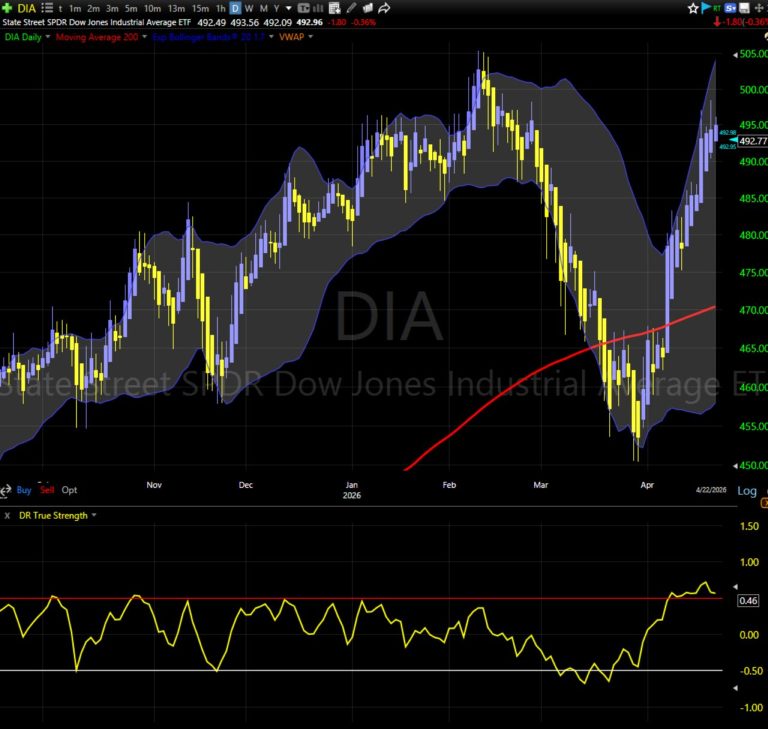
By David Rogers. BLOWING ROCK, N.C. — The equity markets remained somewhat buoyed by promises of some sort of resolution to the Iran conflict/war. That said, we are at the top of my Dynamic Trading Channel with deteriorating breadth, so we must take a cautious approach in investing for the intermediate-term, fearful of a significant pullback or, at the very least, an extended period of market consolidation.
Long-term, we remain optimistic that within 10-15 years the Dow Industrials will be at 100,000, as previously published near the bottom of the last intermediate-term correction in April of 2025 (DJI: 37,000) and, prior to that, near the bottom of the intermediate-term correction in September 2022 (DJI: 29,000).
Recall that when the DJI was touching 6700 in early March 2009, we wrote that within 10-15 years the DJI would reach 30,000. With some short- and intermediate-term hiccups along the way, it made that goal in roughly 11 months (December 2020).
Our rationale for higher prices, regardless of who is in the White House, is based on three basic inputs: inflation, the reinvestment of corporate earnings after paying taxes and distributing dividends, and a survivorship bias in the indices.
There is a sort of compounding intrinsic growth in the aggregate value of the Dow 30 with the reinvestment of corporate earnings after taxes and dividends. When you add in the inflation component, those values get magnified. At any given point in time, the market tends to apply standardized multiples to equity valuations, i.e. 10x earnings. They may be cheaper dollars 10-15 years out, but the same level of business activity that produced $1.00 per share in earnings 15 years ago may be producing $3.00 per share today. The actual health of a company may be no better, perhaps even worse, but inflation is a catalyst for increased absolute dollars per share. So a company that earned $1 per share 15 years ago might well be earning $3.00 per share today with no significant improvement in operations. A 10x earnings multiple 15 years ago implies a $10 stock. That same 10x multiple today against $3.00 per share implies a $30 stock.
When you add in the fact that the folks managing the market averages or indices tend to throw out badly performing companies from time to time and replace them with better performing companies, that’s where the survivorship bias comes in — tending to push the averages even higher.
That is a brief explanation of our bullish long-term reasoning, but from time to time the market can get a little overdone. This is one of those moments, suggested in our market studies. Reaching the upper band of our Dynamic Trading Channel produces an intermediate-term sell signal in our studies when accompanied by deteriorating market breadth. In our view, the market simply needs to “correct,” intermediate-term.
Market corrections generally take on some combination of severe price decline OR sideways consolidation over time. For now, we suspect the upside is somewhat limited, with the higher risk of adverse price action. At best, we see a period of consolidation.
Either way, we are looking to hedge portfolios — especially with this president at the helm, steering the ship. He makes everything unpredictable, taking a chain saw to a problem instead of the scalpel that is needed. We’ve seen it in tariffs, immigration, and government spending, as well as in Iran and Venezuela. When you add in off-the-cuff social media statements about taking over Greenland, putting his name on everything that comes to mind, firing qualified people and replacing them with “yes” minions, and wanting to prosecute anyone who dares to challenge him. As a politician, he deserves an “F” grade in getting on the wrong side of 50+ million baptized Catholics in the U.S. by insulting the Pope.
One could easily say that Donald Trump and Pete Hegseth underestimated Iran, which now — even with a weakened military — has a stronger position than when the war began because of its sway over the Strait of Hormuz and the energy-dependent world. The only “out” seems to be to commit potential war crimes (“wipe out a civilization” or “shoot to kill Iran gunboats operating in the Strait of Hormuz”) and to curry the disfavor of most Americans and the rest of the world. Either that, or tuck tail and withdraw.
However laudable his goals might be, we question Trump’s chaotic execution.
DISCLAIMER: The information provided in this publication is for informational and educational purposes only and does not constitute investment advice, financial advice, or a recommendation to buy or sell any securities. The opinions expressed are those of the authors and are subject to change without notice.
Investing in the stock market involves risk, including the possible loss of principal. Past performance is not indicative of future results. Readers should conduct their own research and consult with a qualified financial advisor before making any investment decisions.
This publication and its contributors may hold positions in the securities mentioned and may buy or sell such securities without notice.
By David Rogers. BLOWING ROCK, N.C. — Is free agency a quick fix for weak or depleted NFL rosters? Perhaps. At the very least it is a mechanism by which teams can make immediate roster improvement. It might even be a path to instant competitiveness, even more so than the NFL Draft of college players because more often than not free agents are veterans. They are proven commodities to one extent or another.
There are risks, of course, including future potential injuries of a “purchased” player. There are financial risks, too. Over-investing in free agency can put a strain on a team’s salary cap, even if paying perceived market value for a player’s services. Balancing payment of high salaries for aging players vs. extending contracts for deserving athletes already on the roster can be a delicate exercise. Sure, securing the services of a marquee name, especially at quarterback, running back or wide receiver might sell more tickets, but at what cost? And does the acquired player fit the team’s culture?
For fantasy football reasons, here are my thoughts on the most intriguing roster changes in free agency, money aside:
San Francisco 49ers: Wide receiver Mike Evans may well be in the waning years of his professional football career, but he has been a proven performer these past several years in Tampa Bay. By adding Evans and a solid journeyman WR Christian Kirk, San Francisco answered a lot of questions about the position group given the departures of Jauan Jennings, Deebo Samuel, and Brandon Aiyuk over the course of the last three years. Of course, they still have star tight end George Kittle, but newcomers like Evans and Kirk give QB Brock Purdy additional offensive weapons while taking some of the load off of the team’s proverbial “Swiss Army Knife,” RB Christian McCaffrey. As long as the offensive line remains healthy, SFO could be an interesting NFC contender in 2026.
Denver Broncos: Under head coach Sean Payton, the Broncos have become an AFC contender — and they resigned a host of their own players in free agency. One outsider they signed could have a huge impact on the offense and that is former Miami wide receiver Jaylen Waddle. Opposite WR Courtland Sutton, tight end Evan Engram and, to a lesser degree, WR Troy Franklin, Waddle comes to Denver with bona fide star power. I liked that they re-signed running back J.K. Dobbins, although his staying healthy is a concern. That said, I am not sure we have seen Dobbins’ full potential realized, yet.
Minnesota Vikings: The headliner here is, of course, Kyler Murray’s signing at quarterback. If J.J. McCarthy is the future, he now has legitimate competition for the starting nod with Murray coming over from Arizona. We have to worry about whether Murray’s history of injury had much to do with the Cardinals’ schemes or vulnerabilities in the offensive line. In Minnesota, I fully expect Murray to earn the starting nod and excel behind arguably the best offensive line he has had protecting him. When you consider that he has prime and proven receiving targets in Justin Jefferson, Jordan Addison and T.J. Hockenson, as well as a pair of good running backs in Aaron Jones and Jordan Mason, 2026 could be a good year for the Vikings.
Pittsburgh Steelers: Getting Michael Pittman, Jr. (wide receiver) from Indianapolis and Rico Dowdle (running back) from the Carolina Panthers by trade and free agency seems like an offensive win to me. Now, if they can just get their quarterback situation solidified. With the ageless (?) wonder Aaron Rodgers still not re-signed, the team’s depth chart lists Mason Rudolph and Will Howard as QB1 and QB2. Pittman didn’t really put up the consistent numbers at Indy that many expected but I attribute a lot of that too inconsistent play at quarterback, the resurgence of Daniel Jones notwithstanding. Dowdle has shown at Dallas and Carolina that he can be an attacking, punishing RB, so should be a nice complement for incumbents Jaylen Warren and Kaleb Johnson. Personally, I would like the Steelers to select a young QB in the first or second round of the upcoming NFL Draft.
Atlanta Falcons: One of the most important free agent signings for the Falcons was retaining the services of tight end Kyle Pitts, Jr. Although Pitts underwhelmed after a good rookie season, he seems to be finding himself of late. I thought Brian Robinson, Jr. was wasted, necessarily, last year in San Francisco by playing behind Christian McCaffery. He may face the same fate working behind Bijon Robinson, but maybe he will get more chances from a Falcons team that arguably platoons its running backs more, as it did with the departed Tyler Allgeier.
My most intriguing NFL Draft prospects:
Fernando Mendoza may be all but locked in to go No. 1 to the Las Vegas Raiders, but the recent signing of veteran Kirk Cousins begs the question of which one will be the backup? Everyone thinks Mendoza has the chops to be a Day 1 starter, but Cousins has been there before and looks to still have something left in the tank. Indianapolis rushed the uniquely athletic Anthony Richardson, Sr., a few years ago and may have cost him a career unless a team like Dallas (Dak Prescott, 32) or Los Angeles Rams (Matthew Stafford, 38) can craft a trade for a “next” QB in a backup and confidence-building role behind an aging starter.
Wide receiver: I like Carnell Tate, Makai Lemon, Jordyn Tyson, Denzel Boston, Omar Cooper, Jr., and KC Concepcion, in that order, but this is one of the strongest WR classes in recent memory and each of them have skillsets and athletic traits that could fit different teams (in a different order). Fascinating to see.
Running back: Where will Jeremiyah Love go? All expectations are for Mendoza to go to the Raiders at No. 1 and the NY Jets already have Breece Hall and a number of other needs at No. 2. With James Conner, Tyler Allgeier, Trey Benson and Bam Knight already rostered, it is hard to see the Arizona Cardinals taking Love at No. 3 — but RB talents like Love don’t come along so often. If he doesn’t go to Arizona, I like him going to Tennessee at No. 4 to take some pressure off of Cam Ward and, if not, to the New York Giants at No. 5 for the same reason (another weapon for Jaxson Dart). If he falls to No. 9, could the Kansas City Chiefs scoop him up to create a powerful tandem with recently acquired Kenneth Walker?
Tight End: Everyone seems to be focused on Kenyon Sadiq, but I really like the athleticism and, as a former QB, the football IQ of Eli Stowers. If either one falls to the Carolina Panthers at No. 19, I wouldn’t find that pick surprising.
Draft trade bait? Is Maxx Crosby still happy to be with the Raiders? Or could he be an asset to attract more draft picks?
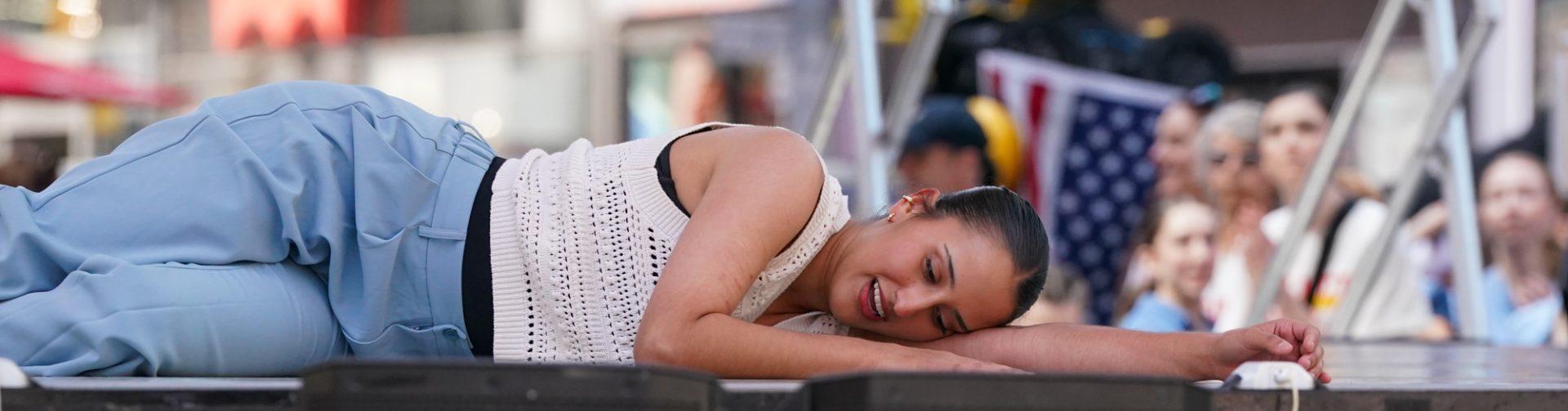
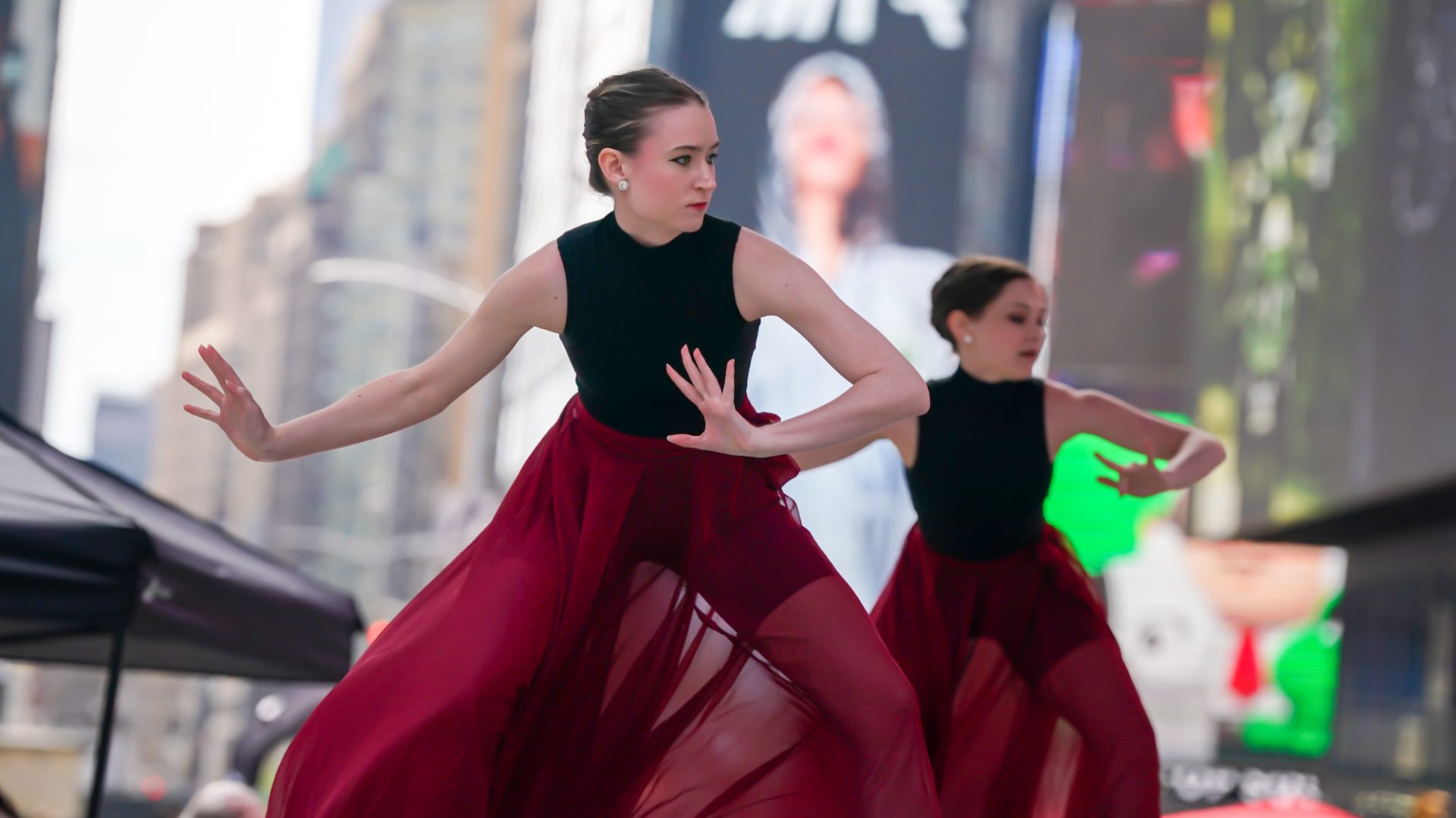
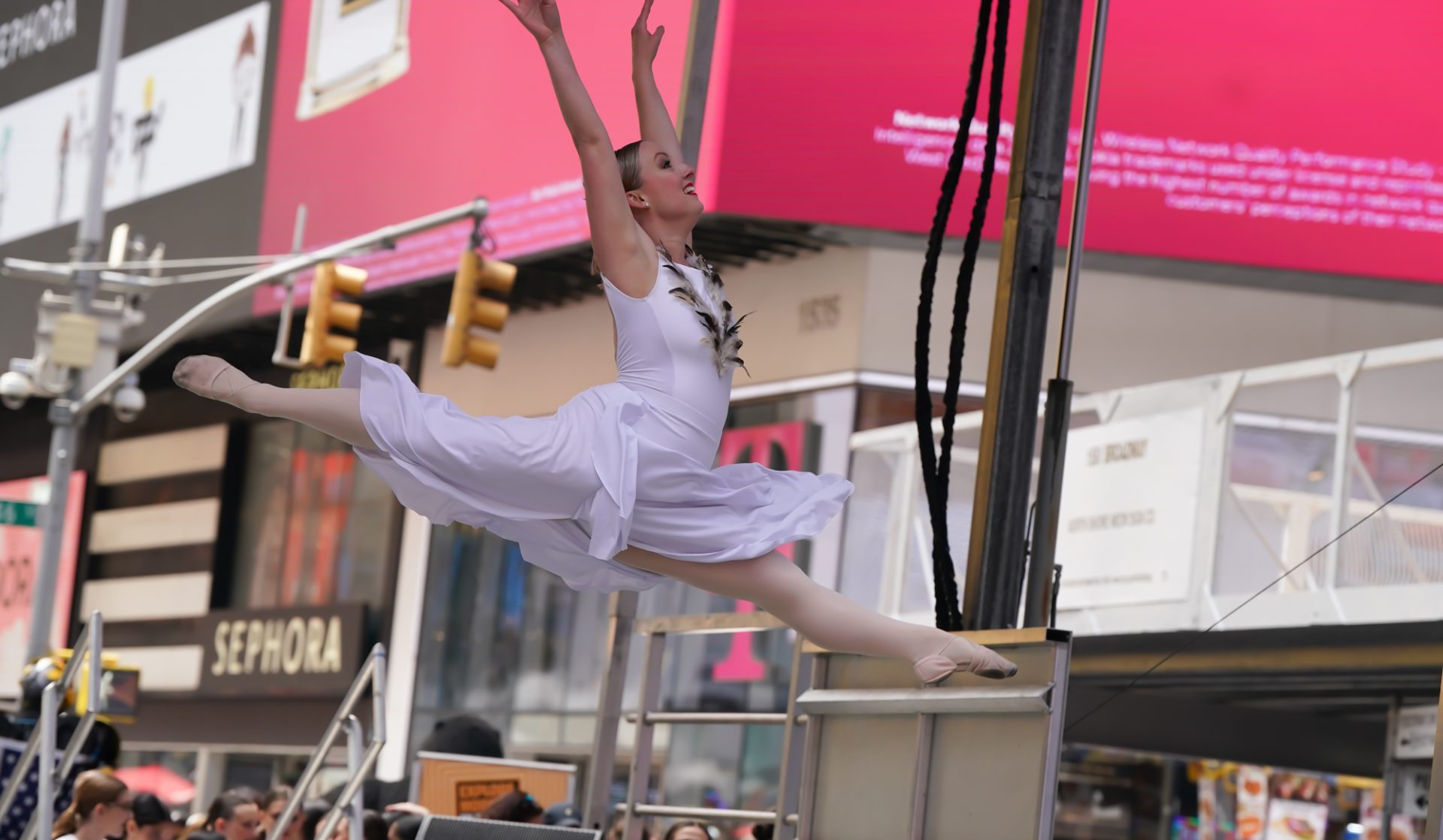
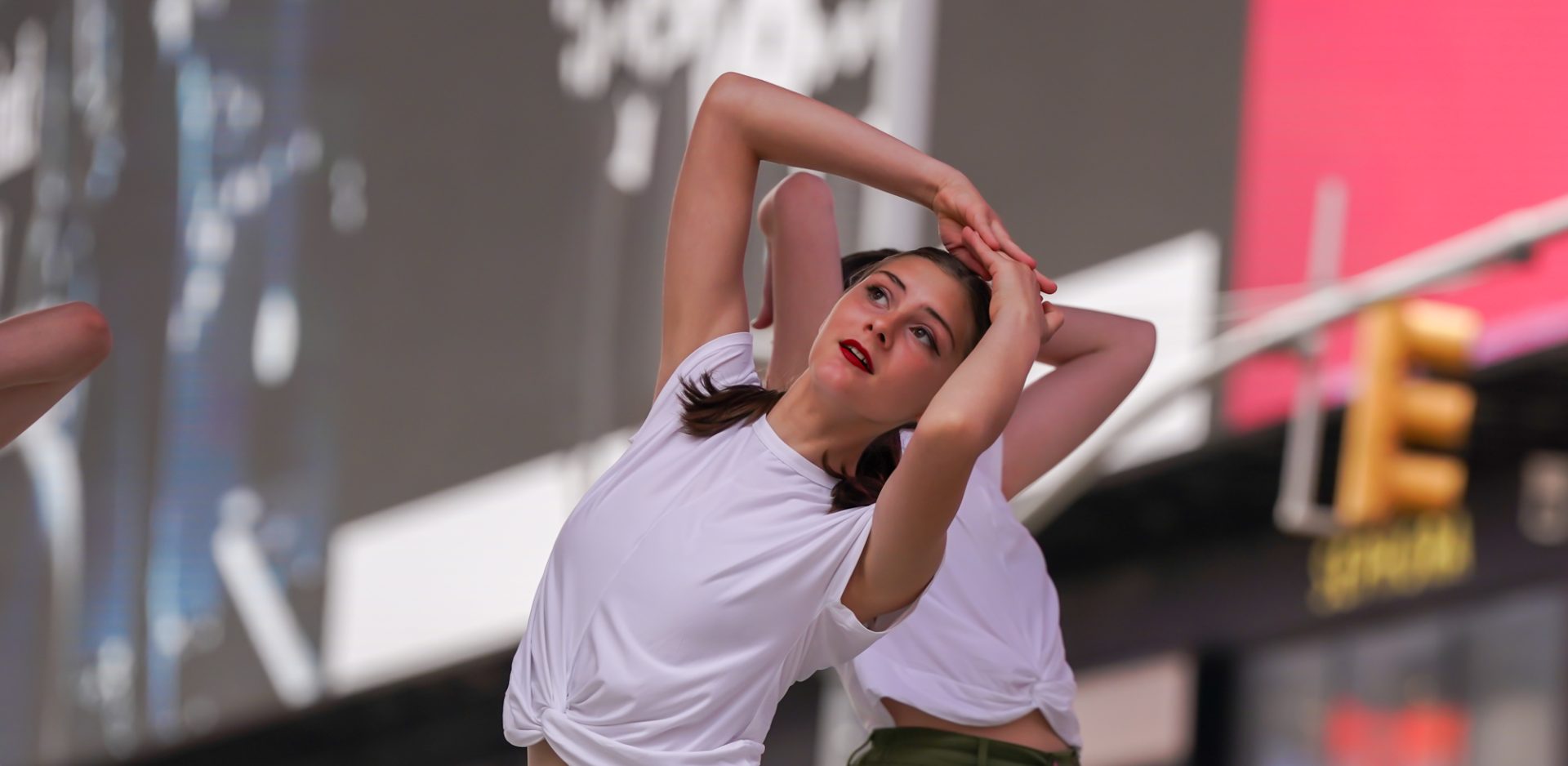
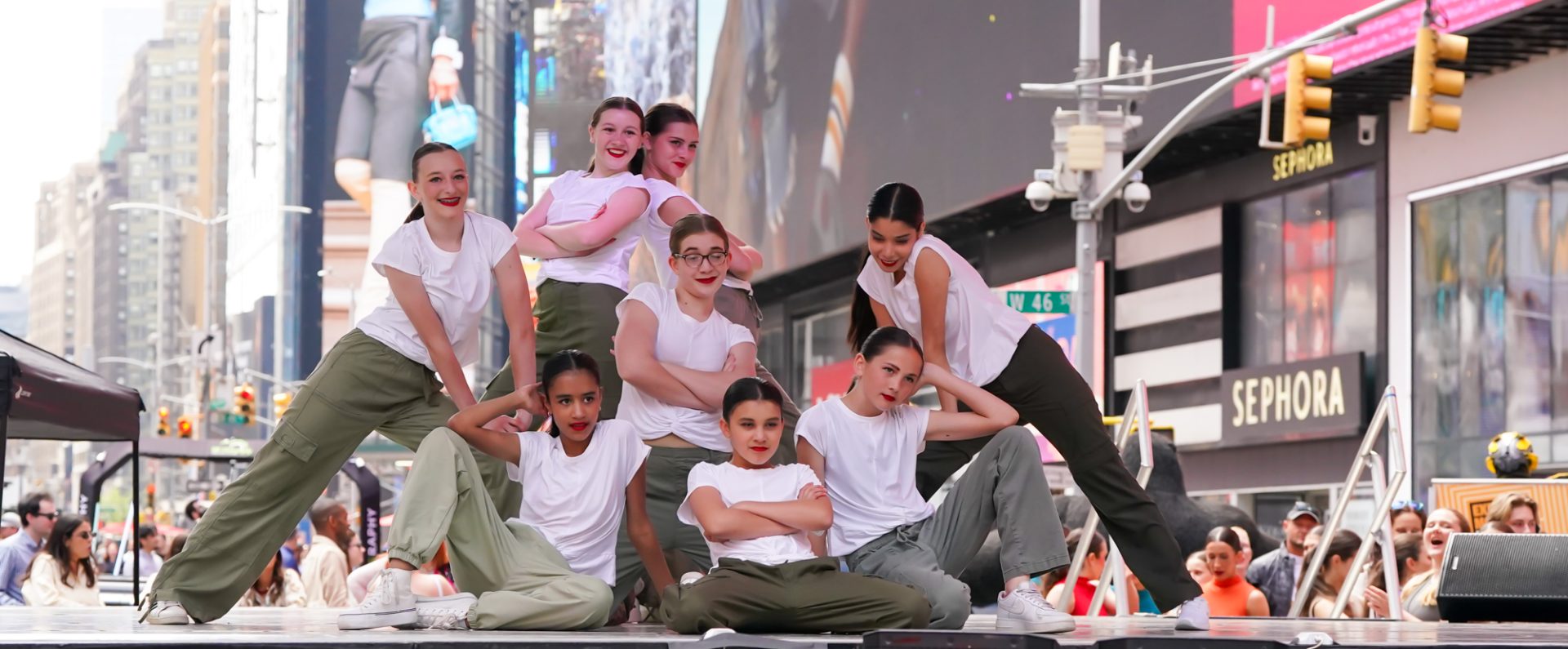
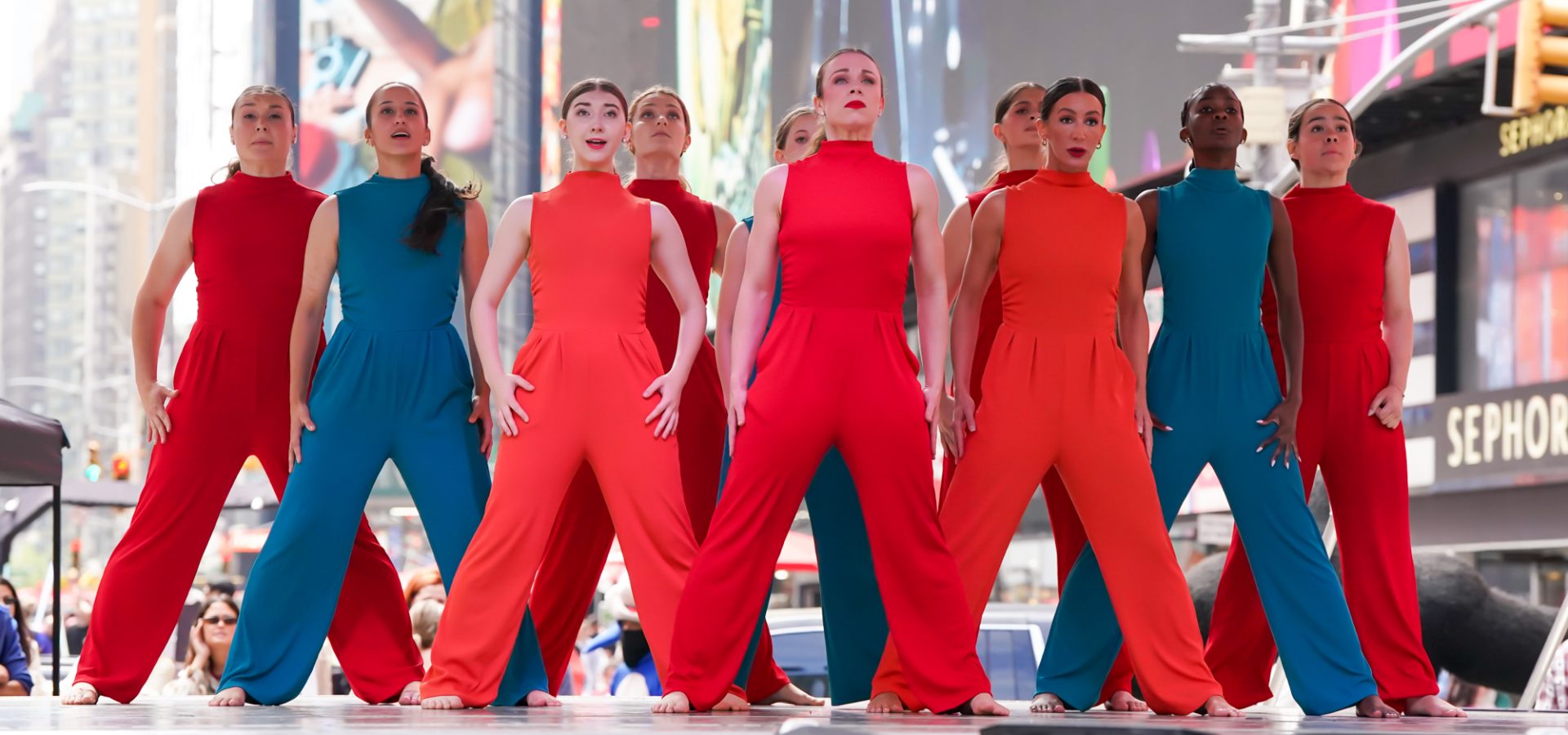
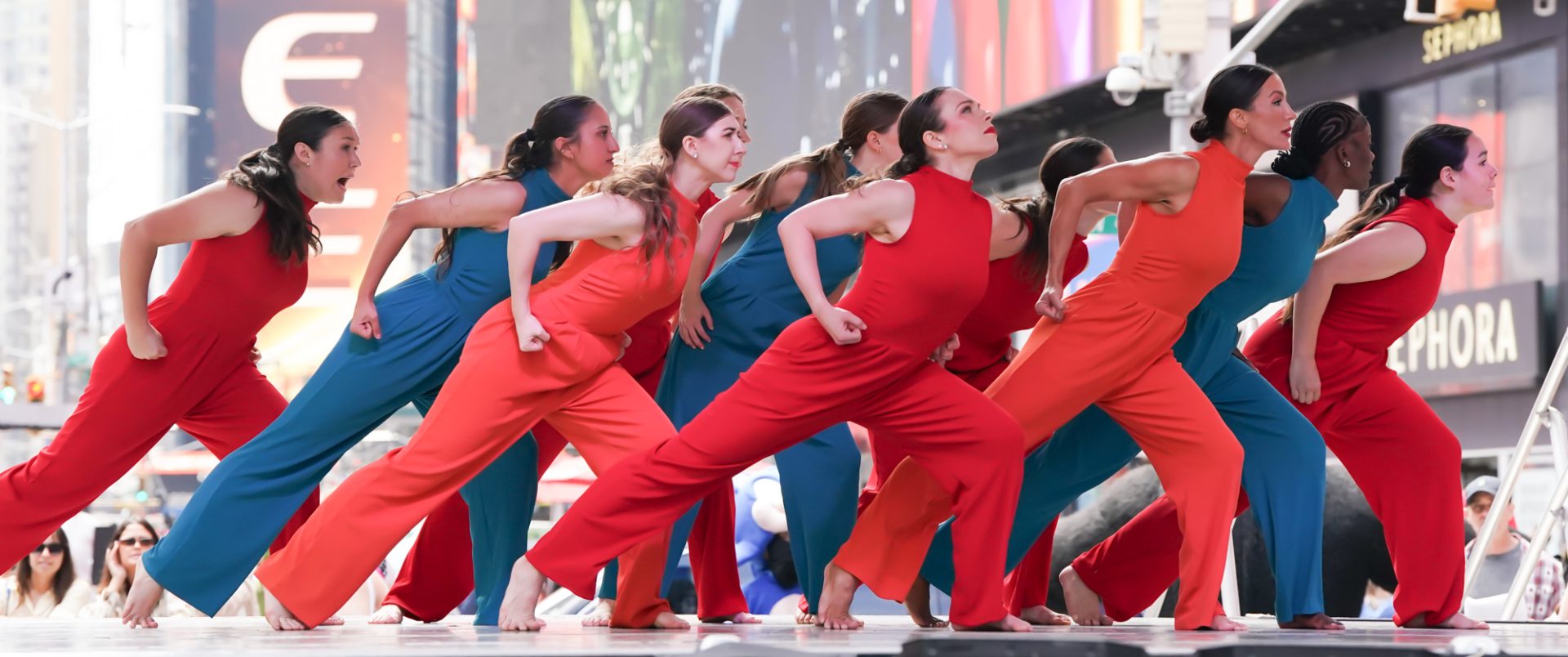
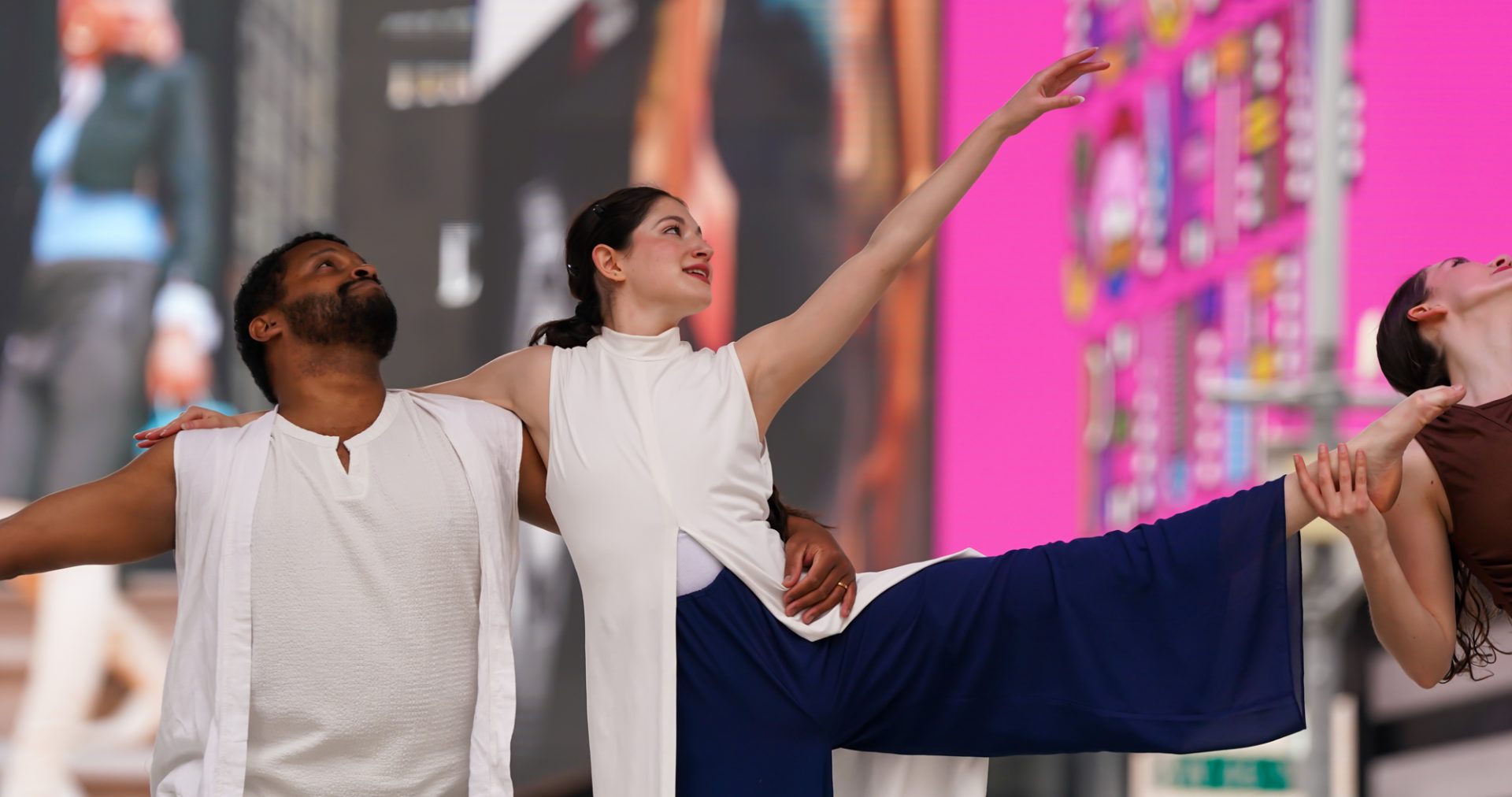
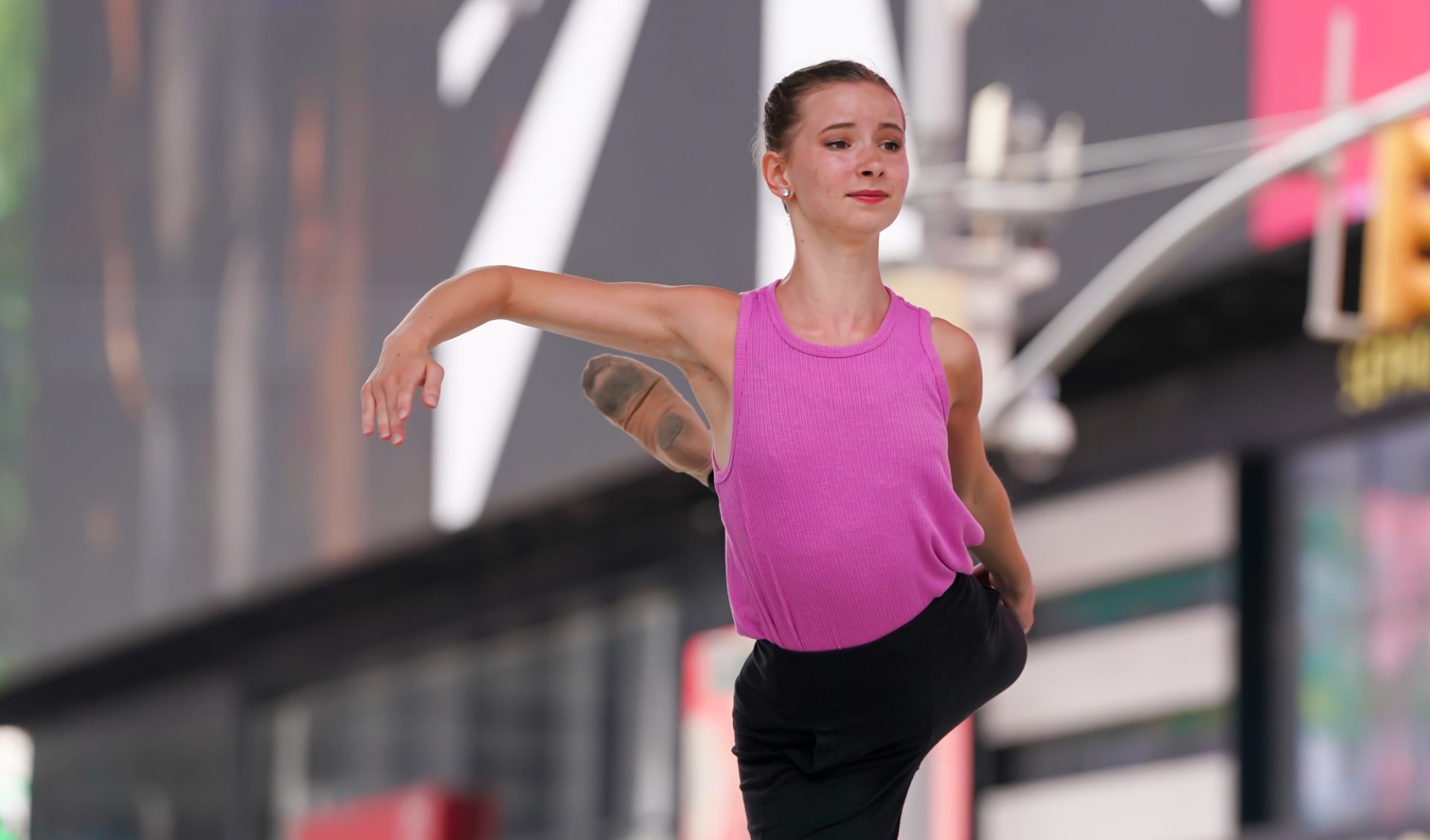
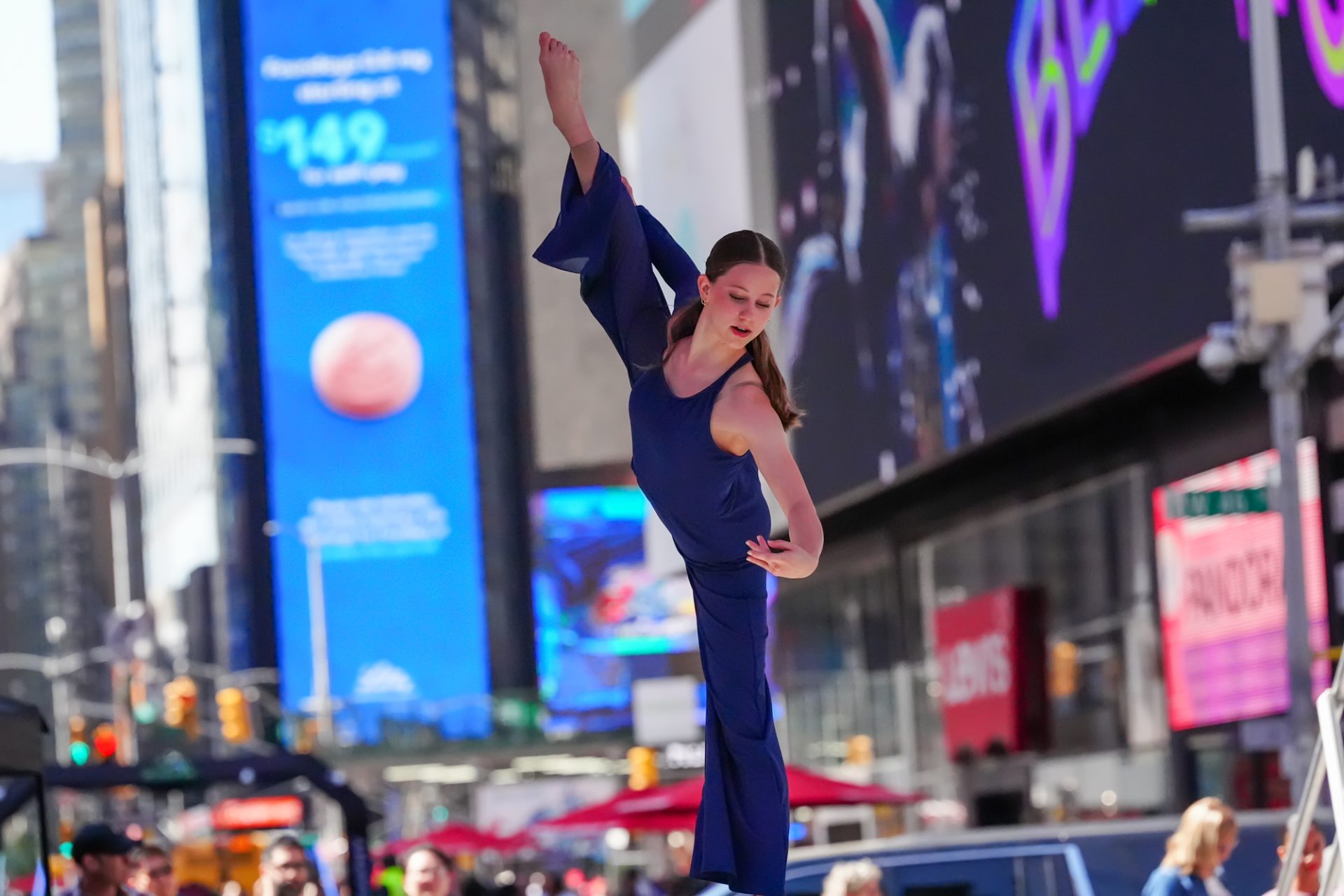
By David Rogers. NEW YORK CITY — it was one of those picture-perfect, “Chamber of Commerce” sort of days, weather-wise, but hearing a cacophony of urban sounds — blaring sirens from fire trucks, ambulances and police cars, as well as honking taxis, delivery vans backing up to a rhythmic beep-beep-beep, garbage trucks running over manhole covers — and people, people, people everywhere, it is a good bet you are in New York City’s Times Square, perhaps to see one of those Broadway shows for which New York is legendary.
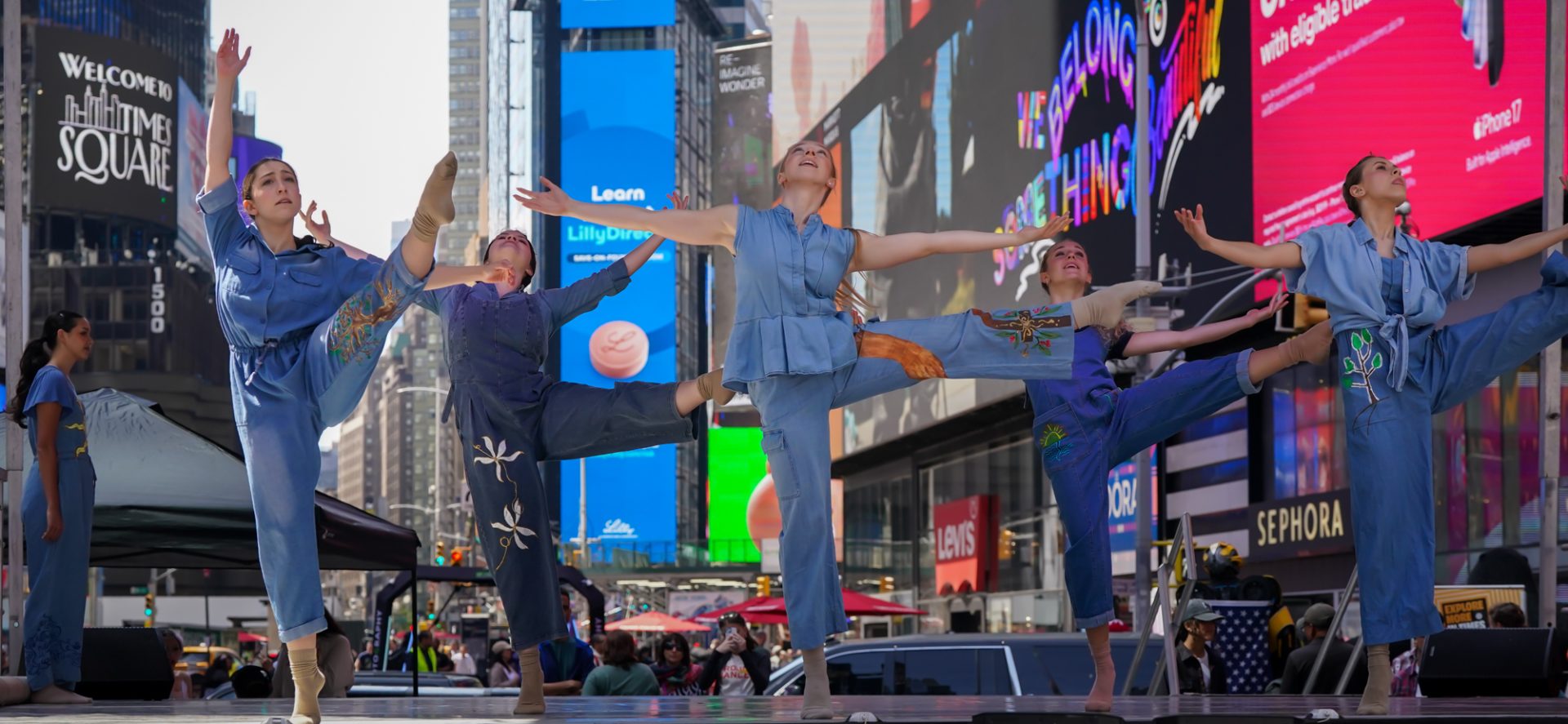
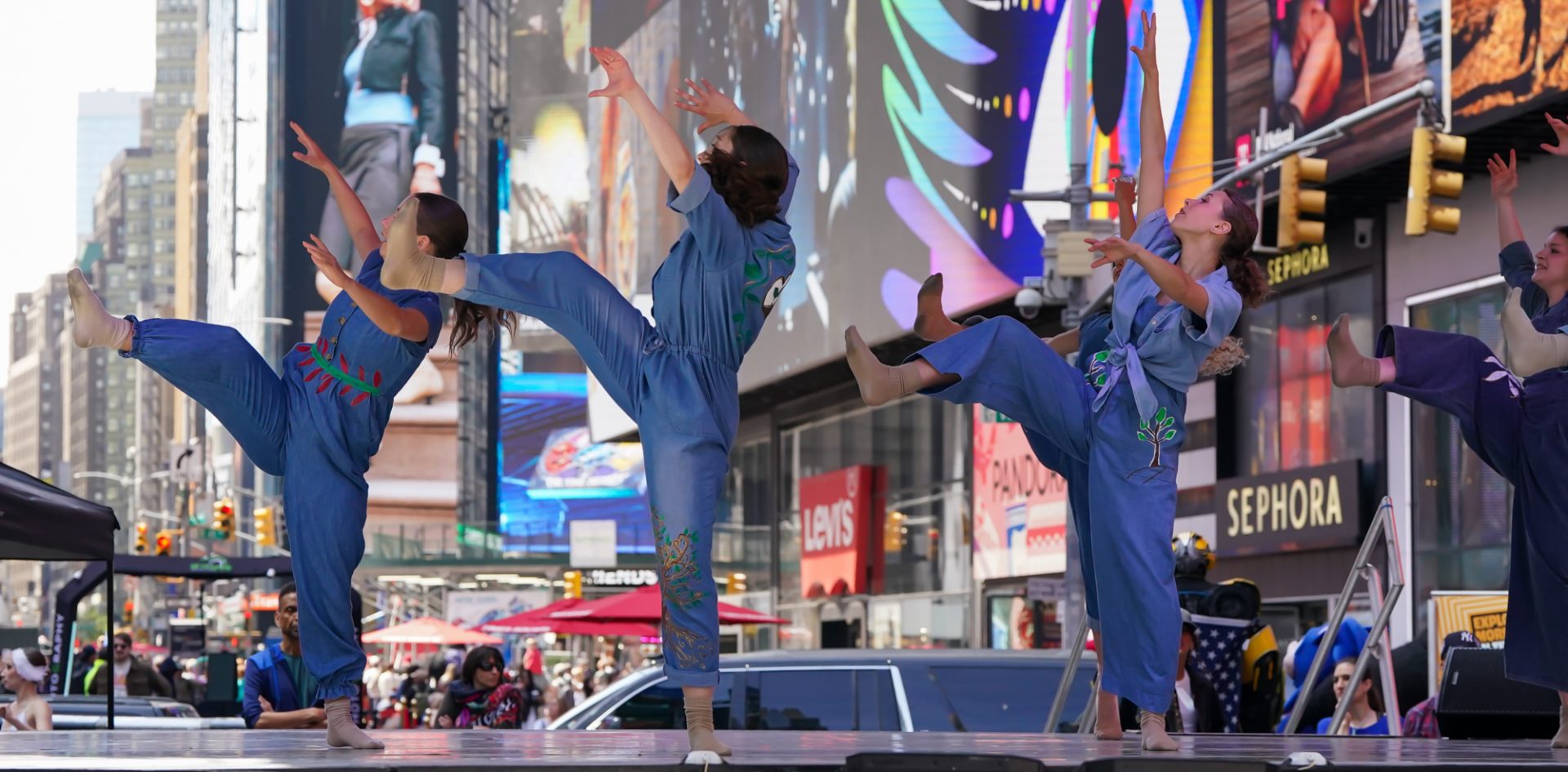
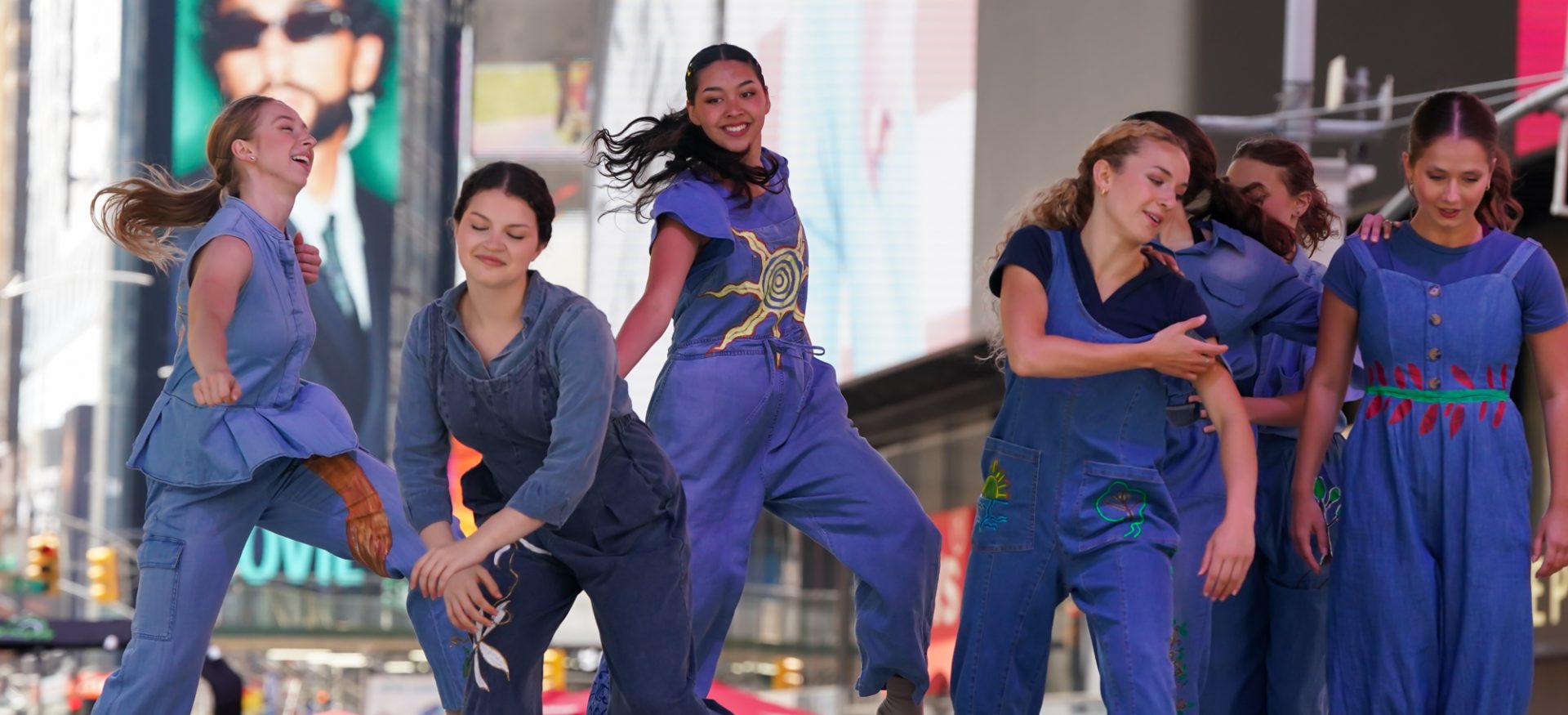
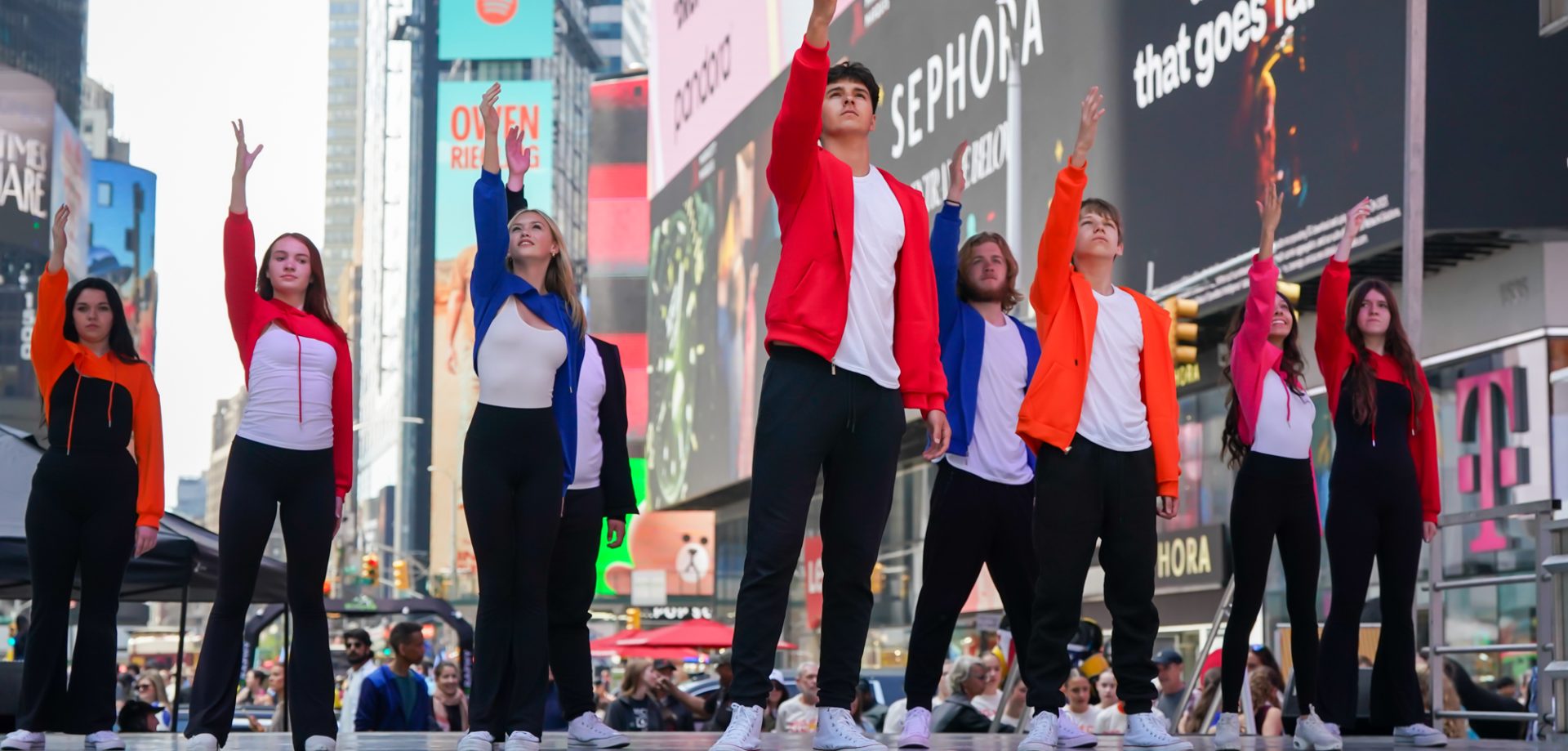
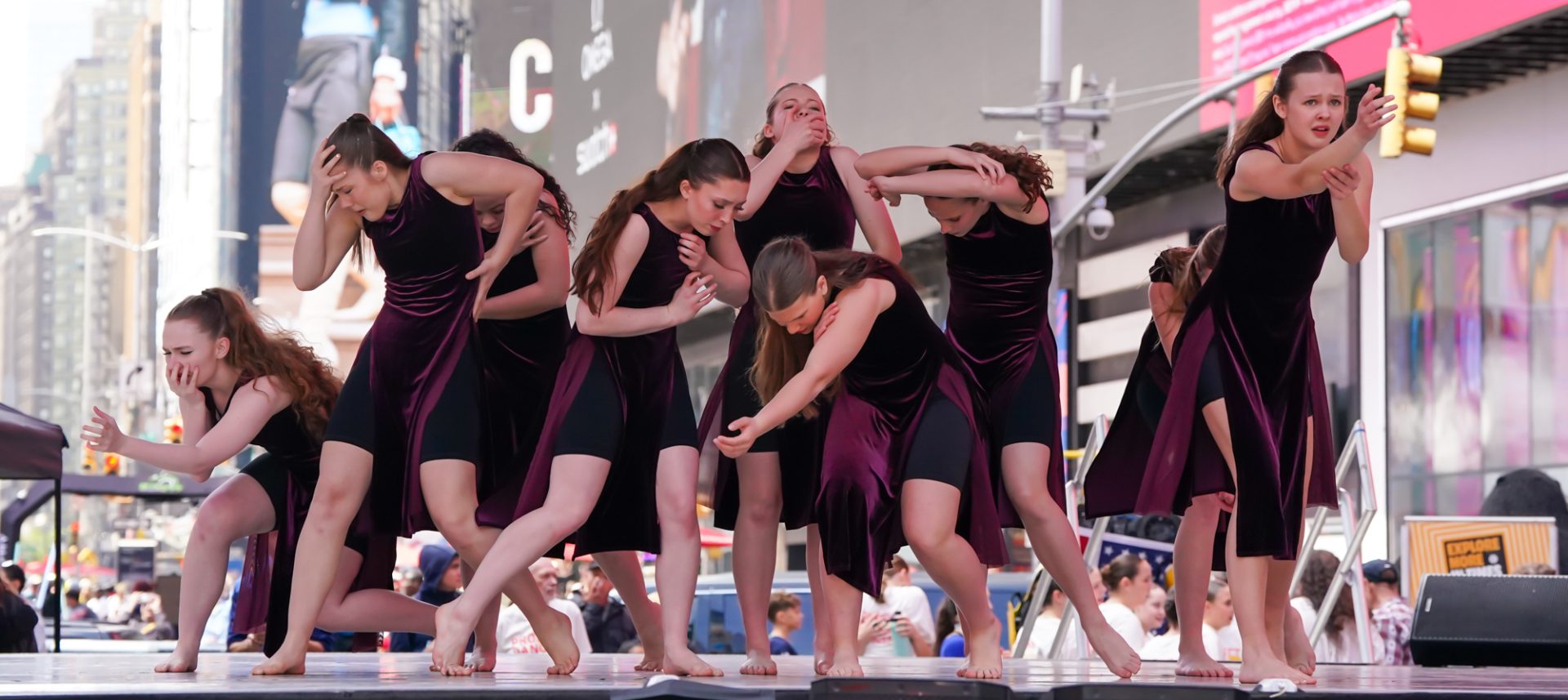
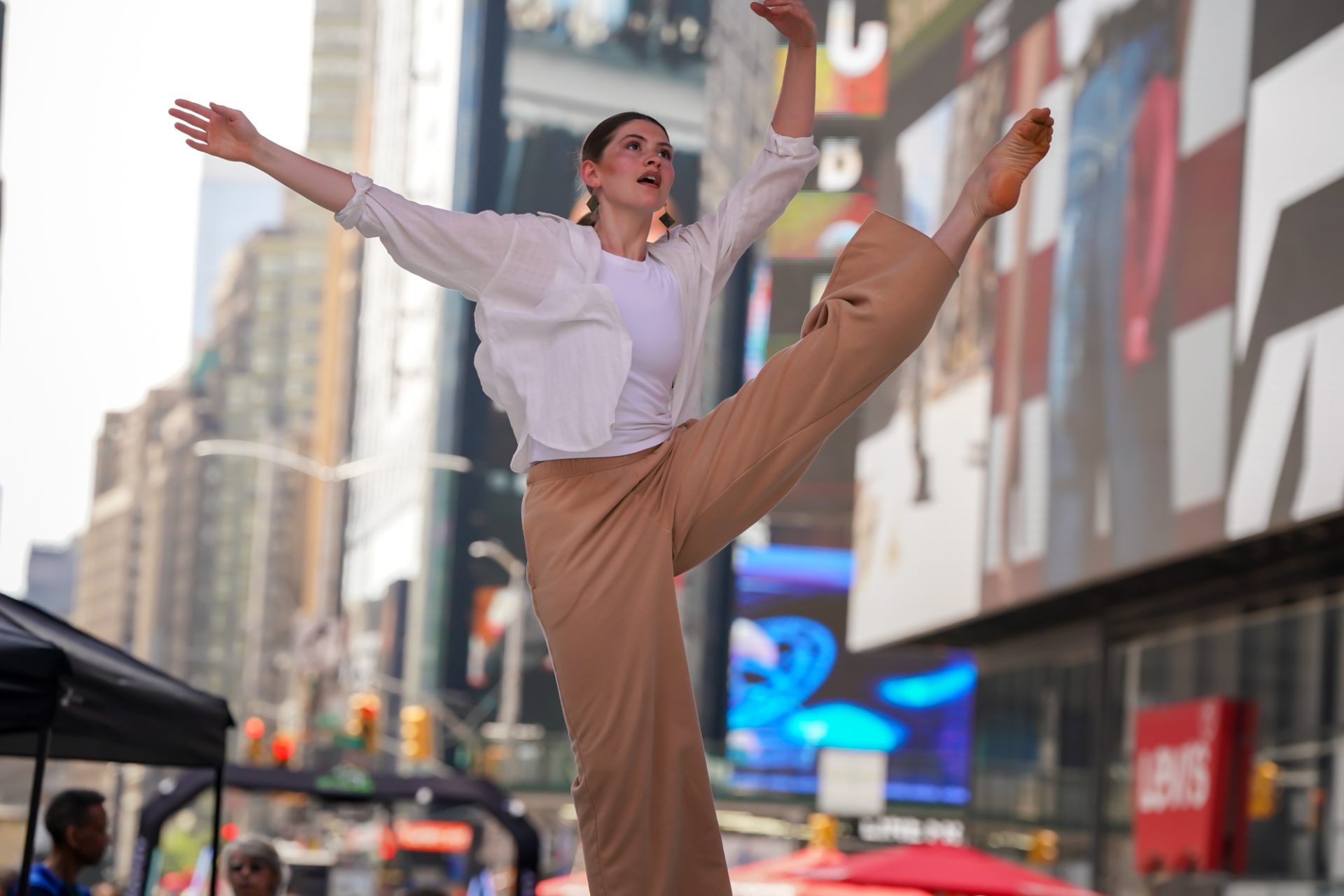
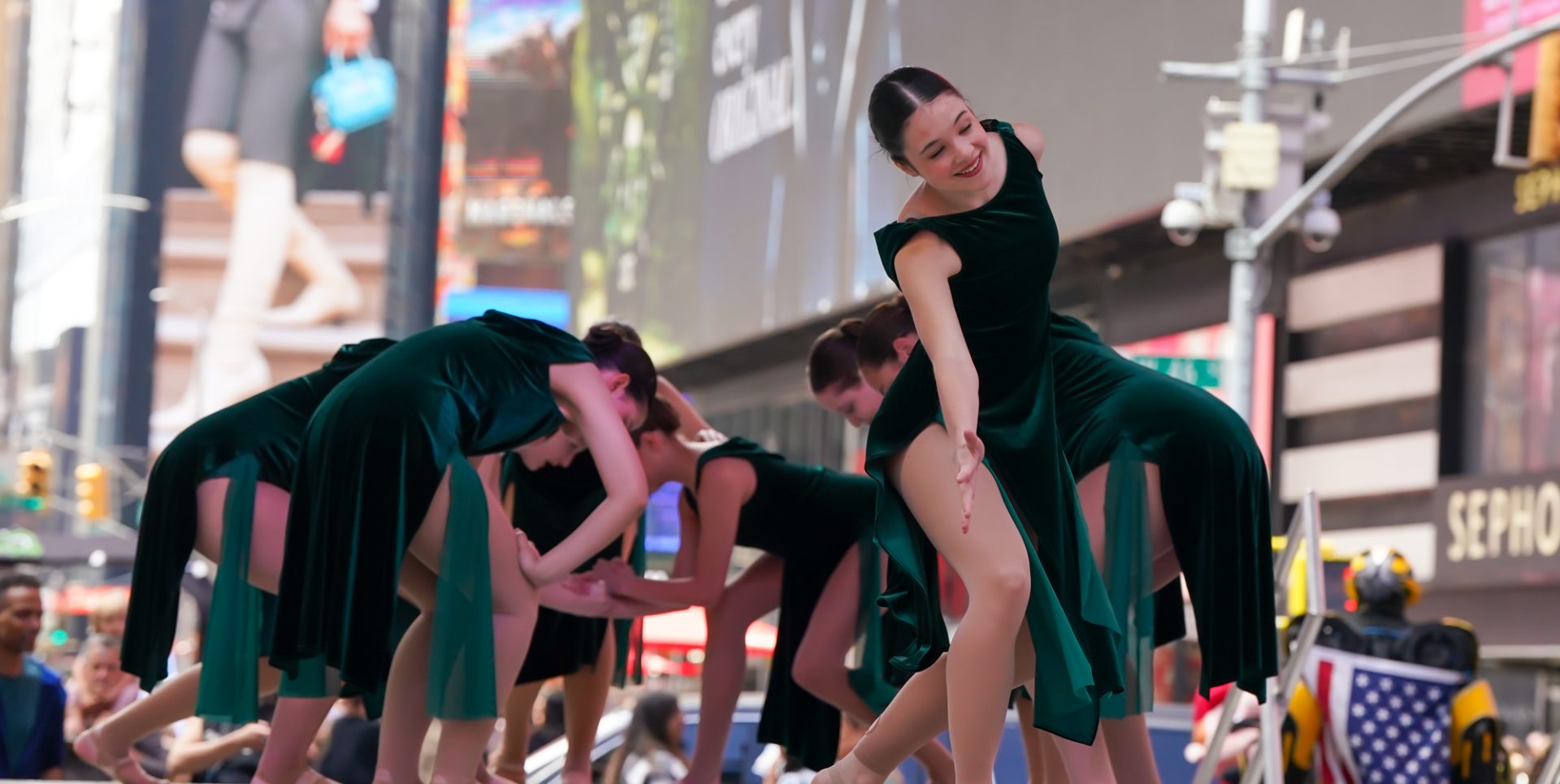
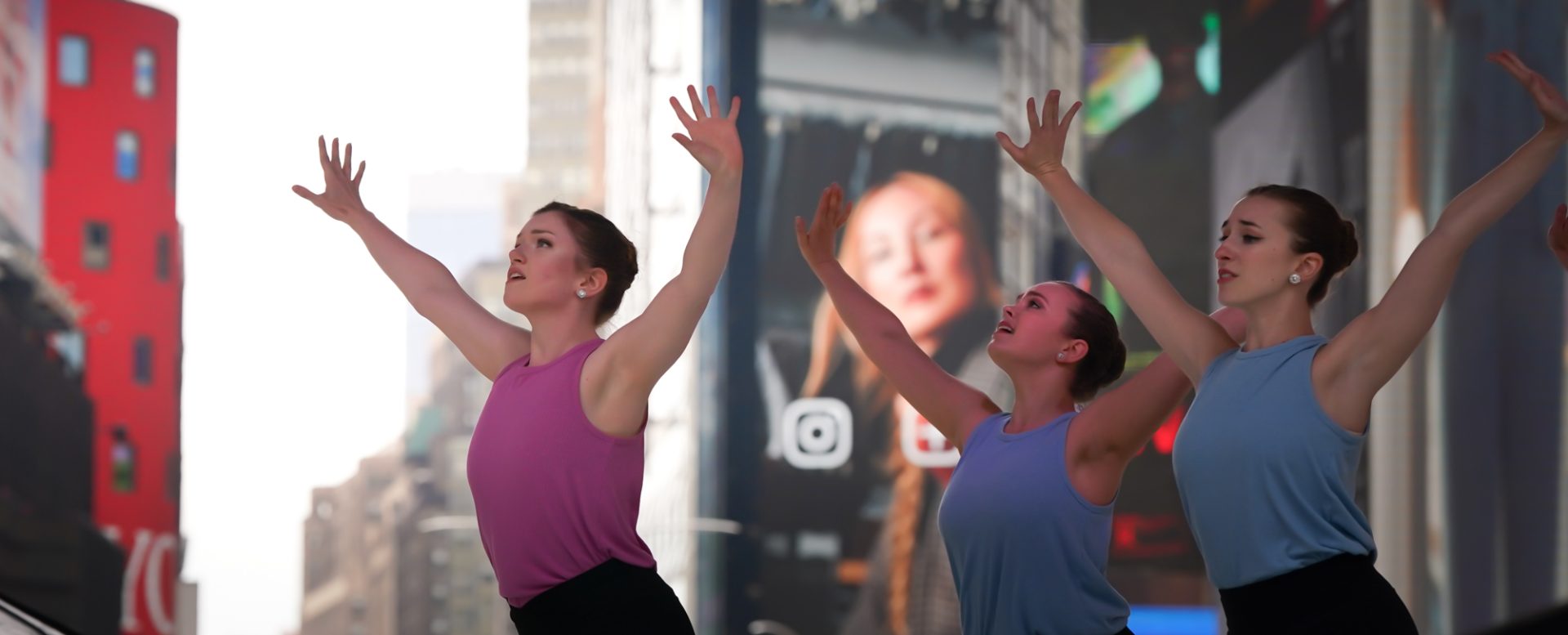
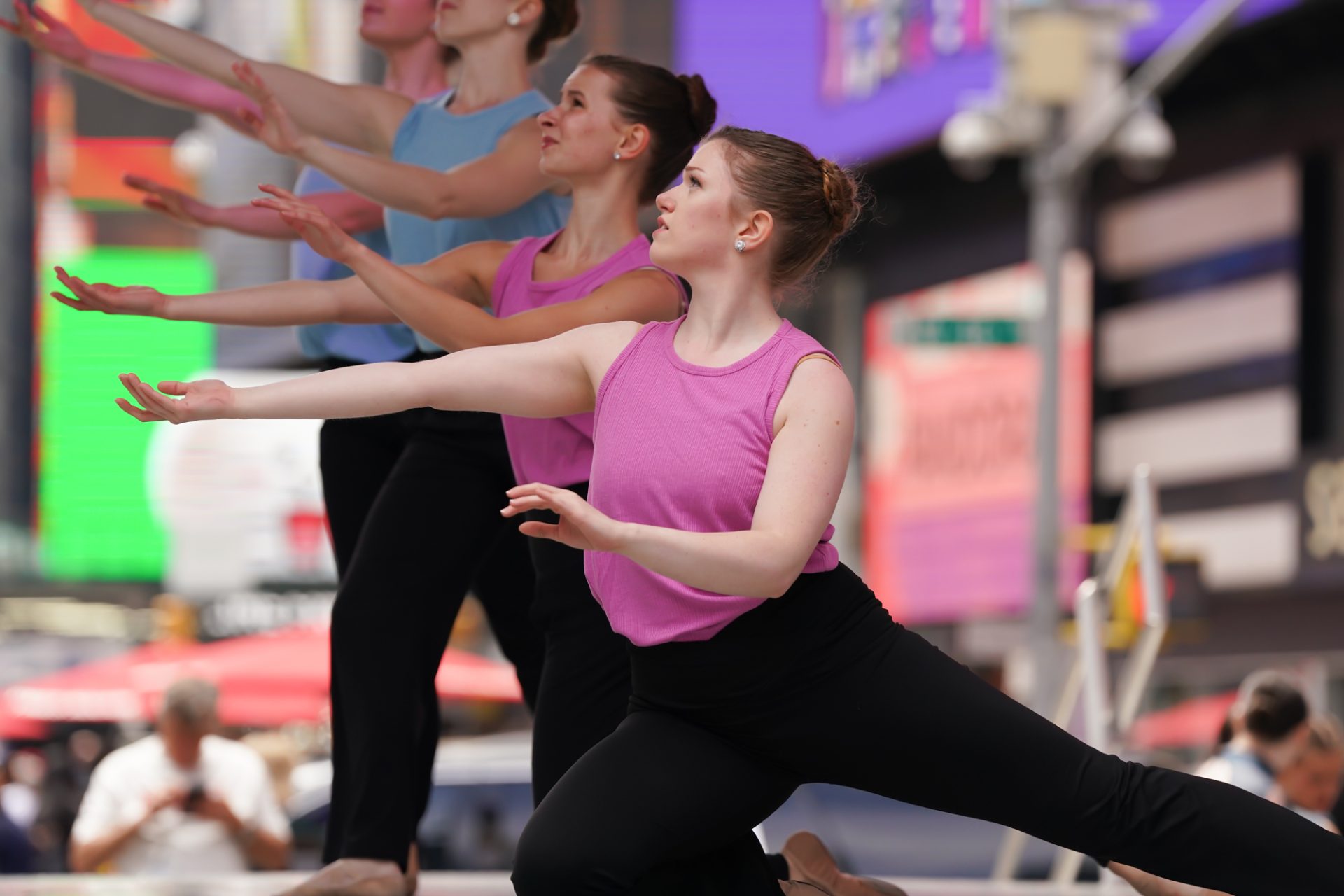
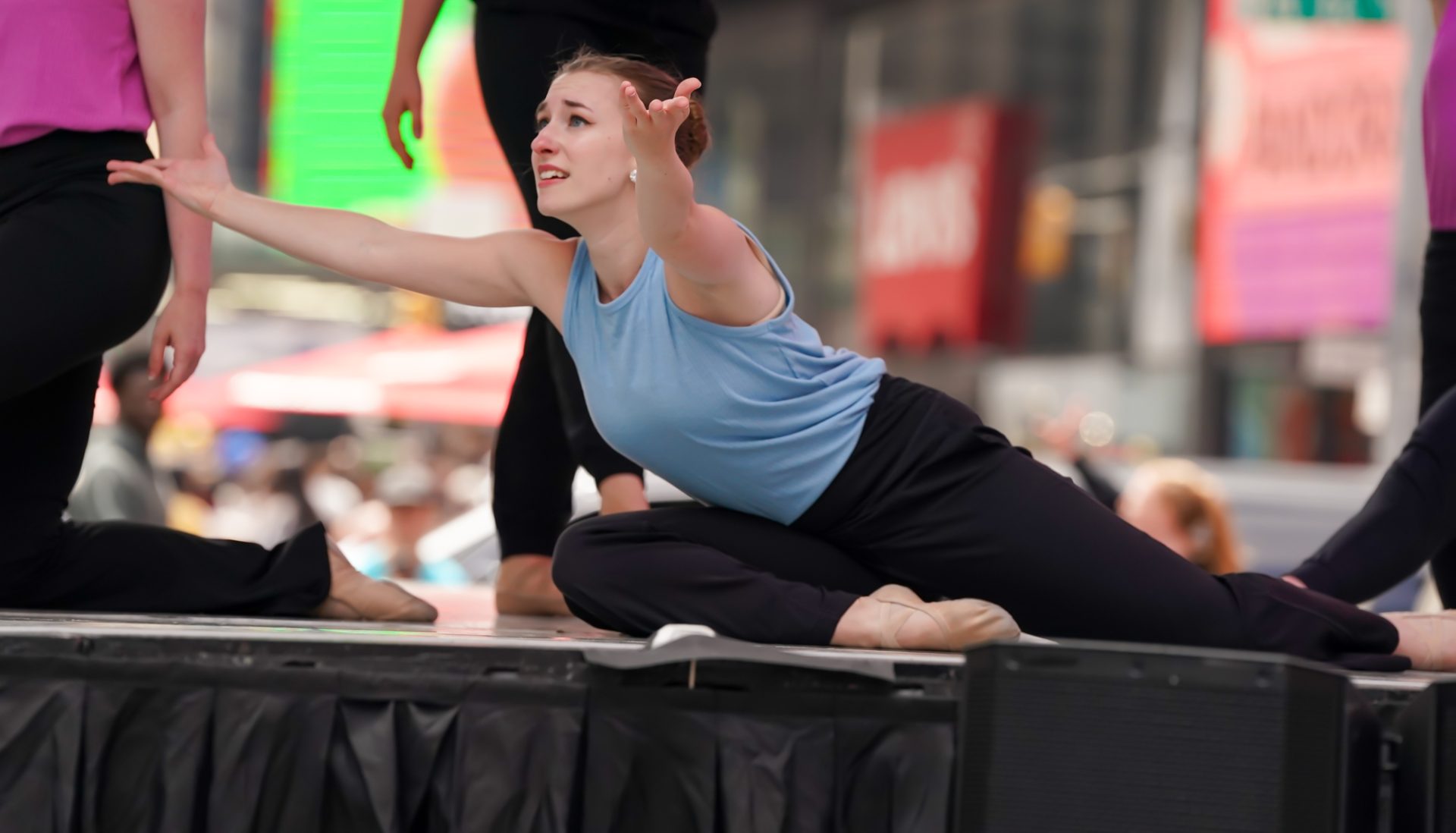
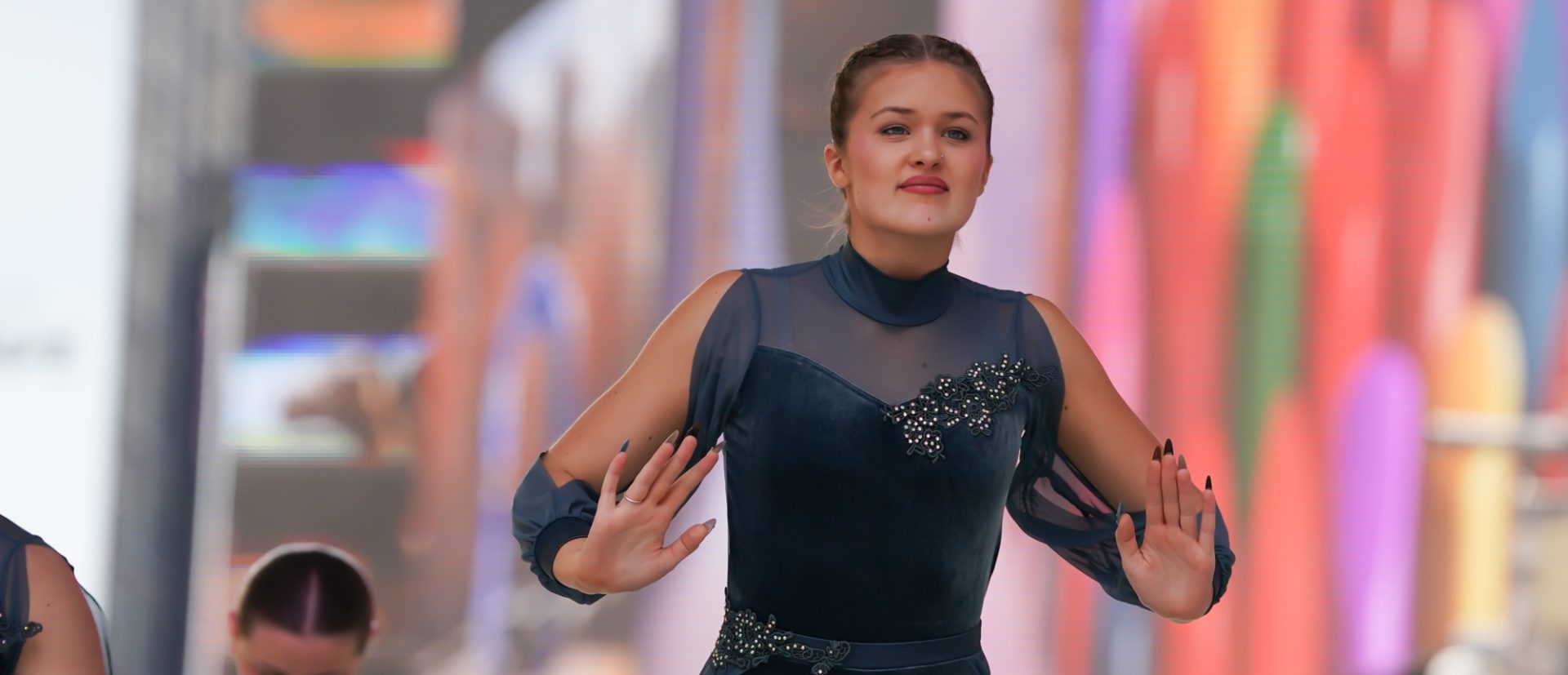
We were in Times Square to see a show on April 18, but it wasn’t for the typical Broadway production. No, this visual and musical theatre was Project Dance New York, an open-air, free dance concert featuring as many as 300 mostly young women, with a sprinkling of men, representing almost three dozen teams from all around the U.S.
From 10 a.m. to 5 p.m., visitors to Times Square streamed by, most stopping to watch, listen and capture images of the young performers. Sightseers tapped their toes or swayed with the music, all the while marveling at the graceful, athletic movements of the dancers. All seemed to have fun, including enthusiastic whoops, hoots and hollers of encouragement after witnessing “wow” moments. And, of course, there was rampant, well-deserved applause after each performance.
Project Dance started with a noble, local purpose: to help NYC “heal” after the trauma of 9/11. Now a High Country resident but formerly a member of the Radio City Music Hall Rockettes, Cheryl Cutlip helped establish the Project Dance Foundation, a 501(c)(3) nonprofit arts and education organization “… dedicated to nurturing dancers and promoting cultural impact through artistic integrity.”
Formally established in 2003 with a more local purpose, but rooted in a mission to inspire people through training, education and performance, Project Dance’ scope has widened, now serving dancers worldwide seeking to use their craft to bring hope and healing to their communities.
Cutlip remains the Project Dance Foundation’s executive director, overseeing three program areas, according to the organization’s website:
The Carolina Snowbelles, a full-scholarship precision dance troupe for girls ages 9 and up, based in Boone, N.C. and offering rigorous weekly training and community-based performances. The program includes an audition-based summer intensive, Kick It Up, that prepares new members for company participation.
Camp of the Arts: A 7-week multidisciplinary summer camp for K-12 students in Boone, offering professional instruction in dance, theatre, music and visual arts.
And Project Dance events, such as the one in New York City’s Times Square. These have grown to be a global initiative, hosting 3-day weekends in cities worldwide with master classes, open-air concerts, and community engagement. Since its founding in 2003, Project Dance has reached 35 cities across six continents.
New York was the beginning, but Project Dance 3-day events have been to several cities and countries, including San Francisco, Los Angeles, Phoenix, Houston, Oklahoma City, Kansas City, Jackson (MS), Chicago, Detroit, Pittsburg, Washington, D.C., Greenville (S.C.), Atlanta, Panama City Beach (Fla.), Orlando, West Palm Beach, and Kona (Hawaii) in the U.S. Internationally, the education and performance events have been in Calgary, Toronto, San Juan (Puerto Rico), San Jose (Costa Rica), London, Paris, Lima (Peru), Jerusalem, Madagascar, Singapore, Penang (Malaysia), Manila, Hong Kong, Taipei (Taiwan), Sydney and Brisbane (Australia).
In 2026 alone, in addition to New York City, Project Dance is hosting 3-day events in Houston, Costa Rica, Paris, Buenos Aires, Panama City Beach, Jackson (Miss.) and Atlanta.
Already planned for 2027 and beyond are stops in Kona (Hawaii), Tokyo, Mauritius Island, and Los Angeles (planned around the L.A.-hosted 2028 Summer Olympics).
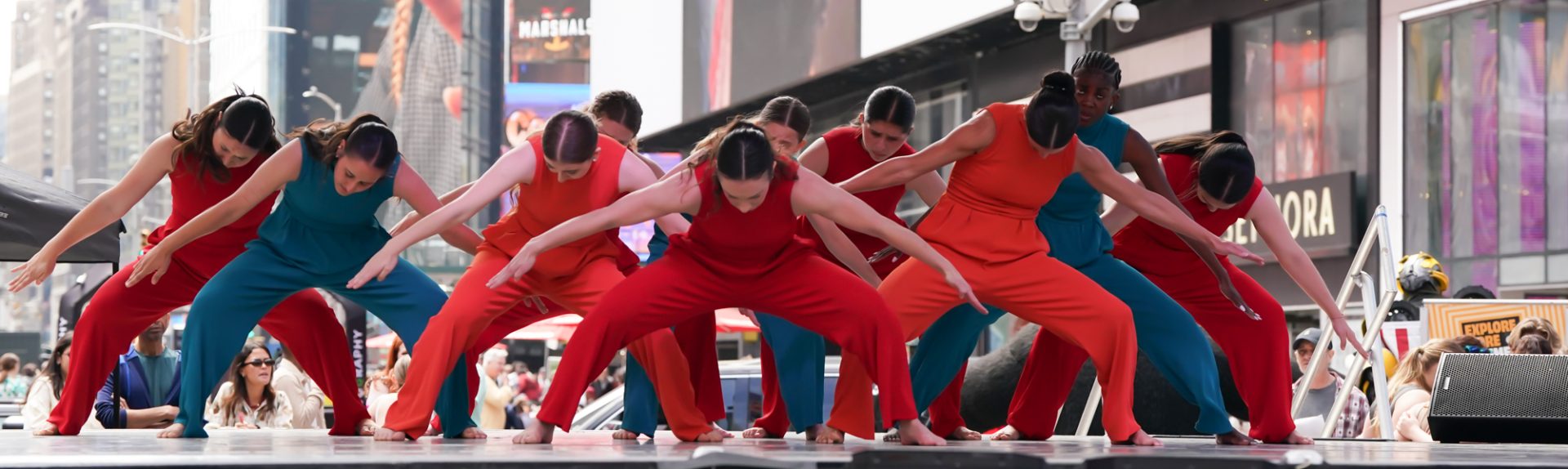
Although New York’s itinerary also included rehearsals and reviews of the various dance teams, a worship concert, and master dance classes, a focal points was a crisply-produced, open-air dance concert in Times Square, a popup stage in Father Duffy Square at Broadway and 47th Street. One troupe followed another without a break except for a brief “interlude” when all available dancers performed the event’s theme song, en masse, on and in front of the stage. Since almost all of the dancers did multiple routines to different musical numbers throughout the day, changing rooms for the colorful costumes were arranged in nearby hotel spaces.
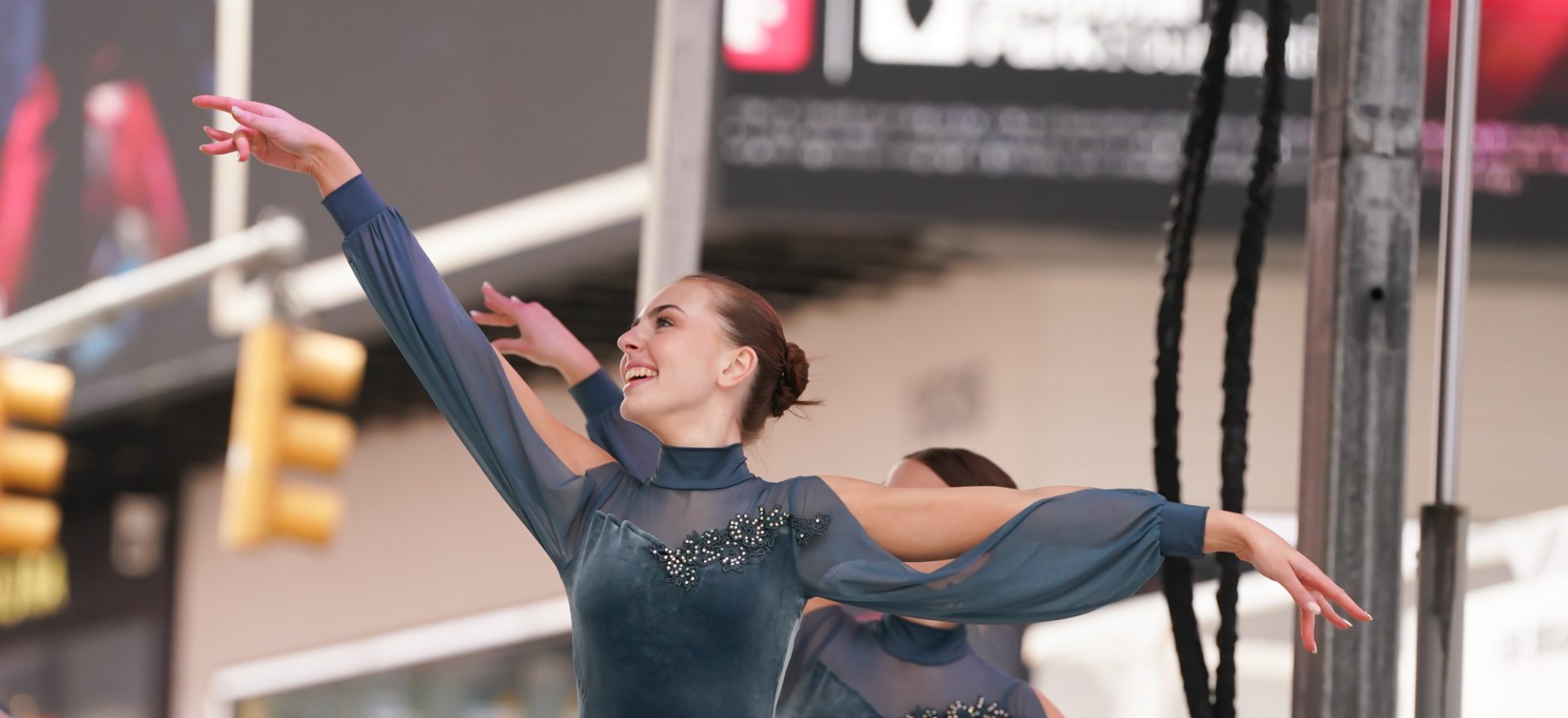
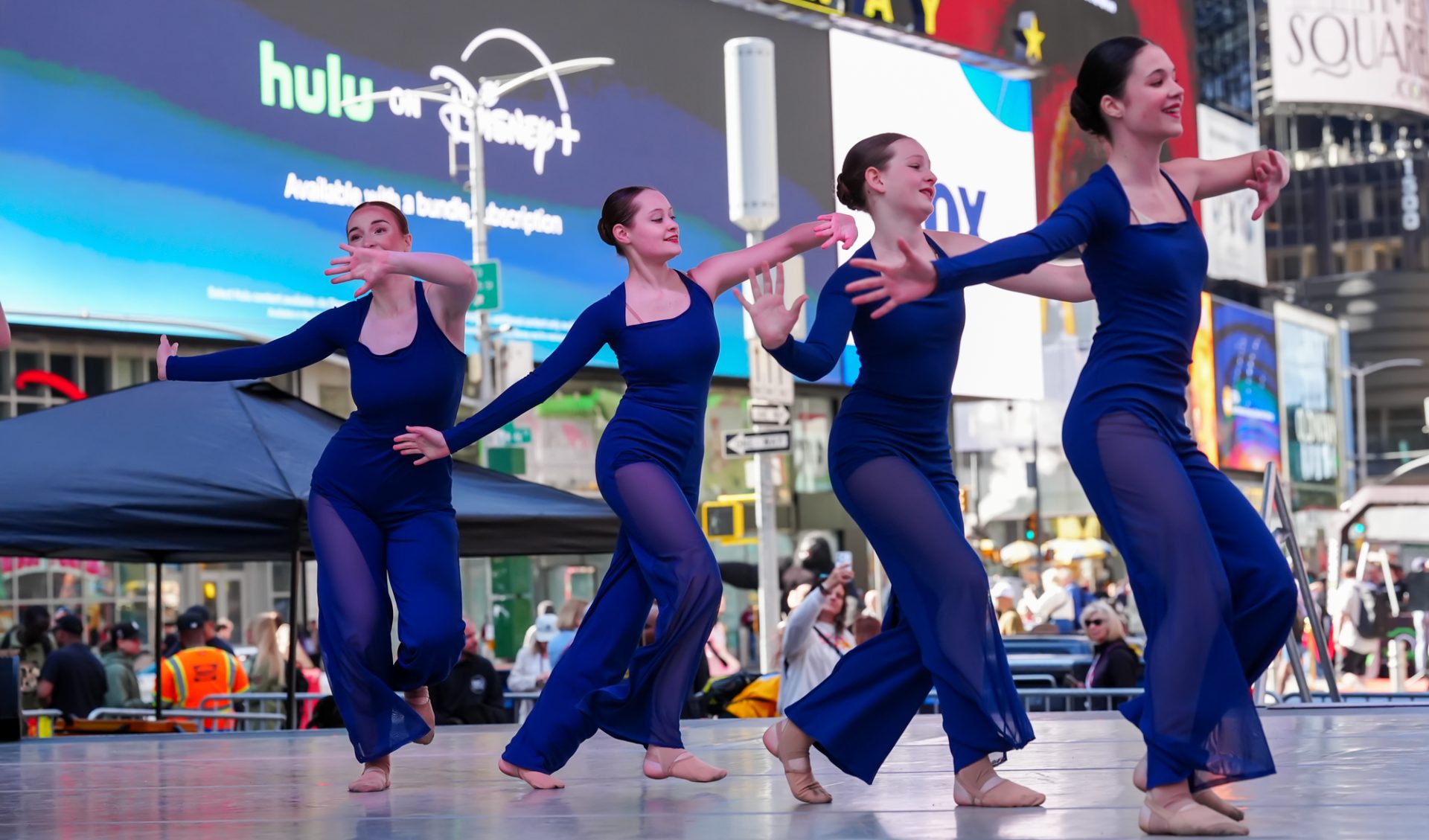
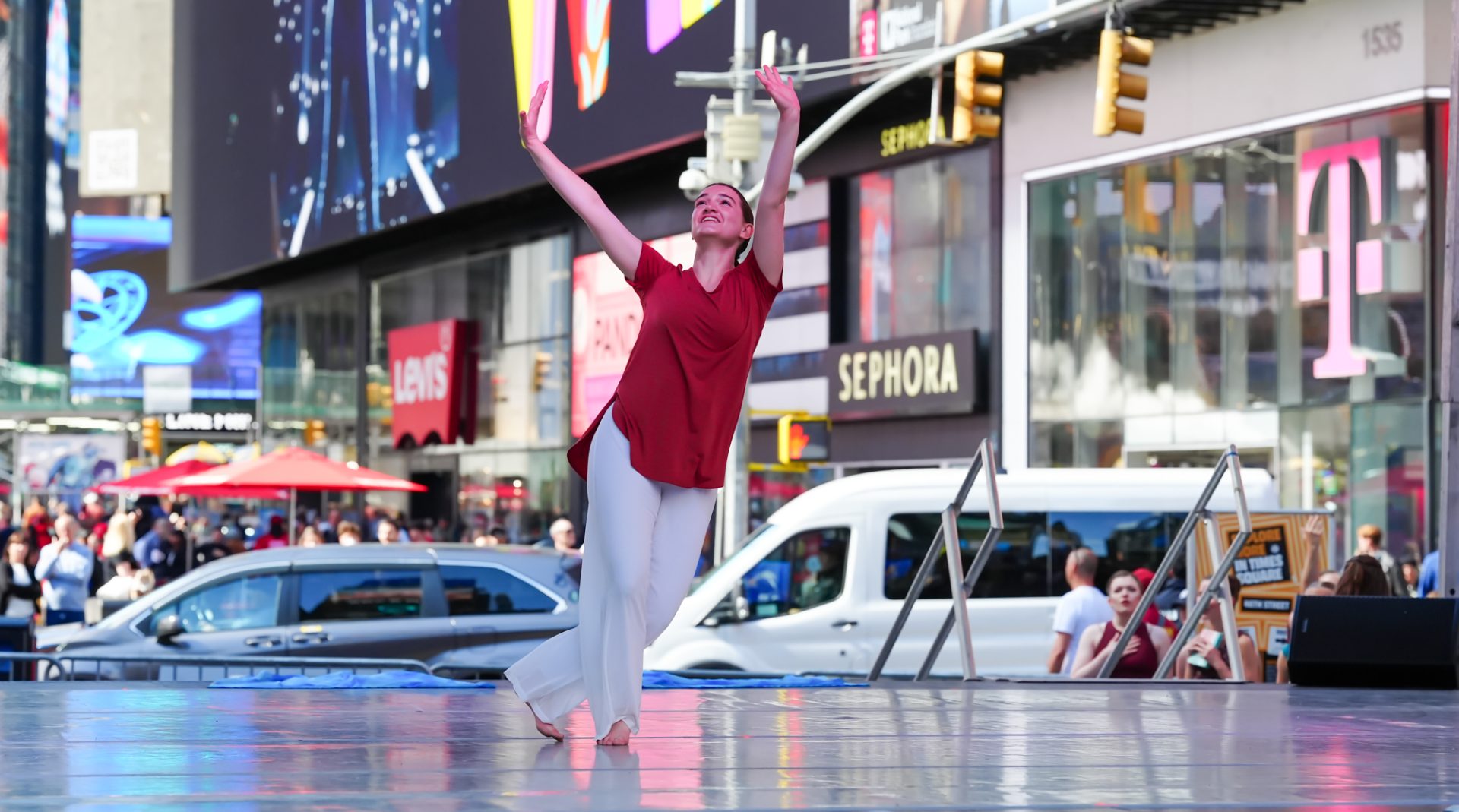
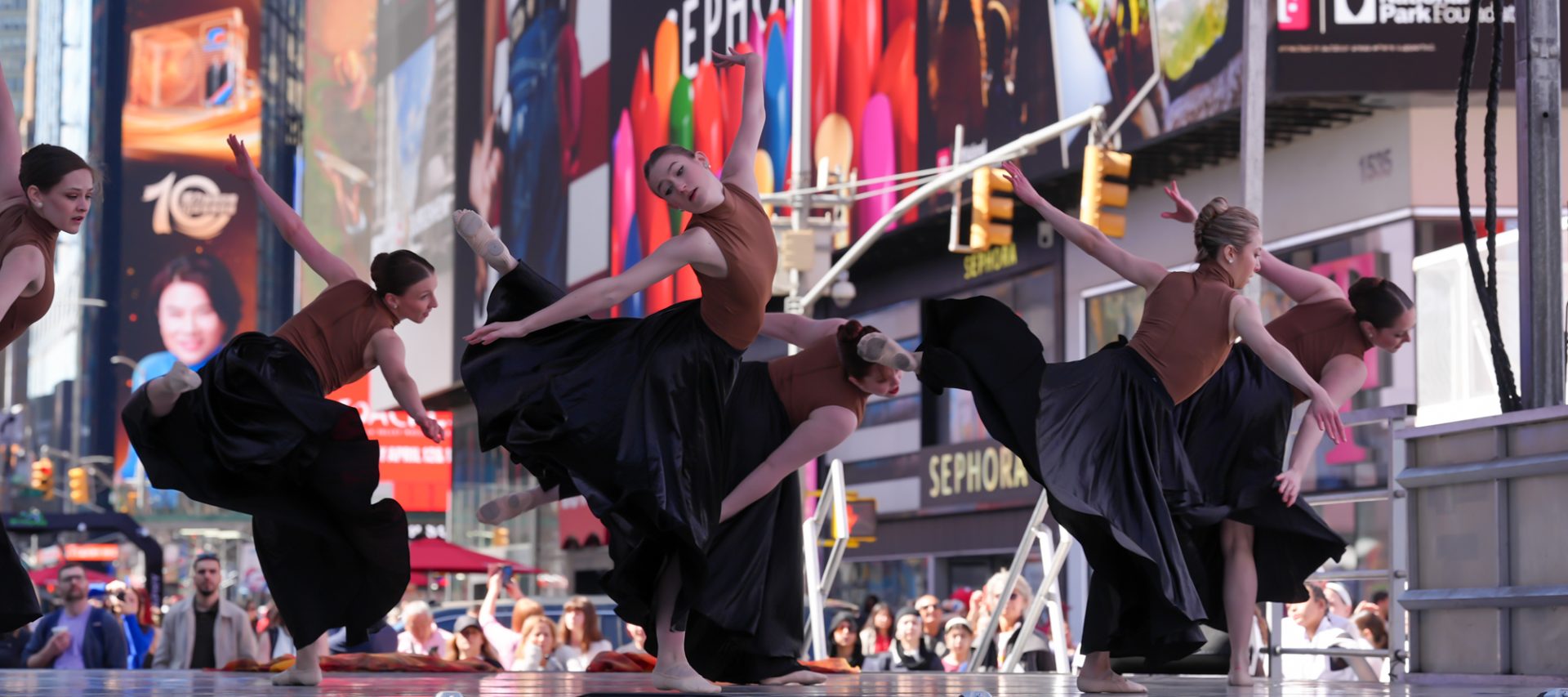
Here’s a comprehensive sampling of images from the live dance concert, the styles including jazz, tap, ballet, modern, hip hop, and breakdancing, to name a few. Many of the performances had moving religious themes.
All photographic images captured by David Rogers for Blowing Rock News: