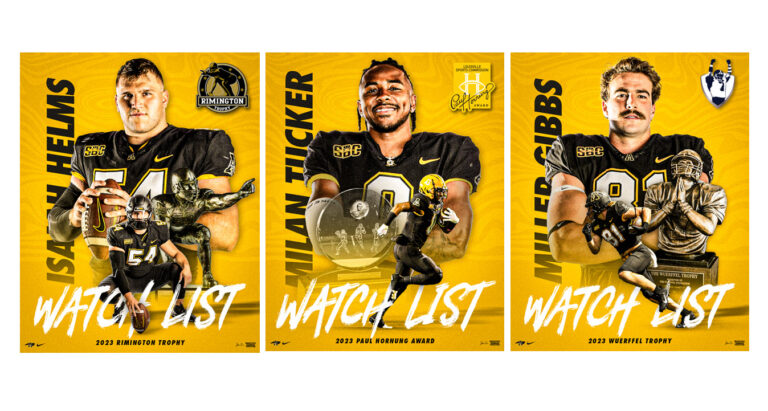
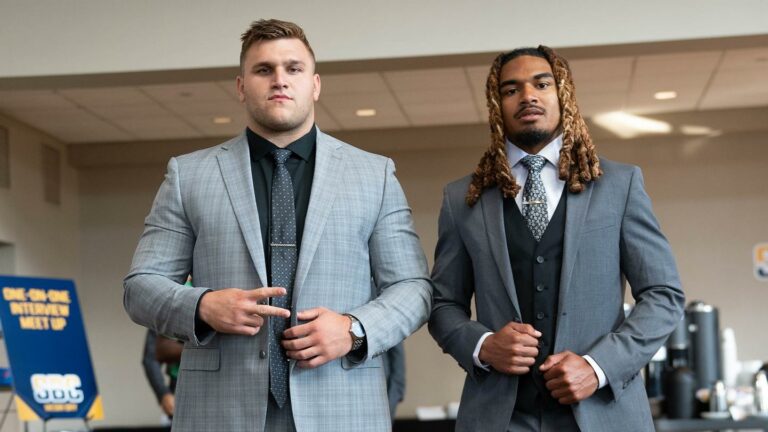
By David Rogers. BOONE, N.C. — Three more Appalachian State football players garnered national attention this week by being named to preseason “watch lists” for individual awards. The trio includes Isaiah Helms for the Rimington Trophy, which goes to the nation’s top center; Milan Tucker for the Paul Hornung Award, given annually to the most versatile FBS-level player in the country; and tight end Miller Gibbs, for the Wuerffel Trophy, recognizing the FBS player who best combines exemplary community service with leadership achievement on and off the field.
PLAYER PROFILES FROM APP STATE SPORTS
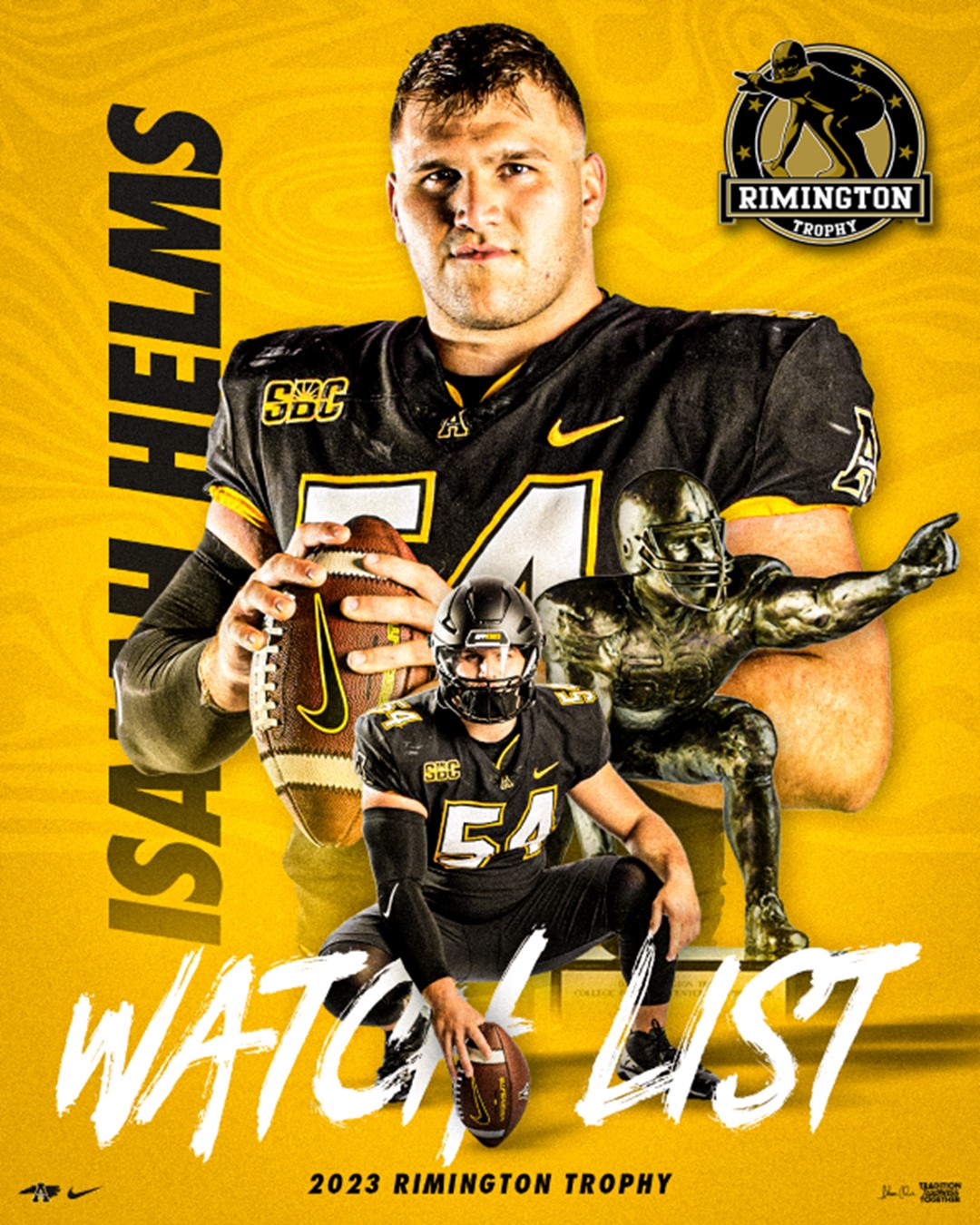
Isaiah Helms
Graphic courtesy of App State Sports
An All-Sun Belt performer, Helms started the last six games at center in 2022 and started in all 25 of his game appearances for the Mountaineers since transferring from Western Carolina before the 2021 season. He was the Catamounts’ starting center for two seasons and was named a HERO Sports FCS Sophomore All-American during the 2020-21 season (that didn’t count against his college eligibility).
Since its inception, the Rimington Trophy raised more than $5 million for the Boomer Esiason Foundation, which is committed to finding a cure for cystic fibrosis. Dave Rimington, the award’s namesake, was a consensus first-team All-America center at Nebraska in 1981 and 1982, during which time he became the John Outland Trophy’s only two-time winner as the nation’s finest college interior lineman.
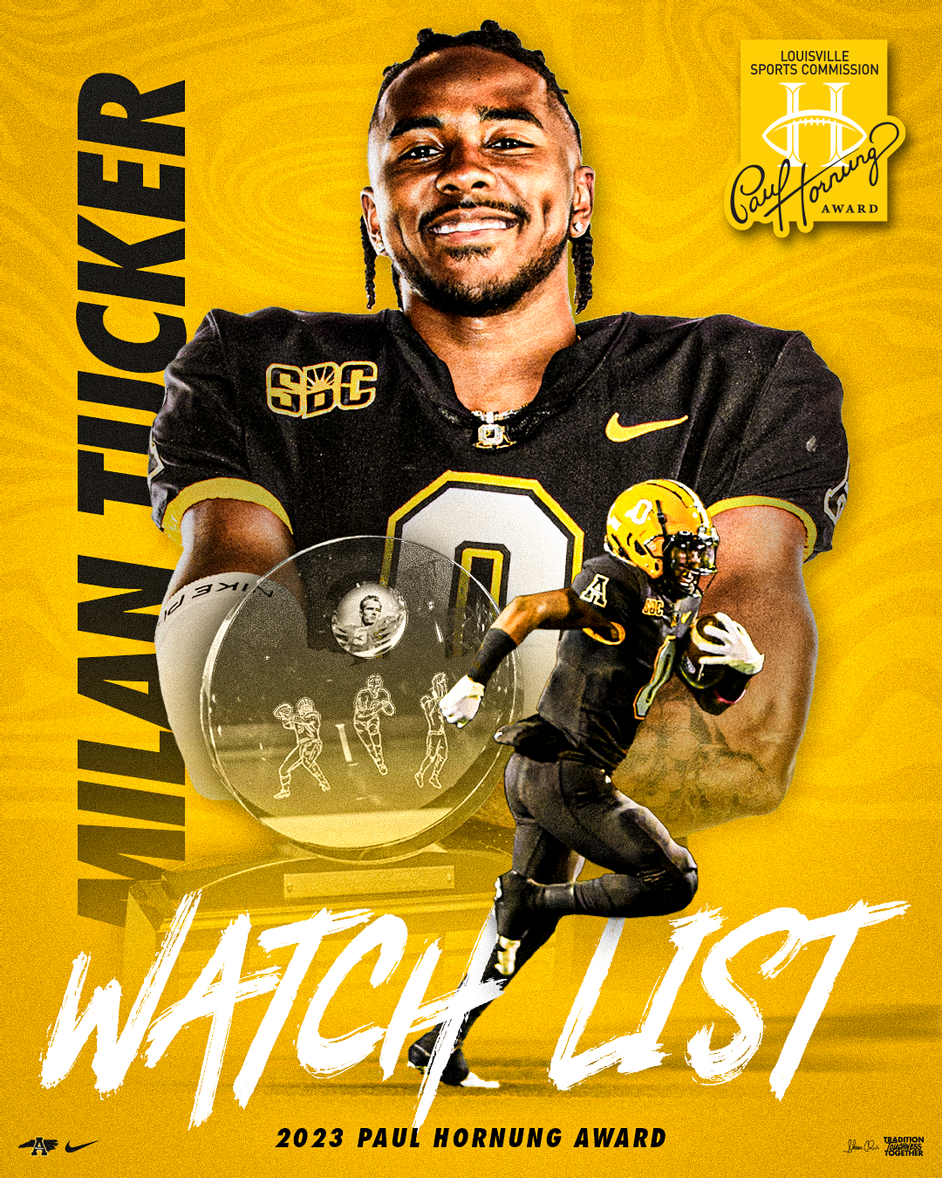
Graphic courtesy of App State Sports
Milan Tucker
The Paul Hornung Award is presented by Texas Roadhouse and given by the Louisville Sports Commission in memory of the late football legend and Louisville native, Paul Hornung.
Over the last three seasons, Tucker returned kicks while spending time at both cornerback and wide receiver, depending on team needs. He earned second-team All-American recognition as a kick returner by the Football Writers Association of America last season, when he ranked second nationally (among qualifying players) with a kick return average of 28.2 yards (with 620 yards on 22 returns).
Tucker scored his first career touchdown with a 96-yard kickoff return at Marshall. He also had key returns of 47 yards against North Carolina and 63 yards in the win against Georgia State. On defense, he contributed as a cornerback, starting at that position against Robert Morris.
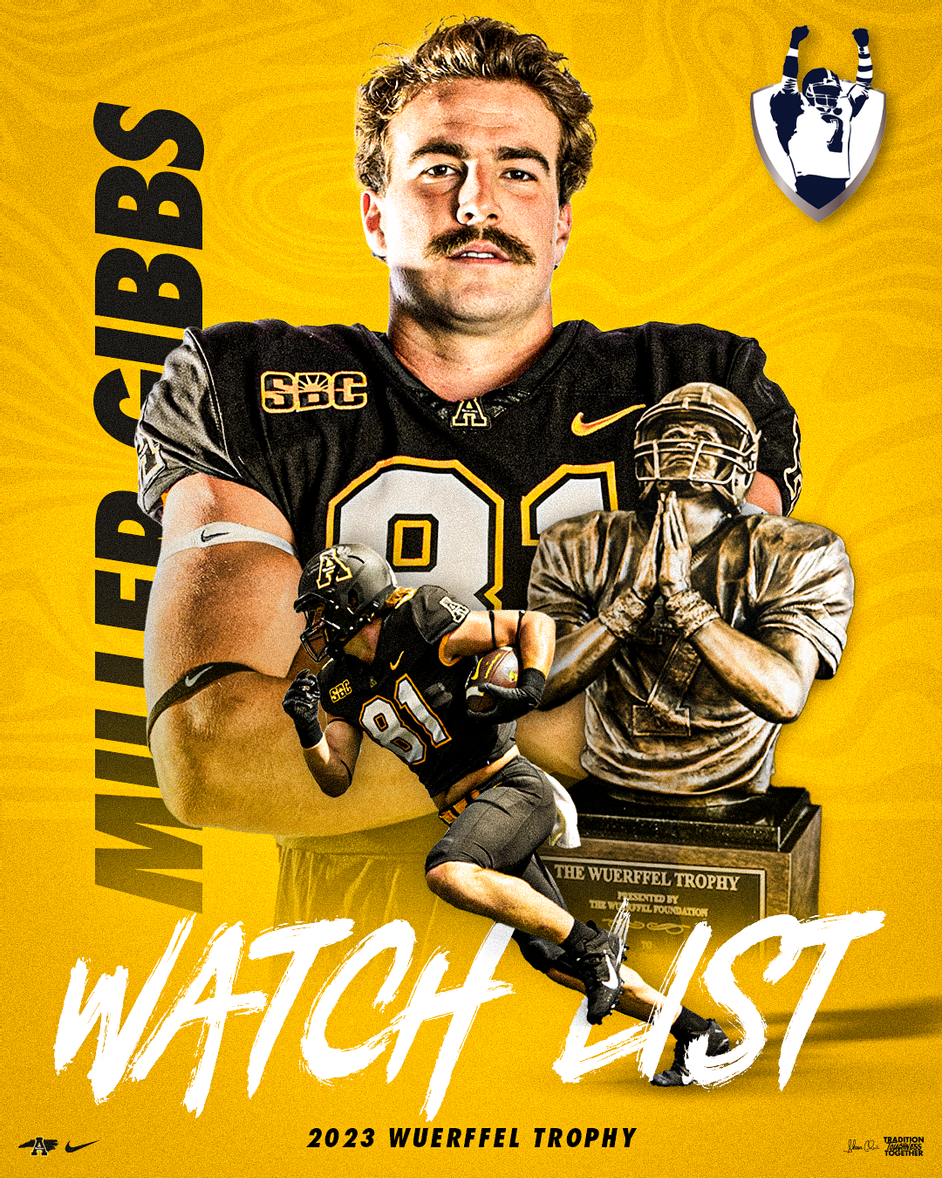
Miller Gibbs
Graphic courtesy of App State Sports
Named after 1996 Heisman Trophy-winning quarterback Danny Wuerffel from Florida, the Wuerffel Trophy honors college football players who serve others, celebrate their positive impact on society and inspire greater service in the world.
During his App State career, Gibbs and other teammates spent time coaching and as a positive influence for participants in the Girls on the Run program. Gibbs also leads a bible study group involving members of App State’s football team.
Gibbs, who earned a management degree in December, has returned to App State for a sixth year and is pursuing a graduate certificate in business analytics. He played in 45 career games so far, including all 12 during a 2022 season in which he made five starts and received the team’s Jerry Moore Award.
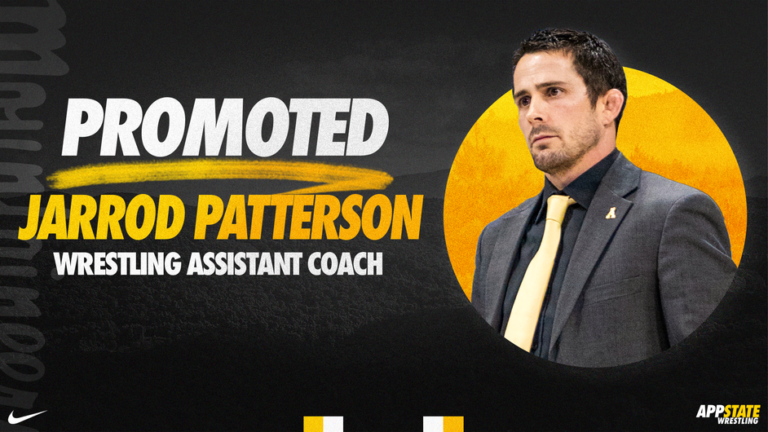
By Bret Strelow for App State Sports. BOONE, N.C. — App State Wrestling head coach JohnMark Bentley announced Wednesday that Jarrod Patterson has been promoted to a full-time assistant coach.
“Jarrod did a great job with our team during his first year in Boone,” Bentley said. “We’re excited that he’ll continue to work with our program and our wrestlers.”
Patterson joined App State’s staff as a volunteer assistant in May 2022 and contributed to a banner 2022-23 season in which the Mountaineers finished with a dual team ranking of No. 20 in the nation, secured a SoCon regular-season title with an 8-0 league record, earned a SoCon sweep by winning the conference tournament and had six wrestlers qualify to compete at the NCAA Championships.
“I am grateful for the opportunity and look forward to helping the program continue to produce champions on and off the mat,” Patterson said.
After being a four-time NCAA qualifier and an All-American at 125 pounds during a decorated career at Oklahoma from 2009-14, Patterson’s work with the top portion of App State’s order and the entire roster helped produce championship results. The Mountaineers went a combined 21-2 in SoCon duals at 125, 133 and 141 pounds last season.
Patterson, who earned a bachelor’s degree in criminology and master’s degree in human relations from Oklahoma, was a three-time Academic All-American and four-time Academic All-Big XII selection during his collegiate career.
This feature story, reflecting a partnership between High Country Sports and High Country Press, also appears in the August edition of High Country magazine, with even more photographic images.
By David Rogers. BOONE, N.C. — Since it was first codified in the middle of the 19th century, the uniquely American game of baseball largely survived the winds of change. Technology brought instant replay to TV monitors, digitized strikes zones, and aluminum bats, but the bases are still roughly 90 feet apart and the pitcher’s mound 60 feet from home plate.
Nine players make up a team and the pungent smell of linseed oil still makes the leather glove more pliable after hanging in the closet all winter. Artificial intelligence may soon replace umpires in calling balls and strikes, but the players’ respective missions remain the same: throw the ball, hit the ball, catch the ball and tag a runner out.
Photographic image by David Rogers
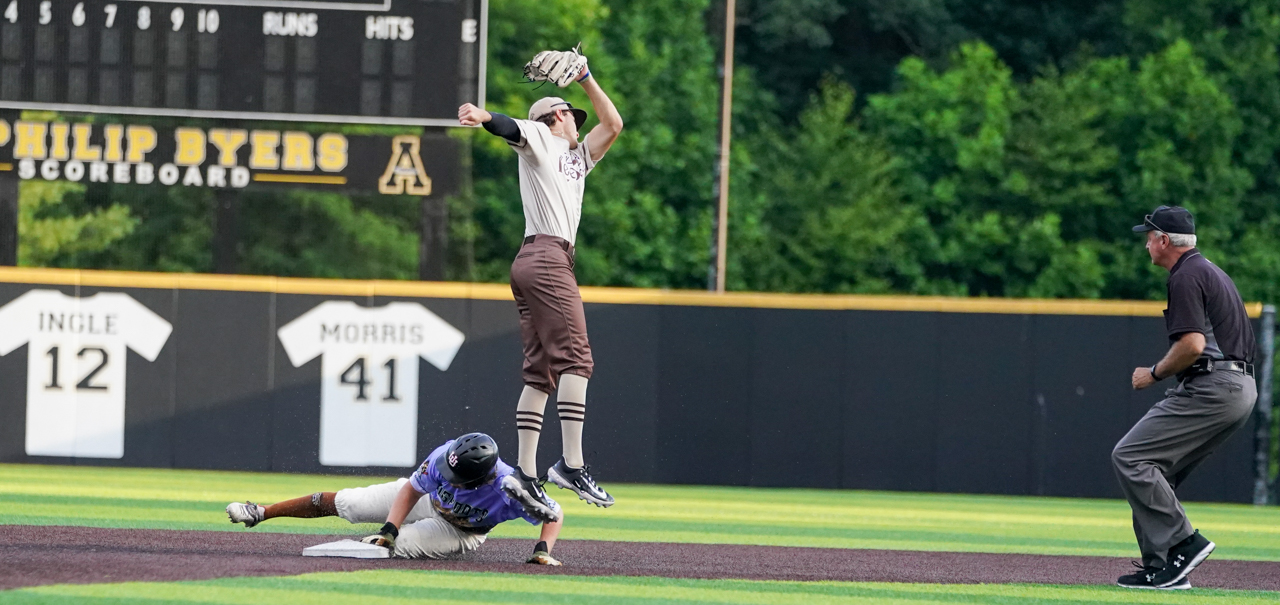
The crack of a bat in a corner of the city park still brings curious smiles to passers-by who stop to watch a kid run to first base while another chases the ball rolling to the right field fence. The throw from the outfield is more of a desperate heave, skying into the air before falling into the outstretched glove of an infielder, the tag just missing as the batter-turned-sliding-runner arches around impossibly to grab second base, the umpire spreading his arms wide while yelling “safe!”
Big league scouts still scour rural sandlots, hoping to discover hidden talent, listening intently for the decisive smack of a 9-inch horse-hided orb being delivered into a catcher’s mitt, a decisive sound that just might foreshadow discovery of the next Whitey Ford, Nolan Ryan, and Randy Johnson of yesteryear, or maybe the next Aroldis Chapman of the present day.
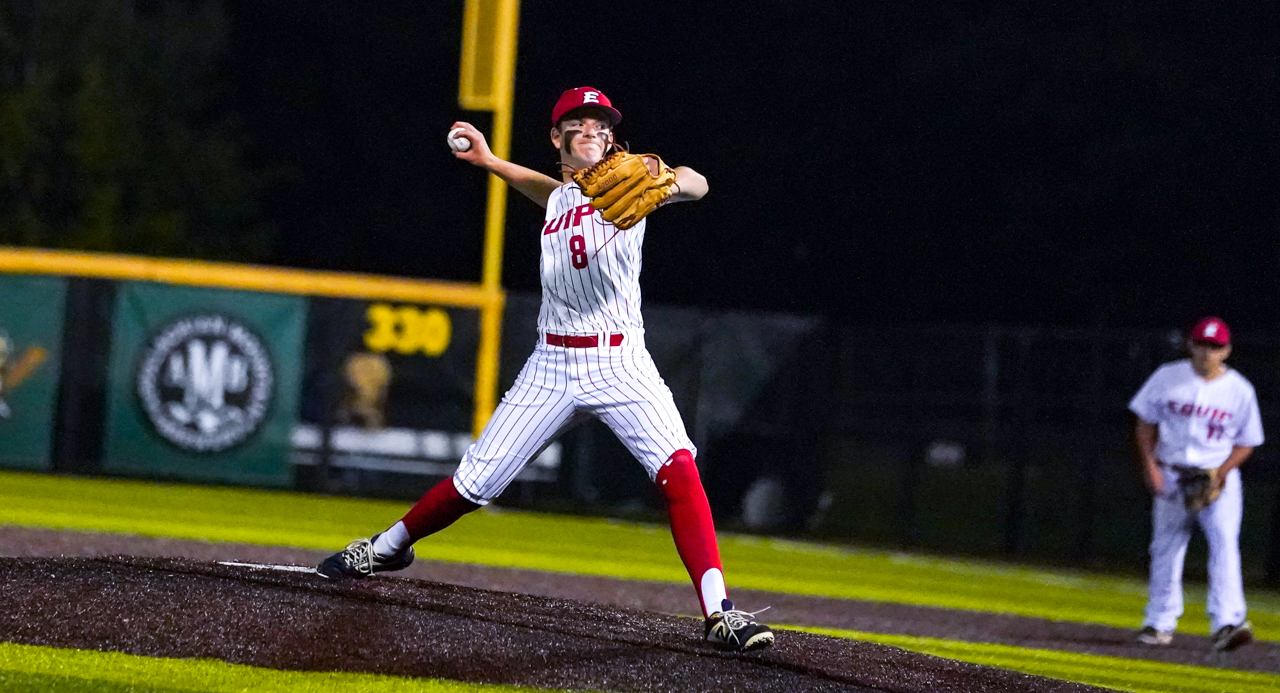
Speed and power command each decisive moment in baseball, reflexes pitted against reflexes.
Photographic image by David Rogers
Growing up, but not out of the game
The faces playing baseball may change from year to year or even decade to decade, but the game remains largely the same. When we grow too old to take the field for a man’s game demanding a lot of boy in us to play it, we sit in the stands and remember our glory days on the diamond. We are fascinated. We applaud. We rejoice at the walk-off grand slam home run or the ninth inning slide into home plate to win the game.
Young and old, we marvel at the accomplishments wrought by the boys of summer.
The High Country is blessed to have organized, summertime ball being played not just by our kids competing in recreation leagues but at an even higher level by the Boone Bigfoots, featuring student athletes who take the field during the school year on college and university teams around the country.
The Bigfoots, named after the mythical creature said to haunt the Appalachian Mountains, compete in the Coastal Plain League, a Southern equivalent to the Cape Cod League made famous in the 2001 movie, “Summer Catch,” starring Freddie Prinze, Jr. and Jessica Biel.
The CPL teams have unusual names, similar to the Bigfoots, reflecting the local area: the Macon Bacon, Asheboro Zookeepers, the Forest City Owls, the Wilmington Sharks, the Florence Flamingos or the Wilson Tobs (think, “tobacco”), and more.
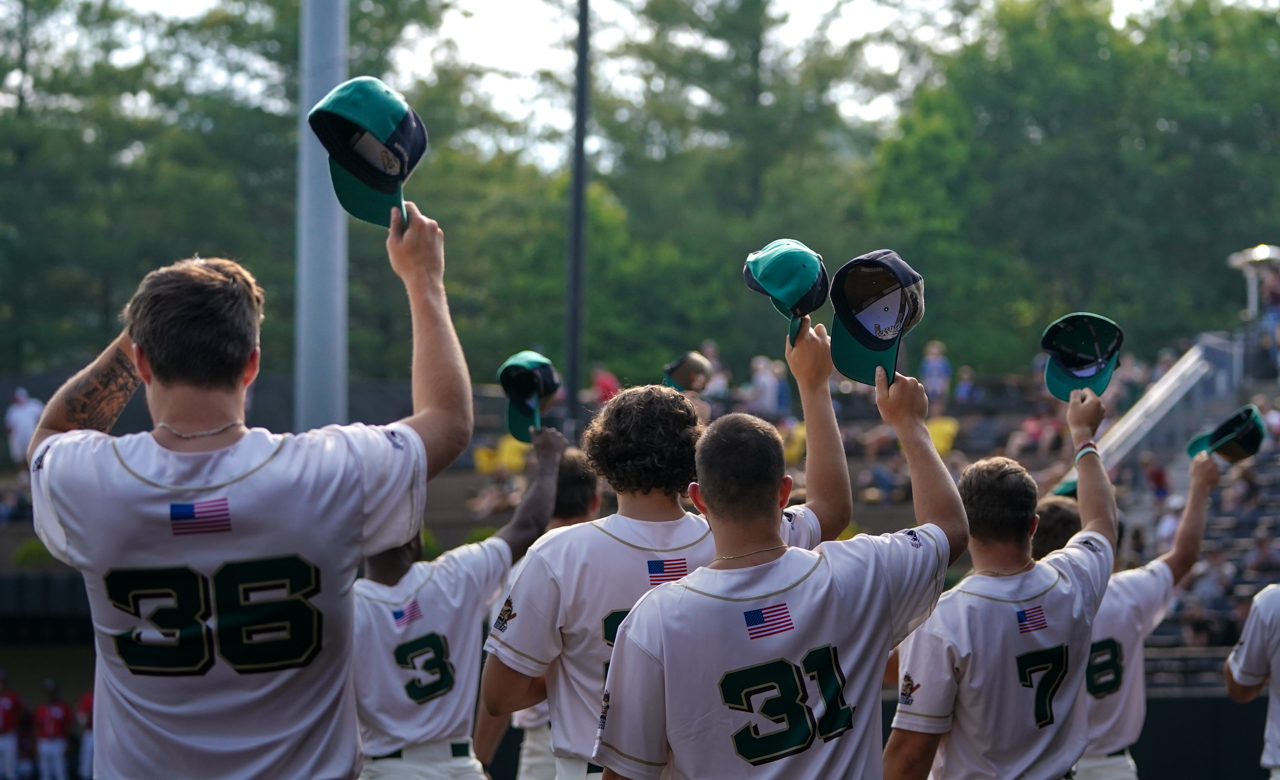
Every game, the Bigfoots salute military veterans and first responders. Photographic image by David Rogers
Like the other teams, the Bigfoots’ coaches and management recruit players from different schools. Because of the milder summer temperatures in the High Country and the beautiful App State facilities, it is an easy sell.
The Boone roster includes a couple of Appalachian State athletes (Braxton Church, Dante Chirico, Zach Lewis) and at least one, Tristan Salinas, having just graduated Watauga High School and headed to play at another NCAA Division I school, South Carolina.
Several NCAA Division I schools are represented, but still others compete during the school year as some of the better players at Division II and even Division III levels. Transylvania, Mars Hill, High Point, USC Beaufort, North Carolina Wesleyan, Presbyterian, Lenoir-Rhyne, UNC Pembroke, Long Island, and Western Carolina are among the less well-known names, all with good baseball programs.
The Ivy League is also represented, those schools generally regarded as among the most academically challenging, with a couple of players from Princeton University.
After competing in a lower division summer college league the last two seasons, the Bigfoots graduated to the higher level CPL in 2023.
Team organizer Bob Wilson, whose professional career as a television and film producer spanned at least three decades in California, revealed in a recent interview that he loves baseball at the collegiate level, was impressed with the facilities at Appalachian State, and made officials at the university an offer they couldn’t refuse.
“In the CPL, we are the only team organized as a non-profit organization. In my professional career as a film producer, I have been blessed, financially, so I committed 100 percent of our net proceeds to the App State fund to support student athletes in exchange for the opportunity to use Smith Stadium and Beaver Field as the Bigfoots’ home venue,” explained Wilson.
Photographic image by David Rogers
There are common themes among the players interviewed: the ability to concentrate on playing baseball and getting comfortable in a more competitive environment.
“I am very grateful for the opportunity provided me by Coach (Randall) Ortiz and Bob (Wilson),” said recent Watauga High School graduate Tristan Salinas, who will be playing for the University of South Carolina in 2024. “One of my coaches at South Carolina put it best. He said it is like driving a car. When you first get your license, you are comfortable at 30-40 miles per hour, then you get faster as you get better. Playing ball in the SEC you are facing pitchers throwing 80-90 miles per hour, perhaps even faster. This is a good chance for me to get used to that middle ground, maybe 75-85 miles per hour, before I get onto the bigger stage in Columbia.
“I have always loved playing travel ball during the summer and last year was my last year playing on the team I had been with for 13 years,” added Salinas. “This is an opportunity to continue playing in the summer, make new friends, branch out and improve my skills. It is a great new chapter of my life.”
Right-handed pitcher Luke Patton is one of those NCAA Division III players, attending Transylvania University in Lexington, Ky.
“After my freshman year this past season, my coach told me that playing for the Bigfoots would be a great opportunity to play with and against even better talent. And that is exactly what I am finding. Coming here, there are guys from big time programs, even Power 5 programs like Duke University and South Carolina, all baseball programs that are well known, like George Mason,” said Patton. “This is a great experience. In D3, there are things that you can get away with but down here, at this higher level, even small mistakes are exposed during a game. You have to be better prepared.
“It is a little different playing summer college ball without having to worry about academic studies,” continued Patton. “You are waking up in the morning and all you have to do is play baseball. It is a great feeling knowing that you don’t have to go home and study.”
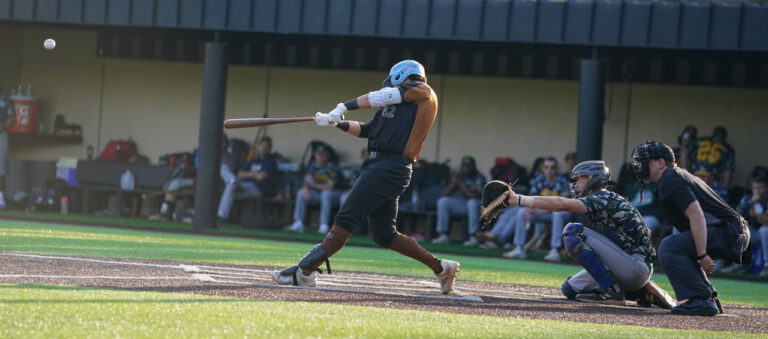
After a June 4 win by the Bigfoots over the Asheboro Zookeepers, Caden Wagner analyzed his big hit, a home run in the seventh inning that helped propel the Bigfoots’ comeback victory.
“A couple of pitches earlier he was throwing off-speed on the outer half of the plate, so I was thinking to myself to try and stay in the middle of the field or try to catch a gap, don’t try to do too much. As it turned out, I connected with the ball just right,” Wagner recalled of his rocket that sailed over the 385-foot sign in left center.
Wagner hails from Parker, Colorado and attends school at the University of Northern Colorado, an NCAA Division I school competing in the Summit League against good baseball schools like Oral Roberts, North Dakota State, South Dakota State and Nebraska-Omaha.
“I played in the CPL last summer with Martinsville and Coach Randall Ortiz, our coach here at the Bigfoots this year. My summer last year was cut a little bit short in order to have some back surgery, so I wanted to come back out here and play a full summer for Coach Ortiz,” said Wagner.
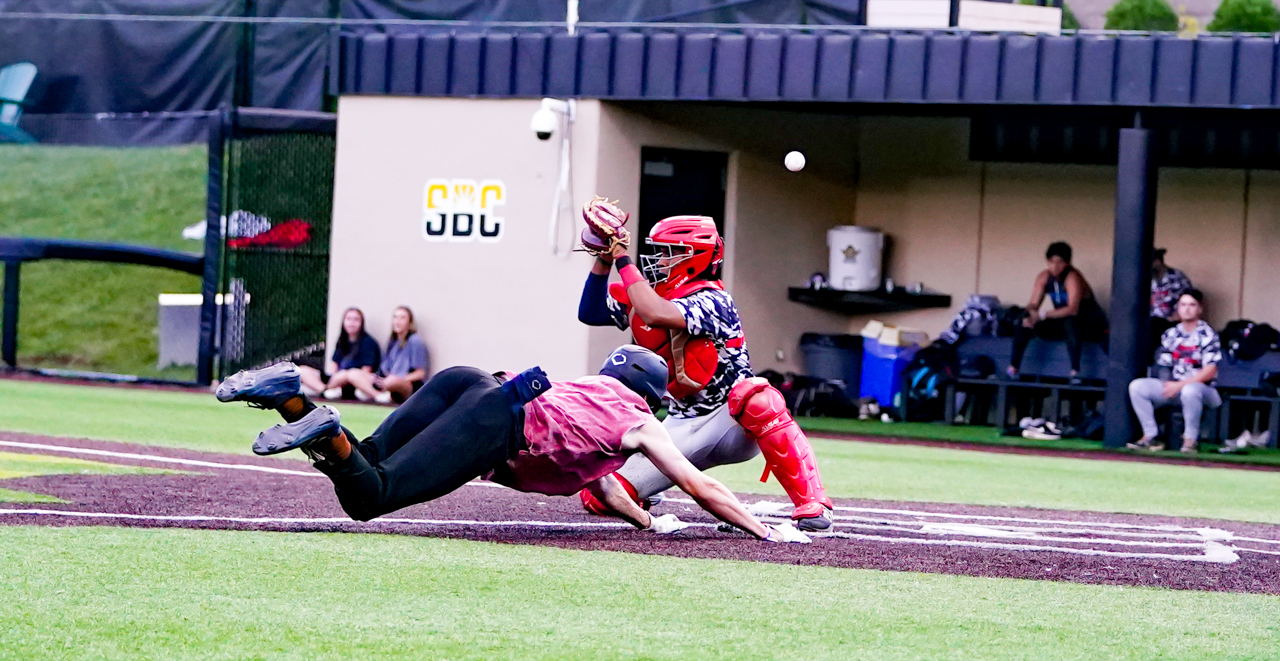
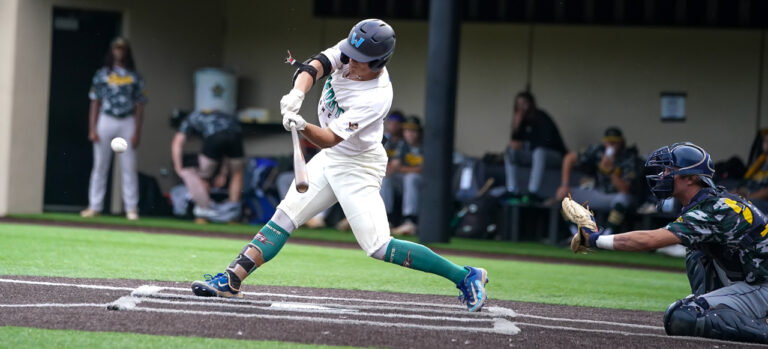
The Boone Bigfoots didn’t have many highlights on offense, but this was one of them. Photographic image by David Rogers
“We have fun. Summer ball in the CPL allows you to play pretty free and easy vs. playing college ball where you have to worry about academics, too,” said Wagner, a business and finance major in school. “Every summer, I come out here with a plan, knowing what I need to work on as an individual and then I get to take that back to the university and our school ball. That is the biggest thing, just able to focus on what you need to work on. You play baseball every day and put your focus there.”
Nick DiPietrantonio is one of two Ivy League players from Princeton University playing for the Bigfoots in 2023. Like Wagner, he also clubbed a big home run on June 4 against the Zookeepers that served as a catalyst for the Boone team’s comeback win.
“I played in the CPL last summer with Martinsville, too, so I am a little bit familiar with North Carolina but have not been here for an extended period of time. My hometown is Manalapan, New Jersey. I really like playing in this summer league because every day you wake up and get to make every decision based on baseball. We play ball almost every night and everything revolves around the competition. We get to hone-in on what we are trying to accomplish. I don’t have to worry about all the pre-med stuff during the summer!” said the future healthcare professional. “In school, there is a lot of balancing. Here, it is all about baseball.”
Catcher Braxton Church didn’t have much time to kick back and relax after his Appalachian State team went deep into the Sun Belt Conference tournament before losing to Southern Miss in the semifinals. Not only does he get to play home games in the familiar environment of Smith Stadium, but his family frequently gets to see him play since his hometown is Wilkesboro.
“This is awesome, being close to home and still getting to stay in Boone for the summer,” said Church. “This is like college ball, of course. There are guys from all over who can sling it and everybody competes. Having Hayden Cross as the Bigfoots assistant coach is terrific because I have learned a lot from playing behind him here, for App State, since he was the older catcher ahead of me. Now I am learning even more with him as my coach.”
Hayden Cross, once Church’s teammate but now officially his mentor, is taking the next step on a potential career by assuming a coaching role with the Bigfoots.
“I am pretty much done playing baseball,” said Cross. “I am out of college eligibility, but I get to spend another summer in baseball as a coach. I eventually want to get into coaching, so this is a great opportunity. This is good baseball. There are guys from really good college programs.”
Photographic image by David Rogers
Although Cross had a final “look” recently from the Chicago Cubs, he said he is not banking on getting drafted.
“My degree is in education,” he said. “So, I would like to coach and teach at either the high school or college level. As a high school teacher, it would probably be in math.”
The guy charged with tying it all together for the Bigfoots in 2023 is head coach Randall Ortiz, an alum of Catawba Valley Community College and Wichita State University as a player. He is also beginning his fifth year with CVCC as a coach.
“In high school, I was a lot smaller than I am now,” said the man with the stocky build of a catcher. “So in high school, I began as a shortstop. Then halfway through my freshman year they made me the catcher after the regular guy got injured and I never looked back.”
Given their view of the game from behind home plate with the entire baseball arena in front of them, athletes who played the game as a catcher have a special perspective as they transition into coaching.
Photographic image by David Rogers
“I am definitely excited by this opportunity,” said Ortiz, his face breaking into a big smile. “Last year, I was in the CPL with the Martinsville team as a coach. I knew that eventually I wanted to be a head coach. I didn’t know how soon my chance would come, but it has been what I wanted. The opportunity here in Boone opened up and one of my friends from college got me connected with Bob Wilson. The first time I visited here and saw the field and facilities, I knew this was where I wanted to be, the head coach for the Boone Bigfoots.”
Ortiz echoed the common theme heard from among the players.
“Summer baseball in the CPL is good,” said Ortiz. “You have the players’ attention pretty much 100 percent. They aren’t having to worry about homework for their academic studies. Add to that I think we have a special group of players here this year. We have only been here for three weeks, but it has been awesome so far. The guys all get along with each other and they can focus on baseball, not worrying about school.”
When it comes to summer jobs, it doesn’t get much better than it is for the boys of summer.
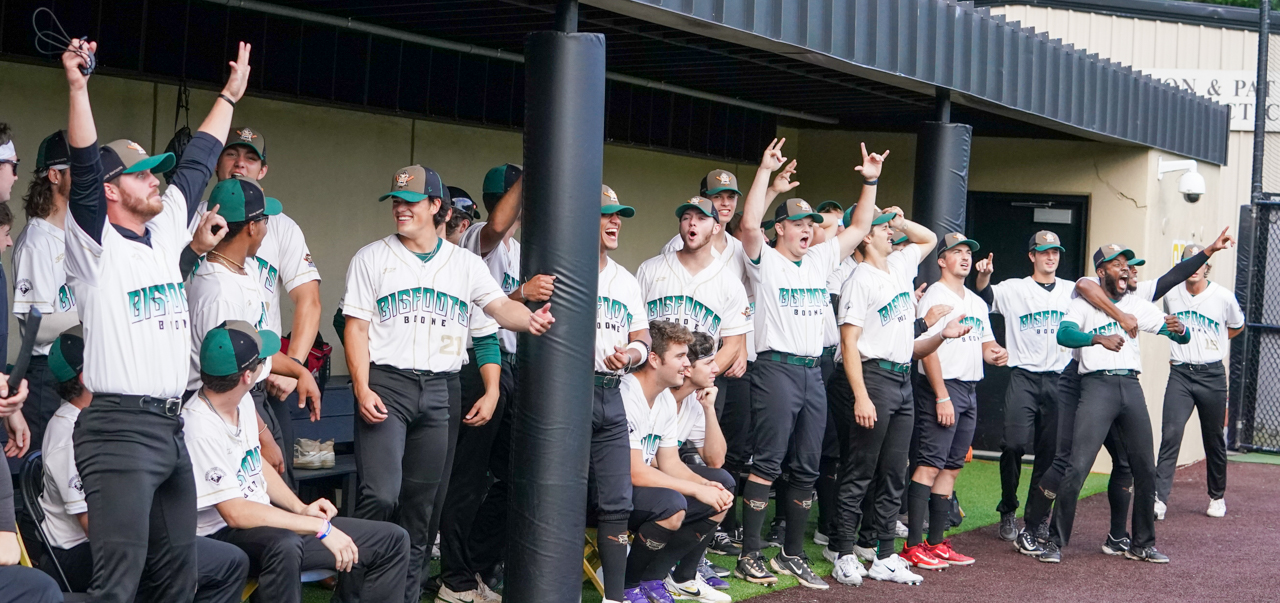
By David Rogers. BOONE, N.C. — It was only an exhibition game, but just what the summer baseball doctor ordered. The Boone Bigfoots had fun on July 31, on “Hawaiian Night”, in defeating the Catawba Valley Stars, 16-3.
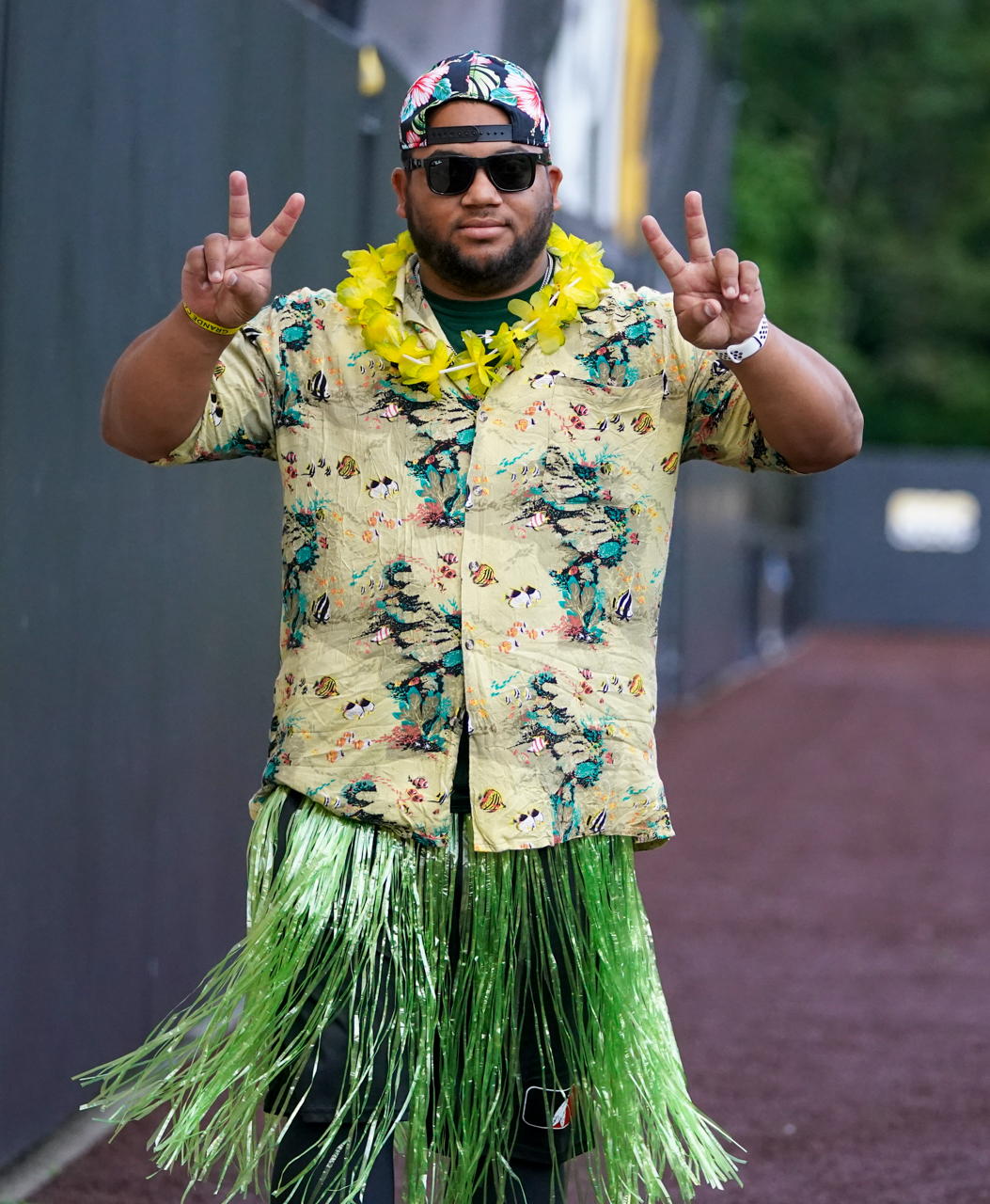
Randall Ortiz shows off the latest in head coach fashion accessories. Photographic image by David Rogers
That the Stars were arguably playing above their competitive level would be an understatement, at least on this night. The independent, Hickory-based team had hitting, fielding and pitching shortcomings and the Bigfoots showed little mercy. In a game called after five innings, the Boone hard ballers pounded out 16 runs on 11 hits, including four home runs, one each by Tyson Bass, Rhogue Wallace, Tristan Salinas, and J.C. Navarro. Add in seven stolen bases and four fielding errors by the Stars, four wild pitches by the visitors, as well as four hit batters, and it is easy to see the mismatch.
The tilt against the Stars was the season debut of new pitcher Coleman McGinnis, a rising freshman at University of North Carolina, Asheville. McGinnis is a right hander from Mebane, N.C. He was credited as the winning pitcher in his debut, giving up three runs (one earned) on no hits. He walked five and struck out six of the 15 batters he faced. Jalen Chambers earned the save, going the final two innings and allowing no runs and no hits, walking one and striking out two of the seven batters faced.
“Coming into this evening, I wasn’t sure about what I thought of this game,” said Bigfoots head coach Randall Ortiz afterwards. “But now, seeing how much fun our guys had, I think it was the perfect remedy for being tired at this point in the season.”
Photographic image by David Rogers
Coastal Plain League baseball for college-eligible players can be rewarding for those participating, but it can also be a grind. Because of budget limitations, teams don’t play a two, three or four-game series against any particular opponent. The teams typically don’t have the money for hotel lodging nor extended bus transportation over multiple days, so they return home after every game.
For the Bigfoots, that might mean a two-hour bus ride down to High Point-Thomasville to play the Toms and two hours back after the game — or a 4-hour trip to Lexington, S.C. and a 6-hour trip to Macon, Ga. — and then another game either home or away the very next night.
Photographic image by David Rogers
For the ball players, the baseball may be fun and the experience adding to their development toward a potentially professional career, but the time away from home with nothing in the way of real job money for the summer… well, it can be trying. As the Bigfoots certainly know, roster turnover is a certainty as guys burn out, get injured or, in the case of the Boone team just a couple of weeks ago, teammates get drafted into Major League Baseball organizations.
Bigfoots return to Coastal Plain League action on Aug. 1, at home against the Martinsville Mustangs, 6:30 p.m. at Smith Stadium.
By David Rogers. BLOWING ROCK, N.C. — Equestrian competitions rarely get more exciting than Rodney Harkey’s win on July 30, in the Blowing Rock Charity Horse Show’s Russell Hall Memorial Classic featured event.
With seven riders and their horses competing for $15,000 in prize money, five of them toured the course cleanly in the regulation round, within the 84-second time limit. That set up a “jump off” around an abbreviated course, with a 48-second time limit.
Elizabeth Cram of Aiken, S.C., riding HF Jett, set the bar high when she was first to ride in the jump-off, beating the the allowed time by six seconds, making the final jump after she guided Jett around the course cleanly, in 42 seconds.
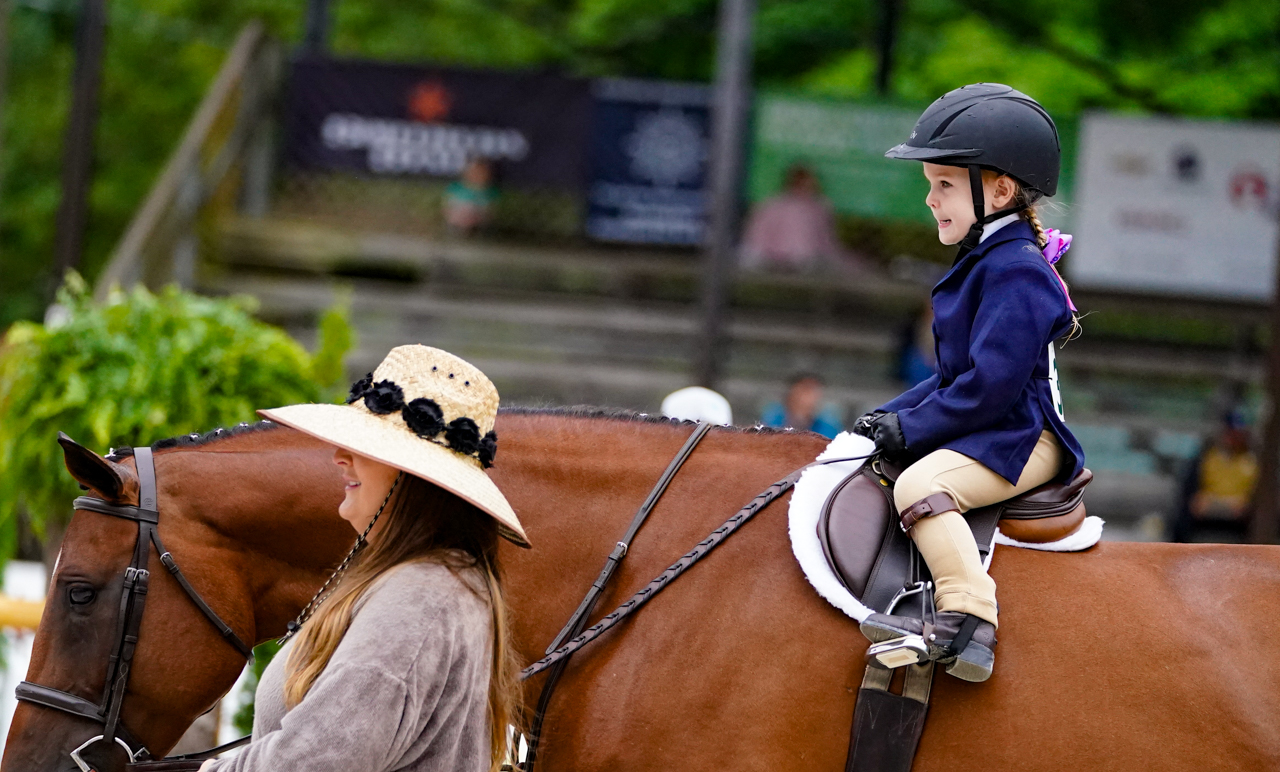
A cure break in the equestrian action for the Blowing Rock Charity Horse Show on July 30 was the ‘Lead Line Competition’ with 19 ‘small fry’ competitors earning a blue ribbon in the 19-way tie for first place! Photographic image by David Rogers
Moments later, Victoria “Tori” Colvin, of Loxahatchee, Fla., lowered the standard even further by taking her horse, VDL Moniseur, around the course in just over 40 seconds to take the lead.
Two riders later, it was Harkey’s turn on Equador, a horse that he both trains and owns, as well as rides. Watching the duo gallop quickly to and over the fences, negotiating tight turns between each one, there was a sense of purpose in the Charlotte rider’s performance — and he was rewarded by shaving six MORE seconds off the previously leading jump-time, to 34 seconds. Try as they might, the remaining riders were unable to match Harkey and Equador’s time, much less beat it.
For the win, Harkey collected $3,800 in first place prize money. Colvin took home $2,800 and Cram, $1,500.
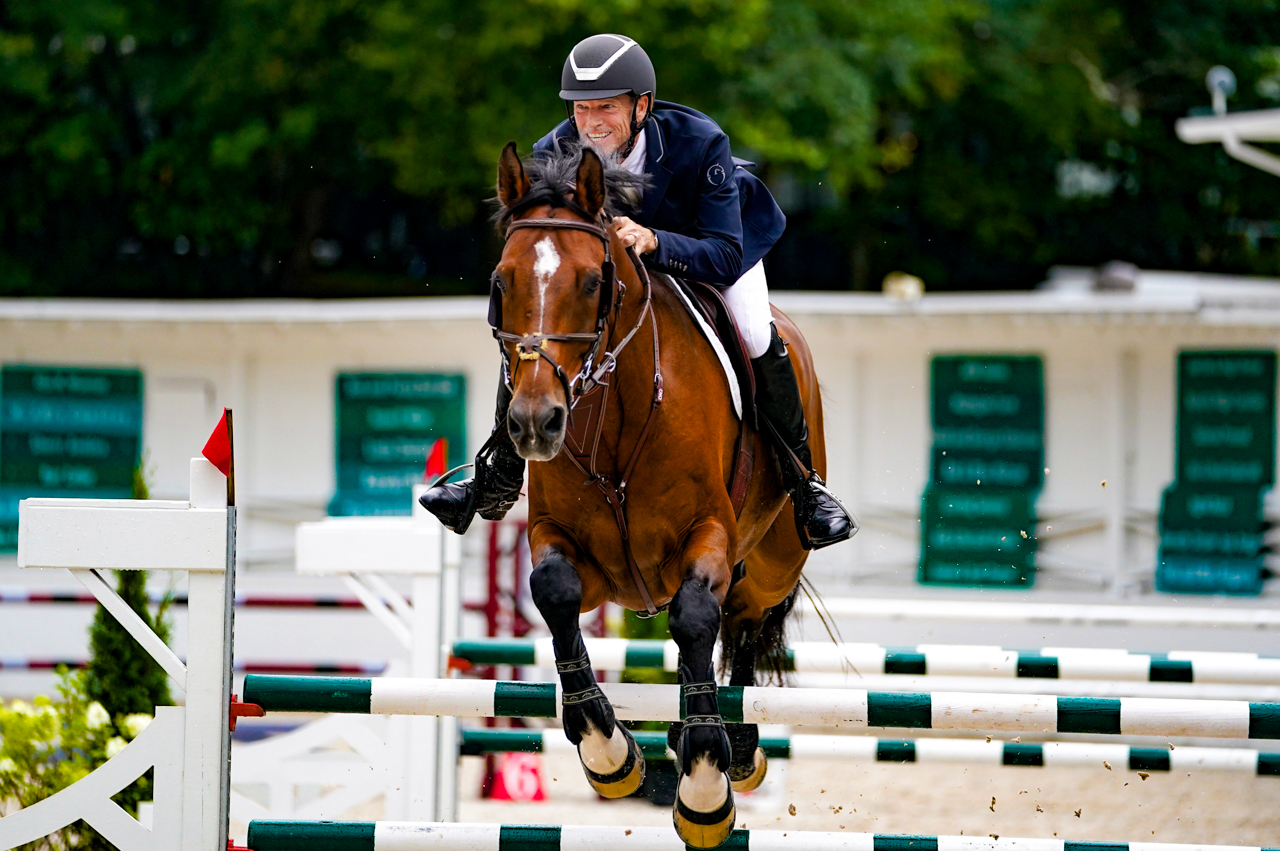
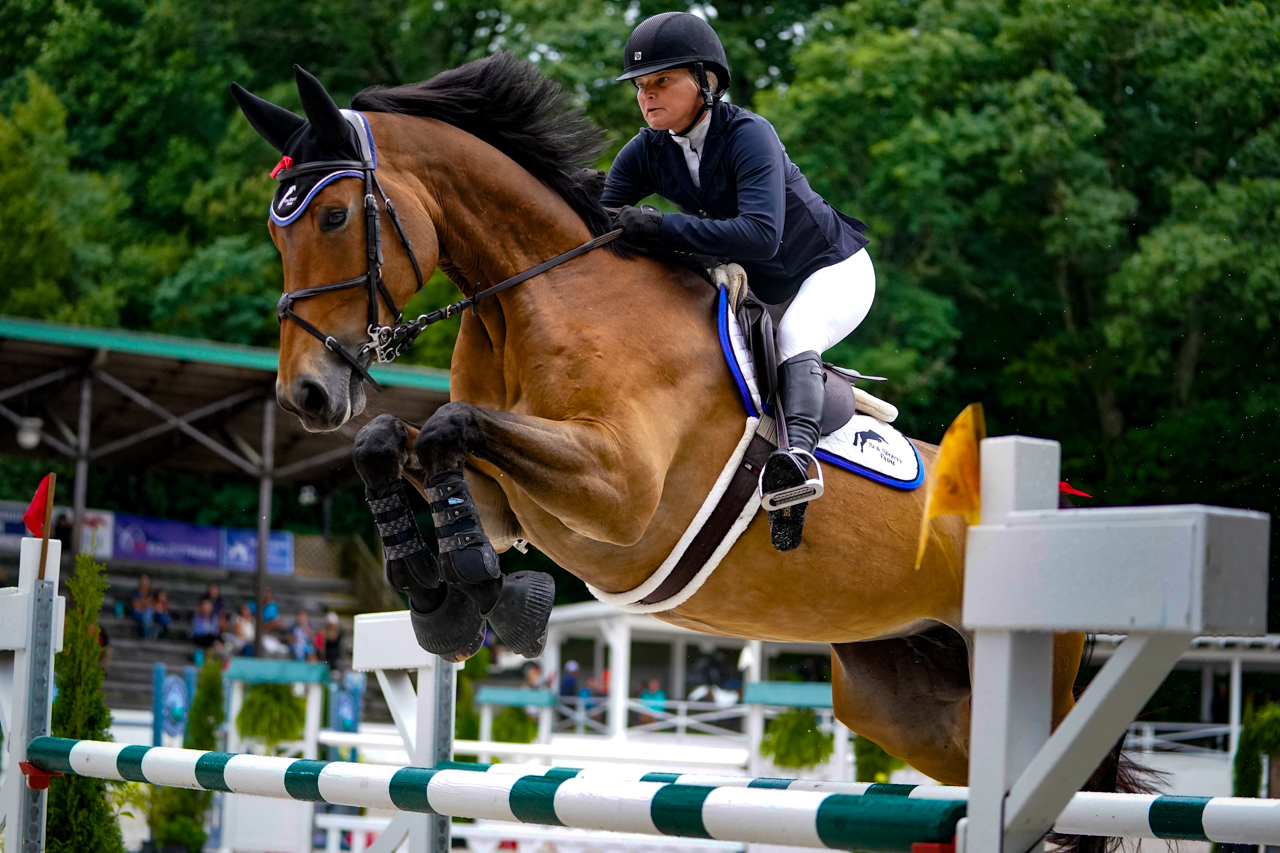
Majestic, powerful… words hardly describe the athletic beasts as they tour the hunter/jumper course during the Blowing Rock Charity Horse Show. Photographic image by David Rogers
The Russell Hall Memorial Classic was a featured event on the last day of the Blowing Rock Charity Horse Show’s first week. With a day off on July 31, they get things going again for the second week of the Hunter/Jumper competition, scheduled from Aug. 2-6.
More than 500 horses are entered in the competition, now in its 100th year as the United States’ longest, continuously-running equestrian event. Assuming an average of five people attending per horse (riders, owners, trainers, groomers, support staff and family members) we can conservatively guestimate that the Blowing Rock Charity Horse Show brings upwards of 2,500 people to town for the two weeks of equestrian competition, including some of the top riders and horses in the country. An economic impact study by Nicole Jelley at Appalachian State in 2012 concluded that during its 21 days (including a week of Saddlebred competition in June), the Blowing Rock Charity Horse Show generates $7.7 million in economic impact to the Blowing Rock/High Country area, including lodging, restaurants, retail and other expenditures.
By David Rogers. BOONE, N.C. — There was a poll circulating around Twitter a couple of weeks ago by CFB Campus Tour, soliciting readers’ votes for the “Top G5 Football Stadium.” The finalists were (drumroll) Appalachian State’s Kidd Brewer and East Carolina’s Dowdy-Ficklen.
For the uninitiated, “G5” is the familiar abbreviation for the Group of Five football conferences: the non-Power 5 schools in the NCAA Division I Football Bowl Subdivision (FBS).
Sun Belt Conference, Rising
It is hard to argue that the Sun Belt Conference is not now the most competitive of the G5 schools. In just under a decade since App State moved from FCS to the FBS level, the Sun Belt Conference in which the Mountaineers are a member has transitioned from football doormat to a legitimate D1 threat any time one of its member schools takes the field against a Power 5 opponent. App State alone has defeated both North Carolina (ACC) and South Carolina (SEC), as well as Texas A&M, took Tennessee (SEC) and Penn State (Big 10) to overtime on the road, and has had strong showings against Miami, Fla. (ACC) and Wake Forest (ACC) — and that is not even to mention the storied upset of Michigan when the Mountaineers were an FCS upstart.
Other Sun Belt Conference schools have made giant leaps in their competitiveness, too. On the same weekend that App State was holding court on the road in defeating highly ranked Texas A&M last September, Marshall upset the storied Fighting Irish of Notre Dame and Georgia Southern prevailed in an offensive thriller at Nebraska.
In 2020, the “Fun Belt” had a 3-game, weekend sweep of Big 12 schools when Arkansas State thumped Kansas State, Louisiana rallied to beat Iowa State, and Coastal Carolina jumped on Kansas. Last year, Sun Belt “newbie” Old Dominion pulled off an upset of ACC power, Virginia Tech. There is nothing “hokey” about the Monarchs. They proved to be for real.
The near-upsets have had their moments, too. Last year alone, Georgia State challenged the Tar Heels of UNC in a close one, South Alabama scared Oklahoma State,
The G5 is made up of 60 schools across the country, including the American Athletic Conference (AAC), Conference-USA (C-USA), MidAmerica Conference (MAC), Mountain West Conference and, of course, the Sun Belt Conference.
According to CFB Campus Tour, the final vote came down to East Carolina’s Dowdy-Ficklen Stadium and Appalachian State’s Kidd Brewer (“The Rock”) Stadium. Of course it was a popularity contest driven by enthusiastic fans but, even so, being in the final two out of 60 stadiums is pretty heady stuff.
After almost 9,000 votes were counted, Kidd Brewer Stadium (with 54.8 percent of the final vote) came out on top. There was a backlash of condemnation from ECU supporters, claiming the poll had some kind of bias and that voters were “… just looking at the pretty trees.”
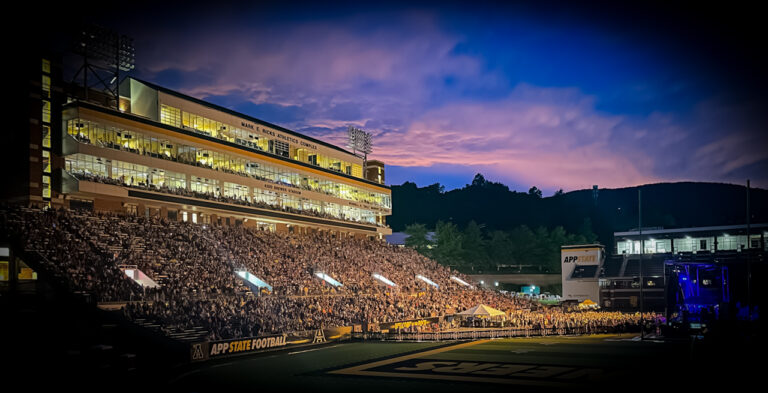
Well, it is hard to see the trees in the picture at the top of this story, the moment captured by our friend Jay Howard near the start of the the Darius Rucker concert hosted at The Rock on July 29.
No argument here with the CFB Campus Tour decision.
By David Rogers. BOONE, N.C. — Hot-hitting Watauga High School alum Tristan Salinas rapped a two-out single to right in the bottom half of the third inning to get things started for the Boone Bigfoots vs. the Forest City Owls on July 28, then scored on a bases loaded walk for the home team’s first run. That proved to be just the beginning for both Salinas and the Bigfoots as Boone cruised to a 9-4 win at Smith Stadium.
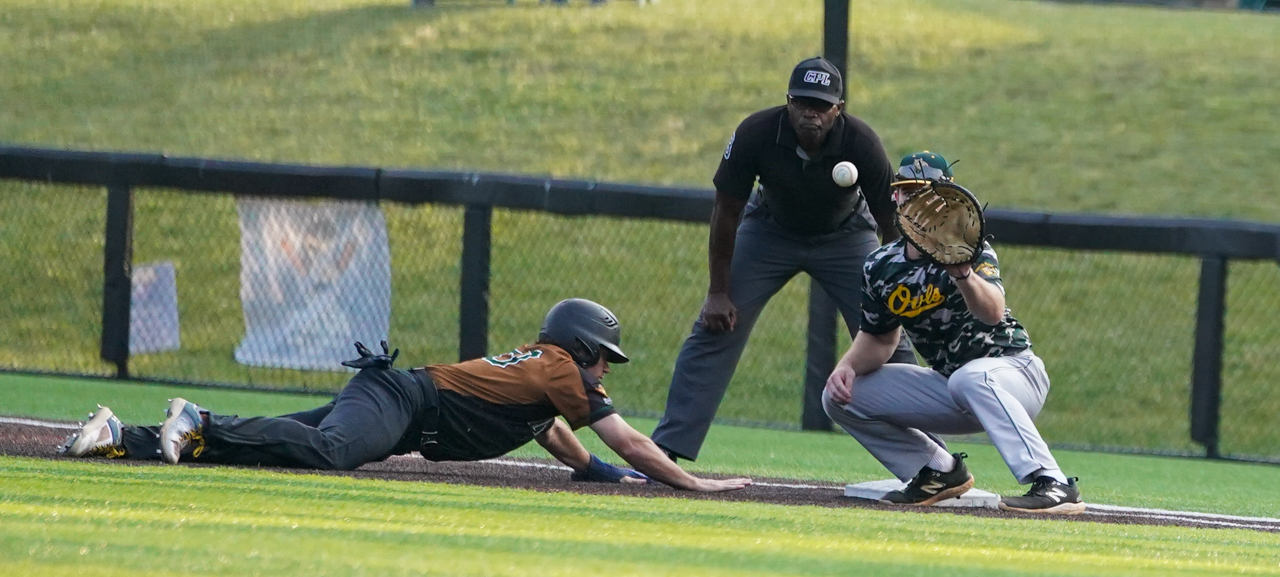
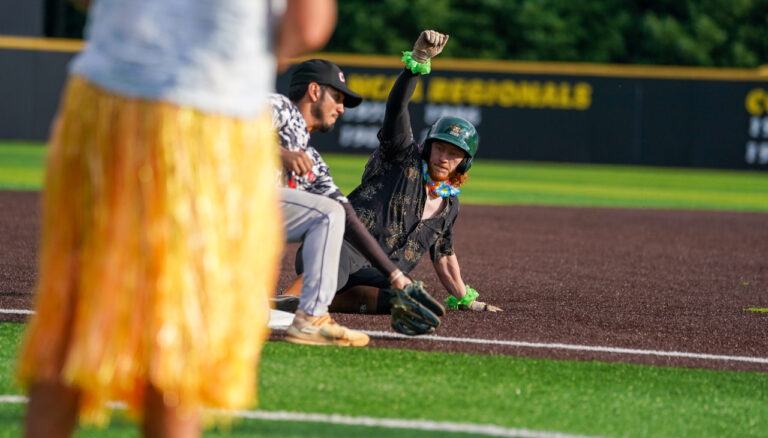
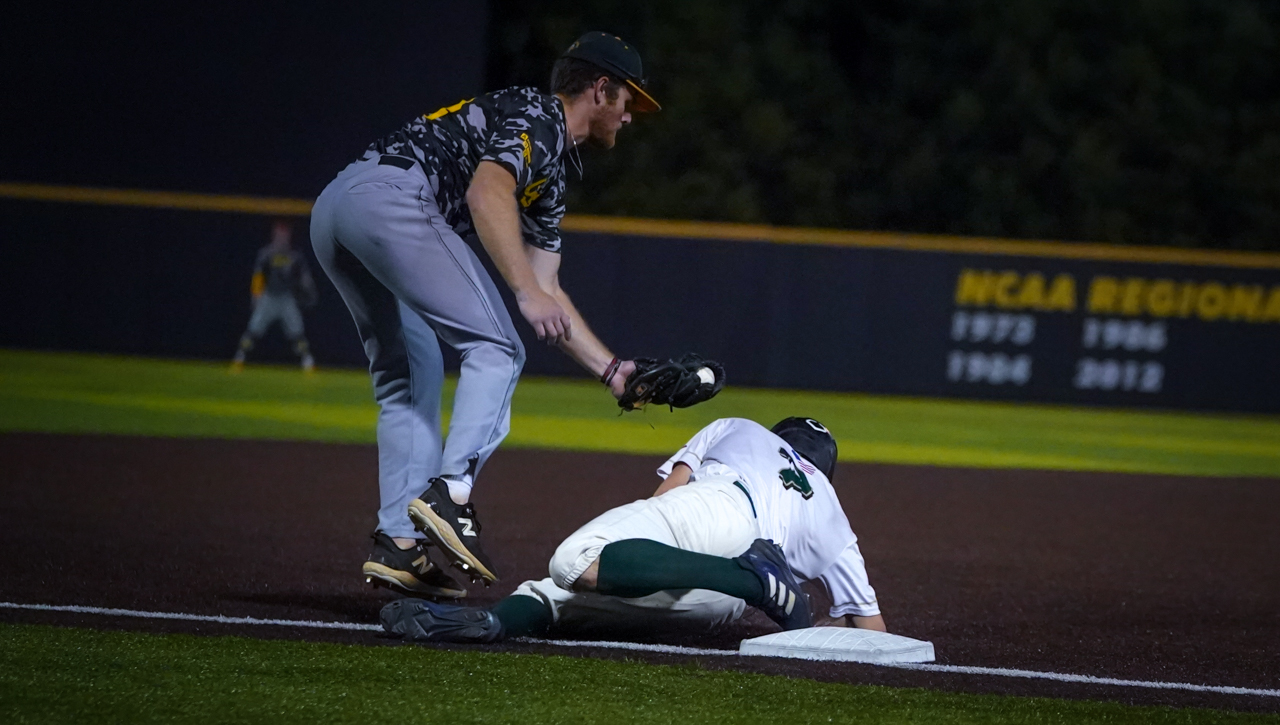
Tyson Bass slides into third base for the Boone Bigfoots on July 28, ahead of the tag. Photographic image by David Rogers
Salinas had a big night at the plate, going 3-for-5 with one run scored, and one RBI, as well as his fifth double of the Coastal Plain League season, an RBI 2-bagger through the gap in centerfield. Salinas’ double came with two outs in the bottom the seventh inning, producing the final run of the Bigfoots’ 5-run explosion in the frame to gain separation from the Owls on the scoreboard.
If there was a bigger bat for the Bigfoots than Salinas’, it was in the hands of first baseman J.C. Navarro, who jumped out of a season-long slump to go 2-4, including a home run and a double. Navarro’s 6th-inning dinger broke a 3-3 deadlock that put Boone ahead for the first time and gave the Bigfoots momentum going into their monster seventh inning at the plate.
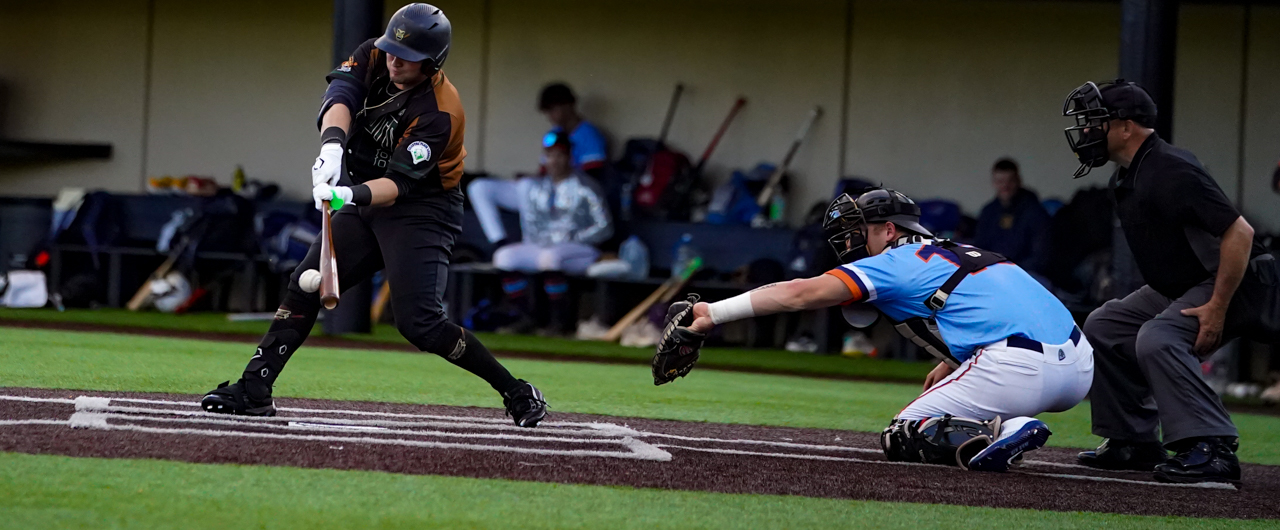
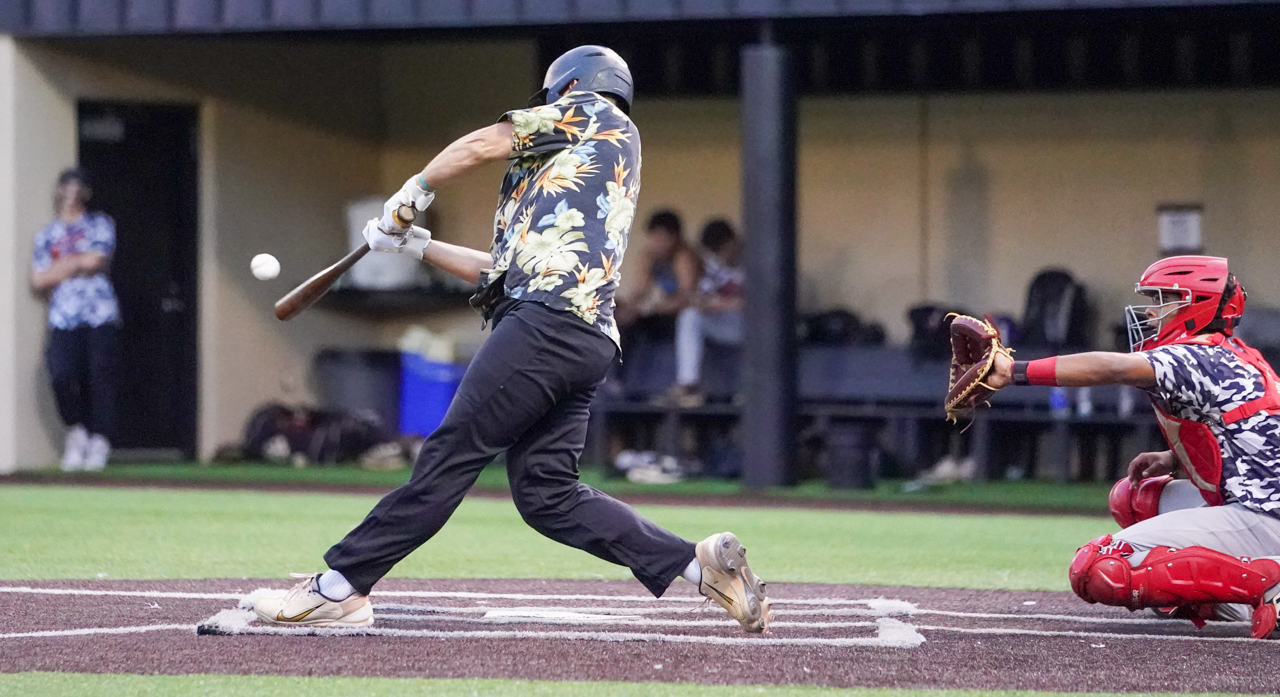
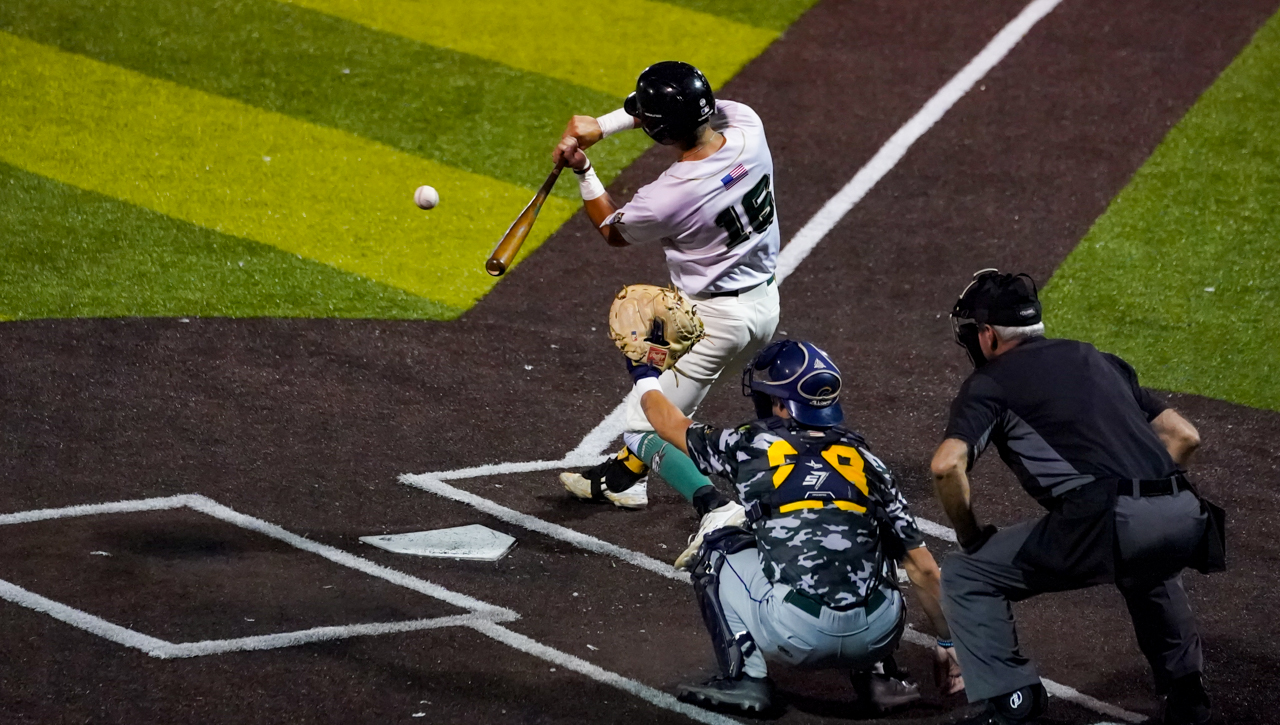
Braxton Critcher takes aim at pitch during the Boone Bigfoots’ 9-4 win over the Forest City Owls on July 28. Photographic image by David Rogers
With three RBIs on the night and scoring one run, leadoff batter Will Dorrell was also a key contributor in the Bigfoots win, going 2-3, walking twice and striking out once. He also stole his second base of the season.
Boone’s starting pitcher Riley Bost was credited with the win, scattering eight hits over six innings and allowing three runs to the Owls, all in the first three innings. Although Bost’s stat line for the night was uneven, he was able to wriggle out of what could have been a disastrous, bases-loaded jam in the top of the third inning by striking out consecutive batters for the final two outs.
In relief, righthander Caleb Jones pitched two strong innings for the Bigfoots, giving up no runs on no hits while walking just one batter and striking out two.
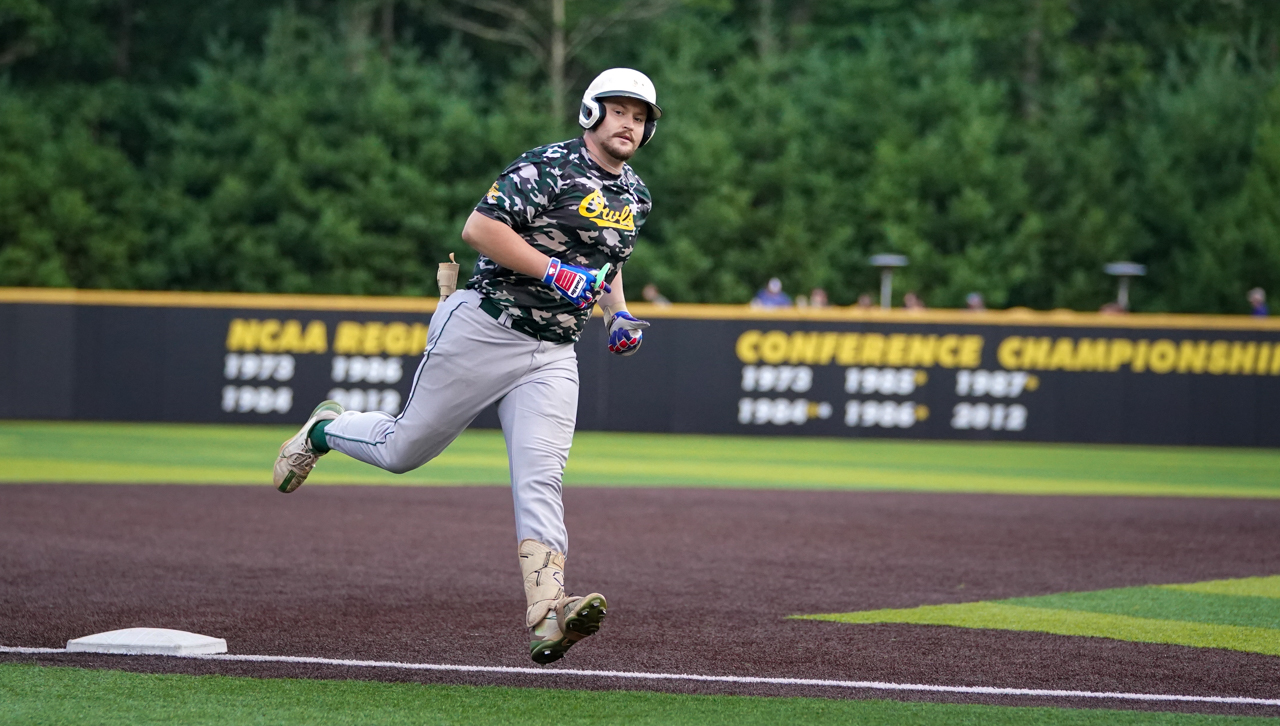
Forest City’s Will Butcher spots a photographer as he rounds third base on July 28 at Smith Stadium. He is circling the bases after a monster home run, but Boone prevailed, 9-4. Photographic image by David Rogers
Clayton Stewart, an App State transfer from Florence-Darlington Technical College, served at the Bigfoots closer in pitching the final inning. He gave up one unearned run in facing just four batters.
At this point in the Bigfoots’ first season in the CPL, no lead is safe, even in the late innings because of their lack of pitching depth. A couple of their hurlers have been injured and others have either gone home for the end of summer or gone back to school.
For the Owls, which earlier in the first half of the CPL slate proved to be the Bigfoots’ nemesis, leftfielder Will Butcher arguably had the team’s biggest night in going 2-4, with a home run, one run scored and two RBIs.
Watauga alum Tristan Salinas showed a lot of patience at the plate on July 28. Photographic image by David Rogers
KEY BATTING PERFORMANCES
BIG – Tristan Salinas: 3-5, 1 run scored, 1 RBI, 2B
BIG – Will Dorrell: 2-3, 1 run scored, 3 RBIs, SB, 2 walks
BIG – Tyler Bass: 2-3, 1 run scored, 1 RBI, 2 SB, 2 walks
By David Rogers. NEW ORLEANS, La. — It is not a rebuilding year for Appalachian State football in 2023, but a “reset.”
That is the core message being communicated by head coach Shawn Clark and player representatives, center Isaiah Helms and defensive back Nick Ross, at the Sun Belt Conference Media Days, July 25-26.
Notes from interviews:
The Mountaineers have brought in 32 new players, 17 from the transfer portal
There is no “QB1” right now, but a competition between Ryan Burger (6-3, 205 lb., redshirt freshman from Myrtle Beach), Joey Aguilar (6-3, 220 lb. transfer from Diablo Valley CC in Calif.), and Mason McHugh (6-2, 195 lb. freshman from Ferdinand, Idaho). The QB1 will be named the week before the first game of the season vs. Gardner-Webb.
There were no App State selections named to the all-Sun Belt preseason defense. Clark calls the Mountaineers’ unit, “the no-name defense,” pointing out that of the 32 new players to the roster, there was a heavy emphasis on the defensive side. In addition to 5th year senior and safety, Nick Ross, Clark reflected high expectations for redshirt senior transfer Tyrek Funderburk (Richmond), redshirt senior and inside linebacker Andrew Parker, redshirt junior Brendan Harrington, and junior safety Ronald Clarke for leading the defense.
The Mountaineers pride themselves on a tradition of producing exceptional offensive linemen, including last year’s Cooper Hodges and Anderson Hardy, now on NFL rosters. Led by center Isaiah Helms, the Mountaineers expect to have a strong offensive line unit in 2023.
Clark emphasized that the Mountaineers will run the football, rattling off the names of a deep running back room led by Nate Noel, Ahmani Marshall, Kanye Roberts and Anderson Castle.
Christan Horn, Kaedin Robinson, and Dalton Stroman are returning leaders of the wide receivers’ corps, which Clark identified as deep and talented.
Helms and Ross had high praise for Director of Athletic Performance for Football, Matt Greenhalgh, saying that the team as a whole has gotten bigger, stronger and faster. Clark pointed out that most fans don’t realize how much work the individual players put in during the offseason to get ready for the actual playing season.
Clark was enthusiastic about the support demonstrated by “AppNation” in having already sold out the season tickets, suggesting that the program will set another new home attendance record this year.
Clark noted that because of the work of Sun Belt Conference commissioner Keith Gill and the individual member schools’ athletic directors, the Sun Belt Conference has changed since 2016. It is now the strongest non-autonomous conference in the nation and competitive top to bottom in both the East and West divisions. “It’s not just App State and Louisiana-Lafayette anymore, playing each other in the championship games.”
Clark, Helms and Ross all used the word, “reset,” in describing the Mountaineers’ mission in 2023, pointing out that the 6-6 record in 2022 did not live up to App State’s tradition of competing for championships. Ross pointed out that five of the six losses were by a touchdown or less, so the season could just as easily have been 11-1 if a few breaks had gone their way.
APP STATE 2023 GAME SCHEDULE
Sat., Sept. 2 vs. Gardner-Webb
Sat., Sept. 9 at North Carolina Sat., Sept. 16 vs. East Carolina (Family Weekend)
Sat., Sept. 23 at Wyoming
Sat., Sept. 30 at ULM* Tues., Oct. 10 vs. Coastal Carolina*
Sat., Oct. 21 at Old Dominion* Sat., Oct. 28 vs. Southern Miss* (Homecoming) Sat., Nov. 4 vs. Marshall*
Sat., Nov. 11 at Georgia State*
Sat., Nov. 18 at James Madison* Sat., Nov. 25 vs. Georgia Southern*
HOME GAMES IN BOLD
* Denotes Sun Belt Conference game
By David Rogers. SPARTANBURG, S.C. — I first started covering the NFL as a “stringer,” contracted with a Southern California daily newspaper in the early 1980s. My beat was the San Diego Chargers. It was the heady days of “Air Coryell,” the dynamic passing offense schemed by the legendary head coach, Don Coryell.
The field general was then a future hall of fame quarterback, Dan Fouts. After Coryell was hired and installed the system, Fouts led the NFL in passing yards (4,000+ each year) for four straight years.
It is unknown to him, but Fouts is also responsible for my first lesson in football “subtleties.”
At the time, one of my friends worked as a server at a railroad car-themed restaurant in the Mission Valley area of San Diego. The grub was far from what a hobo might have eaten upon jumping a rail car for a westward migration during the Great Depression and Dust Bowl years (just five or six decades earlier). No, mouth-watering steaks of all kinds were the featured menu items: big T-bones, New York sirloins, Porterhouses and the like.
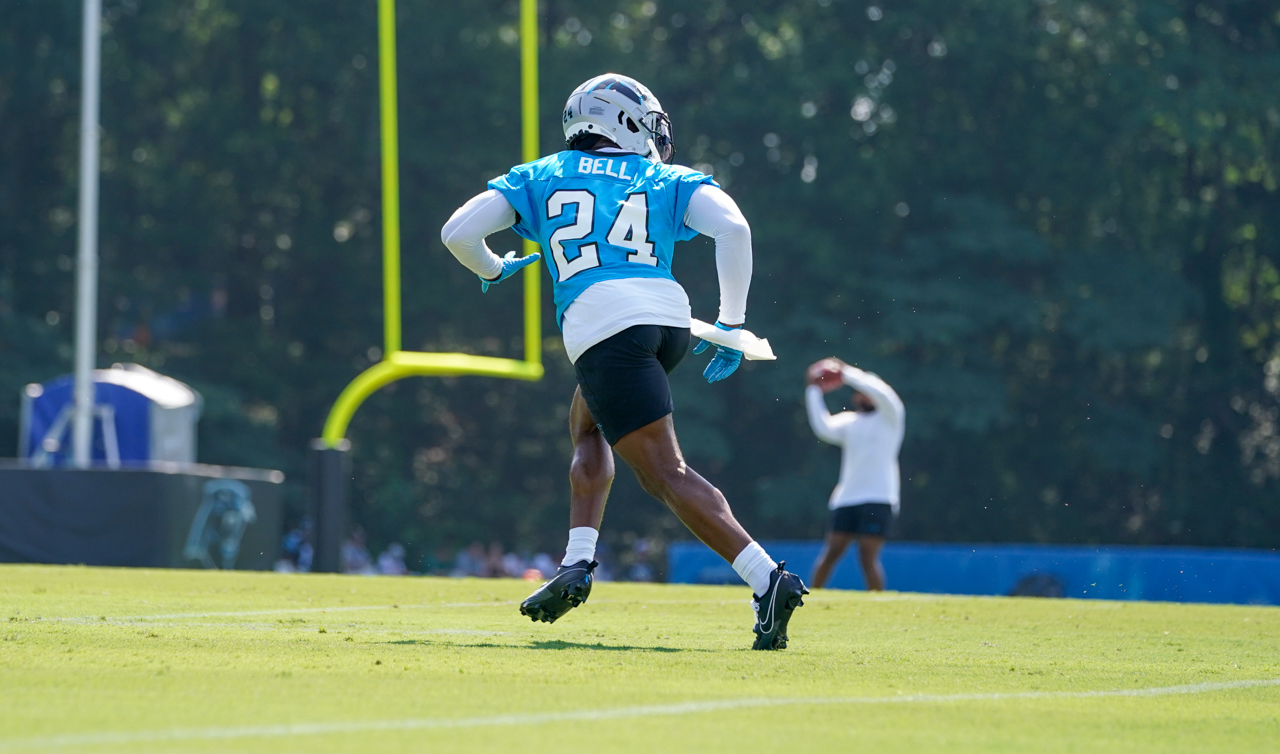
Carolina Panthers safety Vonn Bell goes through a drill on July 26 on the first day of training camp in Spartanburg, at Wofford College. Photographic image by David Rogers
I happened to be in the restaurant one Monday night when in walked these behemoths. I could only think that Paul Bunyan, the lumberjack hero of American folklore and his brothers had arrived. The only thing missing from these lumberjacks was “Babe,” Bunyan’s fabled blue ox!
It turned out, of course, that the arriving gentle giants were the San Diego Chargers’ offensive linemen and none other than Dan Fouts was their host for the evening. My friend explained that it was a frequently observed ritual: if Fouts didn’t get sacked on Sunday, the next day he would treat all of the offensive linemen to a big steak dinner at this restaurant not far from Jack Murphy Stadium.
He may have been buying steaks, but Fouts knew which side of his bread was buttered, as the saying goes.
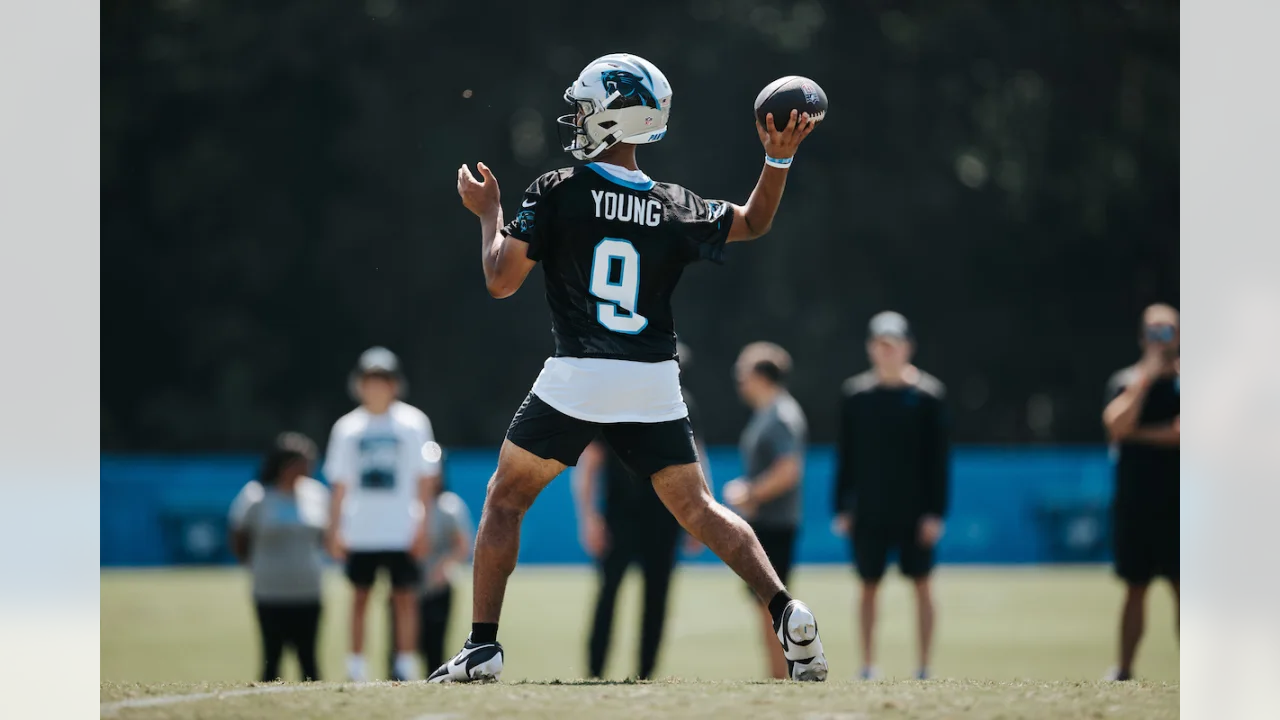
Bryce Young throws pass during Carolina Panthers’ first day of training camp, July 26. Photo by Kenny Richmond, courtesy of Carolina Panthers
At the end of today’s first day of the Carolina Panthers training camp, head coach Frank Reich confirmed that top draft pick Bryce Young was indeed the Carolina Panthers’ new “QB1.” Then, watching and listening to Young himself being grilled by the media, I couldn’t help but recall those days in the early 1980s and what Dan Fouts certainly understood: much of what any quarterback — at any level — can accomplish is made possible by the offensive line in front of him. Those big guys give him time to go through his progressions, to let a play develop and to see open receivers. Even for the ball-toting running backs — or today’s running quarterbacks — it is the offensive linemen who open the gaps at the line of scrimmage.
So, during his time at the media podium today, I popped up and asked the new Panthers QB, “Have you treated your offensive linemen to a steak dinner, yet?”
Young answered appropriately, given that it was Day 1 of training camp: “We just got here!” Young, of course, had no knowledge of my Dan Fouts story and perspective, but I think he knew what I meant.
But the bigger answer was in this remarkable young man’s humble demeanor. He knows. He may have gotten tapped on the shoulder as the Panthers’ No. 1 quarterback but neither his personal success, nor the team’s ability to win games, is all about him.
By David Rogers. BLOWING ROCK, N.C. — There may be nothing more sporting than jostling through a shoulder-to-shoulder crowd on uneven ground with an arthritic hip and an ankle that wants to turn out because there are no ligaments to keep it straight and stable. Then again, we only get to experience “Symphony by the Lake” once every year.
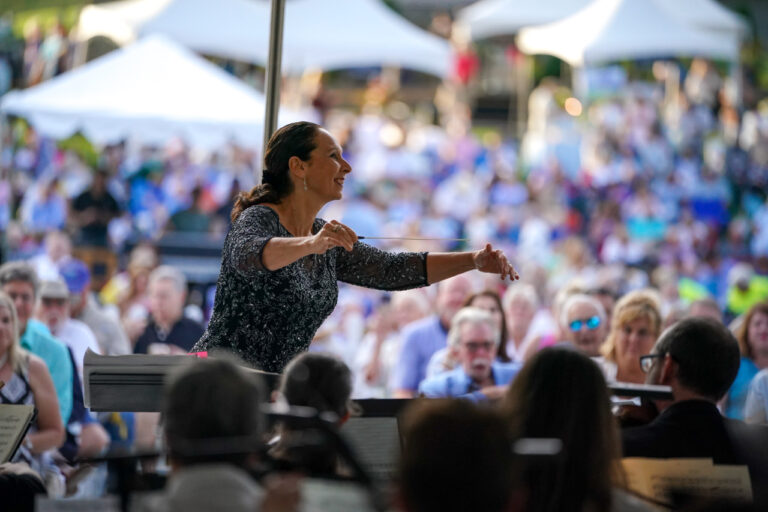
As many of the patrons of the 36th annual edition of “Symphony by the Lake” on July 21 will attest, any age-related physical shortcomings melted into mere inconveniences in the baton-waving hands of Cornelia Laemmli Orth, conducting her Symphony of the Mountains — this year with a bonus collaboration: the Swiss-born, North Carolina-based Kruger Brothers, one of the region’s most popular bands and a fitting representative of Appalachian music in its many forms and styles.
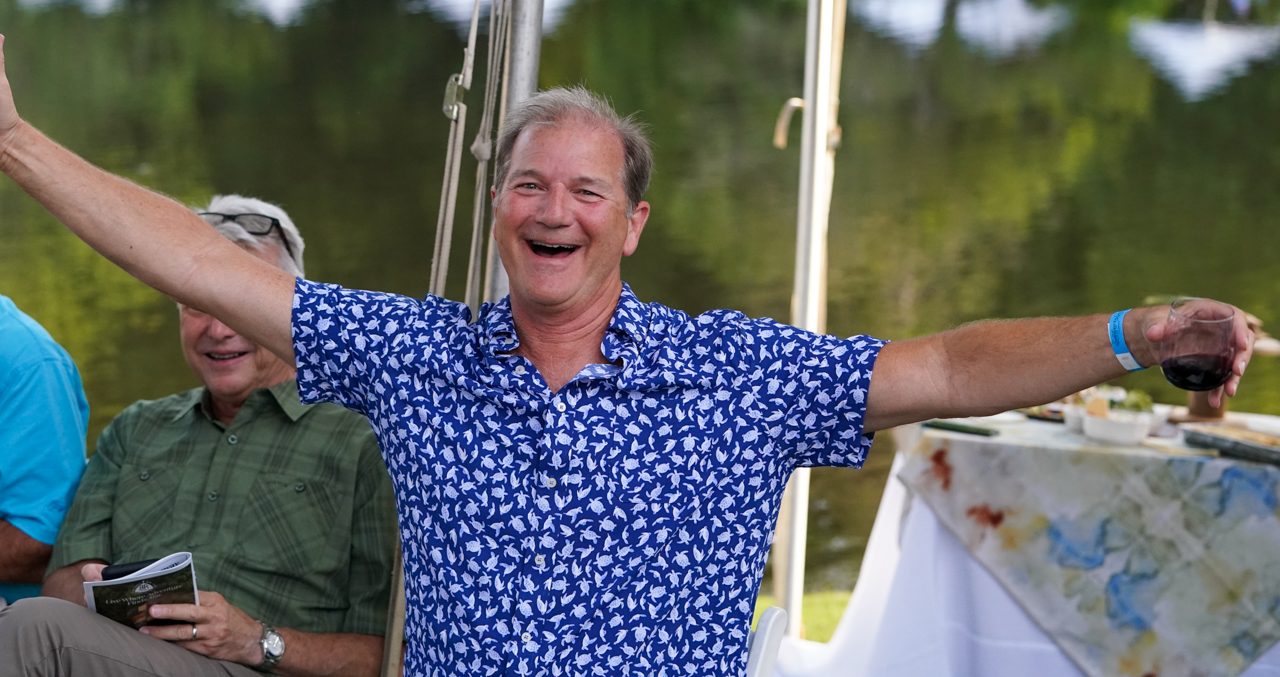
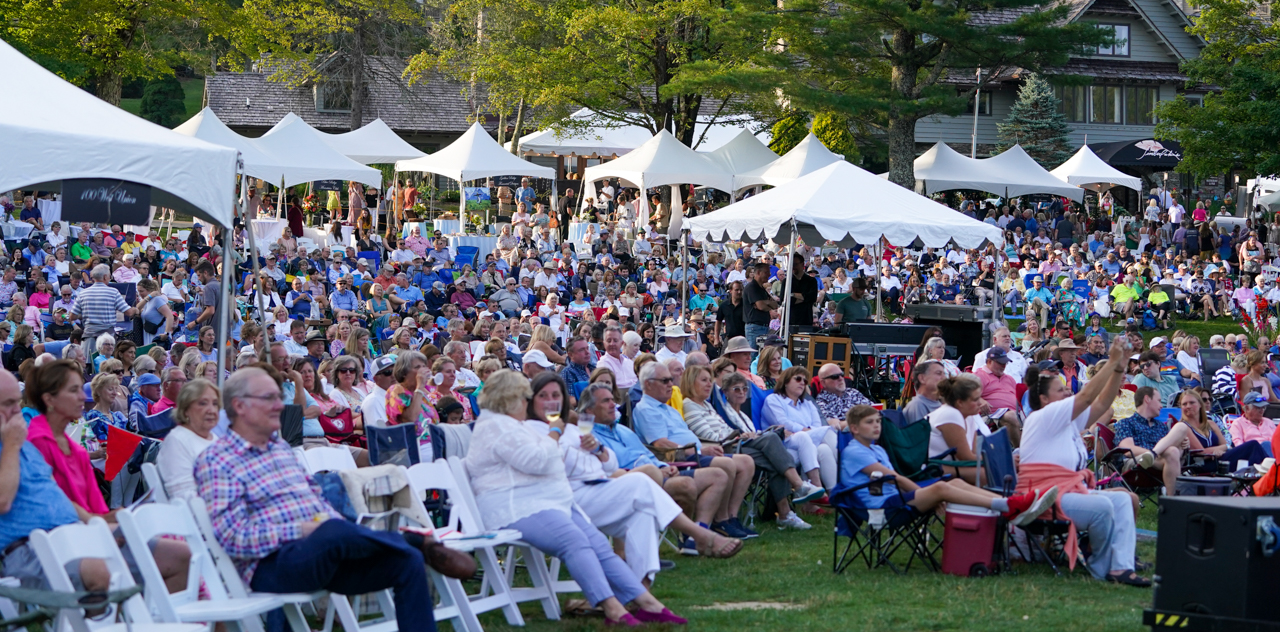
For many among the 3,500 paid patrons, ‘Symphony by the Lake’ is the best party of the year, and spirits are high. Photographic image by David Rogers
And, speaking of uneven ground, the theme for the 26th Annual Symphony by the Lake, presented and hosted by the Blowing Rock Chamber of Commerce at Chetola Mountain Resort was, “From the Alps to the Appalachians.”
Before the COVID-19 pandemic put severe limits on the number of tickets sold, the Chamber was already trying to get a handle on the bulging crowds that were, for all intents and purposes, overwhelming the venue. With the pandemic hopefully behind us, the interest has again surged and Symphony by the Lake was once again sold out (at 3,500 tickets) for Blowing Rock’s cultural-event-not-to-be-missed. Combined with beautiful weather — a perfect respite for Piedmont and Coastal residents from the oppressive heat found off the mountain — there are few more appropriate opportunities to celebrate with a mid-summer party. Along with the sold out crowd, there seemed to be a record number of sponsor and patron tents lining the lake and the top of the gentle slope descending from the resort to the lake that serves as the audience’s amphitheater seating.
A reported record number of patron tents were sponsored on July 21 for ‘Symphony by the Lake’ in Blowing Rock, adding to the festival atmosphere for the 3,500 paid guests. Photographic image by David Rogers
A Terrific Programme
And boy, was that audience entertained on this night.
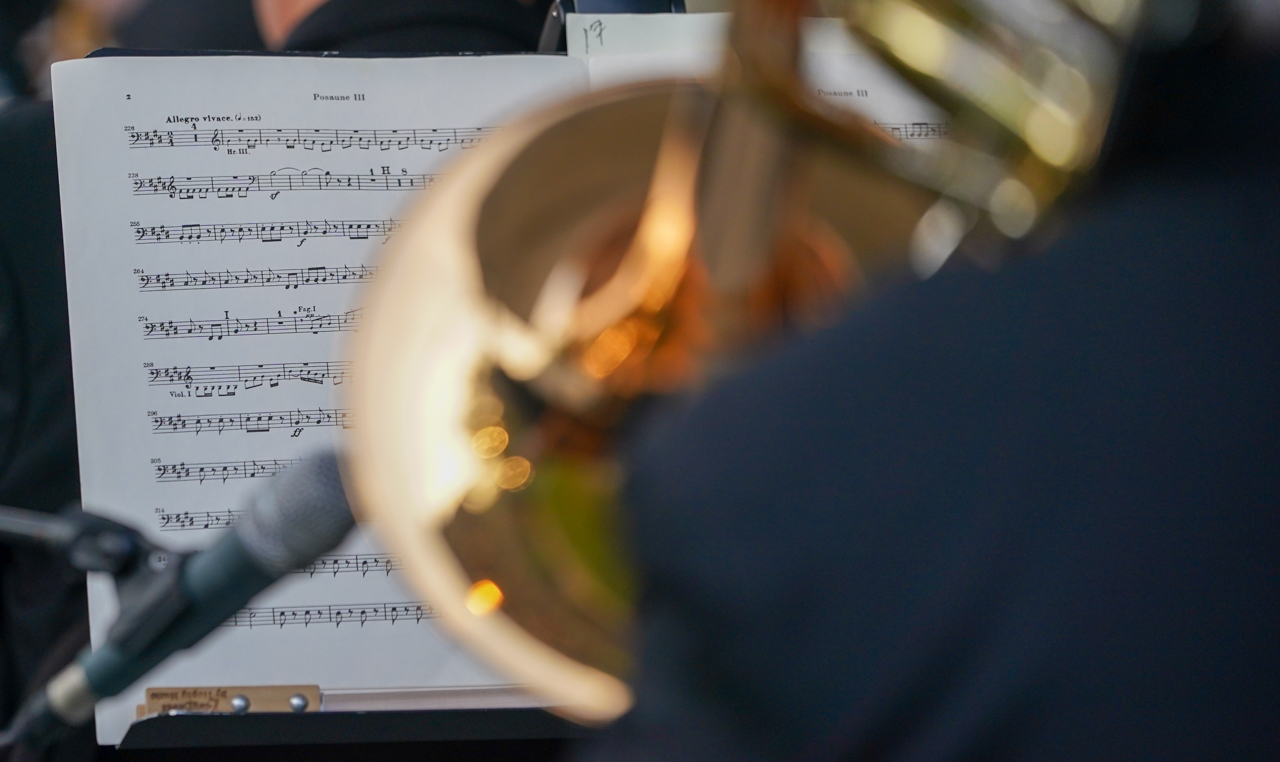
The Orth-directed “Symphony by the Lake” opened, as it traditionally does, with John Stafford Smith’s National Anthem (AKA “The Star Spangled Banner”). Then they quickly started their musical journey in the Swiss Alps with Gioachino Rossini’s “William Tell, Galop” overture, followed by a Michael Story arrangement of “It’s About Time.”
Almost all of the patron tents had big spreads of catered food and beverages. Before Allen Tate Companies’ guests tore into it, this spread looked sumptuous and certainly well-appointed. Photographic image by David Rogers
To get from the Alps to North Carolina, of course, requires an ocean journey. What better musical transition for the “Symphony by the Lake” theme than the Badelt/Ricketts arrangement of “Pirates of the Caribbean?” Robbery on the high seas certainly qualifies this as a sports story!
“Pirates” was followed by Benjamin Dawson’s “Appalachian Medley” and Aaron Copland’s “Fanfare for the Common Man.”
Hendrick Automotive Group always has the prettiest sunflower-centric bouquet for ‘Symphony by the Lake.’ Photographic image by David Rogers
As usual, the Symphony performed an “An Armed Forces Salute,” arranged by Bob Lowden, then a fitting follow-up in “Amazing Grace,” arranged by Matt Riley. The Symphony of the Mountains closed their main body of work with a poignant violin solo by Sean Claire and music by John Williams for the 1992 movie, “Far and Away.”
After intermission, it was The Krueger Brothers turn on stage with:
Up 18 North
Watch the Clouds Roll By
Winterport Intro
Winterport
Swing the Maul
Carolina in the Fall
Fields of Gold
First Settlers/Building on a Dream
Welcome to Ogden
At the end, the Symphony was again front and center with John Philip Sousa’s “Stars and Stripes Forever,” reaching a climax with brilliant fireworks into the sky and over Chetola Lake.
Like the 35 Symphony by the Lake events that preceded it, this year’s musical extravaganza was a great excuse for the year’s biggest party in Blowing Rock, and something to look forward to, each and every year.